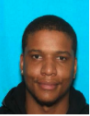
Lewis Howard was 54 years old when he died in Kansas City, Missouri. Even with only that much known, the weight of it is hard to ignore: a life with decades of mornings and routines, people who recognized his voice, places he passed through often enough to feel familiar, suddenly reduced to a single fact that lands like a closed door. Whatever the details were, whatever led to that ending, the result is the same—someone who existed in full, complicated humanity is no longer here.
There’s a particular kind of ache that comes with not knowing more. When a death is described only in the simplest terms, it leaves a hollow space where the story should be. It invites questions that can’t be answered from what’s been shared: what Lewis loved, what he feared, who he trusted, who was expecting him, who called his phone and got no answer. In that silence, the imagination fills in fragments—an ordinary day that didn’t feel like a turning point until it was too late; a moment that changed everything; a final stretch of time that no one can rewind.
What remains most painful is that the information provided doesn’t include any sense of resolution. There are no names attached to accountability here. No arrests. No identified suspect. No public thread that ties his death to a person who was questioned, charged, tried, or convicted. Just Lewis Howard, gone, and the uneasy sense of something unfinished. For the people who cared about him, that unfinished feeling can become its own kind of grief, one that doesn’t settle easily because it has nowhere to go. When there’s no clear answer, mourning doesn’t come with closure—it comes with a long, exhausting waiting.
And yet, even in the absence of details, Lewis Howard’s life deserves to be spoken of as more than an ending. Fifty-four years is a long stretch of living: the way a person changes across decades, the quiet skills they pick up without realizing, the relationships that shape them, the disappointments they carry, the small joys they return to because they can’t help it. Somewhere in Kansas City, his absence would have been felt—not as a headline, but as an empty space in everyday life. A chair that stays unclaimed. A message that remains unread. A familiar presence that is suddenly missing in a way that makes the world feel wrong.
When someone dies and the story is unclear, what often rises to the surface is the simple truth that a person mattered long before the circumstances of their death ever did. Lewis Howard mattered to someone. He mattered in ways that might never be written down, in ways that don’t show up in records—through ordinary kindness, through irritation and forgiveness, through the simple act of showing up for people, or even just being part of the landscape of their days. And if there was harm involved in his death, the lack of public answers doesn’t lessen it; it only deepens the ache, because it suggests a world where the truth can drift out of reach.
For now, the only story that can be told from what’s been provided is a restrained one: that Lewis Howard, 54, died in Kansas City, Missouri, and there is no information here about suspects or arrests. But the emotional truth is bigger than the facts. A death like this—described without context—still carries a human aftermath. It changes the shape of the days for those who loved him. It creates questions that repeat at night and in quiet moments. It leaves a name that should not disappear into a sentence fragment, because behind it was a whole person, and behind that person are the people left to live with the loss.