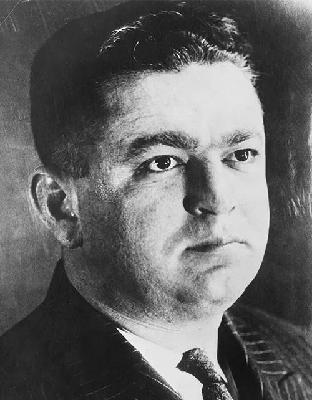
Robert Leacock, a former medical school acquaintance of Herman Webster Mudgett—better known as H.H. Holmes—was reportedly murdered in Chicago in May 1886. Holmes, who would later become infamous as one of America's first documented serial killers, allegedly poisoned Leacock with a dose of laudanum to secure a $40,000 insurance payout.
Holmes, a trained physician, had a history of engaging in fraudulent schemes, including insurance scams.
His medical expertise allowed him to carry out crimes with precision, often leaving little evidence behind. Leacock's death was one of the earliest recorded murders attributed to Holmes, occurring before he constructed his infamous "Murder Castle" in Chicago. The circumstances surrounding Leacock's death suggest that Holmes had already begun experimenting with methods of deception and murder that would later define his criminal career.
Despite Holmes's eventual arrest and conviction for multiple murders, including those of the Pitezel family, there is little documentation indicating that Leacock's murder was formally investigated or prosecuted at the time. Holmes's ability to manipulate legal and financial systems allowed him to evade suspicion for years, and many of his early crimes, including Leacock's death, were overshadowed by his later atrocities.
Holmes was eventually apprehended in 1894 and convicted of murder. While he confessed to numerous killings, including some that were later debunked, his involvement in Leacock's death remains a significant but lesser-known aspect of his criminal history. The case exemplifies Holmes's early use of murder for financial gain, a pattern that would continue throughout his life until his execution in 1896.