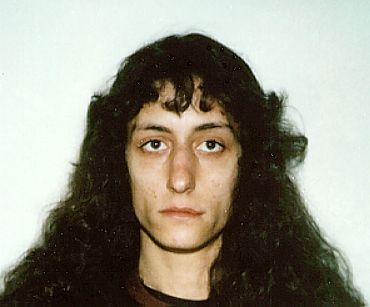
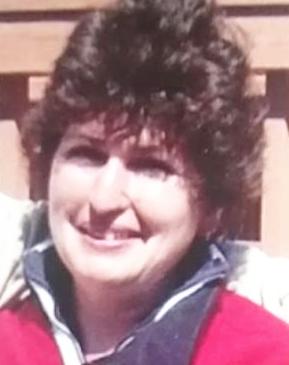
Catherine “Cathy” Marsh, 31, a white woman, vanished from the streets of Poughkeepsie, New York, after she was last seen on November 11, 1996. Downtown Poughkeepsie, where she had been observed, was an area marked by an open drug trade and street-level prostitution, a place where people could slip out of sight and not immediately set off alarms beyond a small circle of those who knew them best.
When the silence stretched on, one of the details that lingered like an unanswered question was how ordinary her absence looked at first—her clothes and personal items were still in her apartment, as if she might return any moment and pick up right where she left off.
Months passed before the disappearance was formally pulled into the light. On March 7, 1997, her mother reported her missing, and by then the trail had cooled into something difficult to hold. Detectives worked the routines of a case that had no confirmed crime scene and no clear proof, at least initially, that a crime had even occurred: they checked nationwide teletypes against unidentified bodies, requested records to see whether she might be jailed elsewhere, canvassed the neighborhoods and corners where she was known to be, and brought in specially trained cadaver dogs to search likely areas. The effort drained into frustration—no workable leads, no solid suspects, and the grinding reality that without evidence of criminality, the case could stall in the narrow space between fear and proof.
Even so, investigators sensed something darker moving beneath the surface. Other disappearances in the same city began to feel less like coincidence and more like a pattern, as if the streets were quietly collecting women and refusing to give them back. In the course of digging, police leaned on the Neighborhood Recovery Unit, which lived close to the street-level pulse of downtown and the people who moved through it. From that world came a name—Kendall Francois, a local man said to be notoriously rough and sometimes violent during sex, living on Fulton Avenue. Detectives put his home under surveillance, and at one point a cooperating prostitute wore a wire and spoke with him while police listened, hoping for a crack in the façade. Nothing useful surfaced, and the city’s dread kept growing while the missing remained missing.
The break came in early September 1998, not through a confession prompted by conscience, but through another act of violence that finally spilled into the open. After an assault complaint involving a woman named Christine Sala, police confronted Francois, and the encounter unraveled into admissions and an arrest. A search warrant opened the door of the Fulton Avenue house, and inside was a scene that matched the rumors that had circulated for years—garbage-strewn rooms, a stench so strong investigators used protective masks, and hidden dead that turned missing-person dread into certainty. Bodies were found concealed in the home, including in the attic, and identifications followed in grim succession; Marsh was among those recovered and identified, her disappearance now anchored to a killer who had kept his secrets in plain sight behind a family’s front door.
What followed was the long, procedural descent from horror into courtroom fact. Francois faced murder charges tied to multiple victims and, after a tangle of pleas and legal maneuvering, ultimately admitted to the killings as part of an arrangement that spared him a potential death sentence. In August 2000, he was sentenced to life imprisonment without parole for the murders—eight life terms that could not restore what was taken, but did end the question of whether there would be an arrest, a suspect, and accountability. For Marsh, the story that began with a last sighting on a Poughkeepsie street corner ended with her name spoken among the dead found in that house, the missing finally found, and the man responsible condemned to spend the rest of his life behind prison walls.