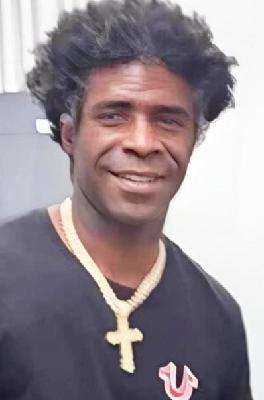
Bob Mack Agee, a 29-year-old White man from Kingston, West Virginia, disappeared during a visit home in February 1962. He had been living in Chicago, where he was attending an electrical school, but returned to West Virginia because his ailing mother was living in a nursing home. After visiting her, he was expected to return to the family home where he was staying in Kingston and may have intended to hitchhike back. He never arrived.
Although February 1, 1962 has been given as a date of death, the available online accounts do not verify that date as the day he died; they describe his disappearance only as occurring sometime in February 1962, and no identified remains or confirmed cause of death have been reported.
The circumstances allowed his disappearance to go unnoticed for an unusually long time. His relatives in West Virginia apparently believed that he had simply hitchhiked back to Chicago without saying goodbye, while the people who knew him in Chicago believed he had decided to remain in West Virginia and was not returning to school. With each group assuming he was safely with the other, there was no immediate missing-person investigation. One detailed account places the eventual report to authorities in July 1964, more than two years after he vanished. By then, any roadside witnesses, vehicles he might have entered, or other physical evidence connected with his last movements would have been extremely difficult to reconstruct. The mystery became even more confused in 1965 when information surfaced claiming that he had been found alive and well in Chicago. Newspaper reports repeated the story, but later accounts say the identification was erroneous and that the report ultimately proved false.
Years later, his disappearance became associated with the disturbing series of cases remembered as the Mad Butcher of Fayette County. Between 1962 and 1964, a number of people vanished in southern West Virginia, particularly around Fayette County, and the later discovery of dismembered victims created fears that a single killer was responsible. Hitchhiking or walking alone was a recurring element in several of the disappearances, which made the possibility that Agee had been seeking a ride especially noteworthy. Still, the connection was never proved. Some later retellings describe him as a possible earliest victim of the unknown killer, while other local histories begin the suspected series with Ernest Gwinn, who disappeared from Oak Hill in July 1962. One review of the cases specifically concludes that Agee probably was not a victim of the Mad Butcher. With no body, crime scene, weapon, or forensic evidence associated with his disappearance, placing him among the killer's victims remains a theory rather than an established fact.
The wider Mad Butcher investigation did produce possible suspects, although none has been shown to have had a direct connection to Agee. One frequently mentioned figure was Hugh Montgomery. An online reconstruction of the investigation reports that Montgomery was arrested in 1964 following a bizarre disturbance at a local hospital. According to that account, he went to the hospital demanding to be hired as a doctor, left after being refused, and returned with a sledgehammer that he used to damage property. Police reportedly discovered several firearms, a knife, a duffel bag and a meat grinder while investigating him. Montgomery had some medical-school training and had served in the Air Force in a medical capacity. He was also said to have admitted involvement in several killings while insisting that they had been committed in self-defense and denying that he was the Mad Butcher. The same account, however, reports that he was at an Air Force installation in Ohio around the time of the particularly notorious December 1962 murder of Mike Rogers, complicating efforts to connect him even to that crime. Nothing in the available material establishes that Montgomery ever encountered Agee, transported him, harmed him or was arrested in connection with his disappearance.
Another person became a strong suspect during the investigation of the Rogers killing after investigators reportedly encountered a bloody axe, knife and hacksaw associated with him. He had also reportedly worked for Greyhound around the period when a military-style duffel bag found with Rogers's remains was believed to have disappeared from a Greyhound bus. The suspect maintained that the tools had been used for slaughtering animals and denied being in West Virginia when the murder occurred. He was never charged with the murder and later died by suicide. Again, there is no published evidence connecting that suspect to Agee, and the episode illustrates how much of the Mad Butcher inquiry developed around later crimes rather than evidence originating with the Kingston disappearance itself.
No available online material documents an arrest specifically for causing Agee's disappearance, nor does it identify anyone who was charged, tried or convicted for killing him. The evidentiary trail is now particularly difficult to recover. A 2024 West Virginia government FOIA record concerning the Mad Butcher investigation shows that Fayette County officials were unable to locate the requested historical case records. The prosecuting attorney explained that more than half a century had passed, deputies and detectives who might have worked the investigation had long since left the department, and the relevant files could not be found; the response also observed that the suspected offender was probably deceased. Consequently, Agee's disappearance remains unresolved. There is no confirmed recovery of his remains, no established cause or verified date of death, and no suspect known to have faced criminal prosecution for whatever happened after he left his mother's nursing home and vanished into the roads of southern West Virginia in February 1962.