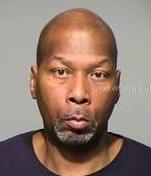
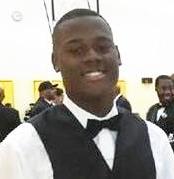
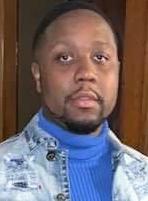
Eric Hansen was an 18-year-old White/Caucasian male from St. Francis in the Milwaukee area whose final known hours unfolded in downtown Milwaukee on September 27, 1983. Four days earlier, his father had seen him when Eric stopped by his apartment. Investigators later learned that Eric had been moving between friends and acquaintances and had previously told his mother that he intended to move to Indiana.
Contemporary and later accounts also reported that he had become involved in sex work and was known within Milwaukee’s gay community.
A crucial lead came weeks into the investigation when a 39-year-old Franklin man contacted authorities after seeing appeals for information in the Milwaukee media. He told Kenosha County sheriff’s investigators that he had seen Eric at approximately 2:30 a.m. on September 27. Eric was standing near a bus stop along South Water Street in downtown Milwaukee, reportedly near either East Buffalo Street or East Chicago Street and outside the building housing the Paradise Adult Book Store. Bars in the neighborhood had closed around 2 a.m., placing Eric in the area shortly afterward. Investigators believed the witness could have been among the last people to see him alive. A pathologist estimated that Eric had died roughly six to eight days before his remains were discovered, a window consistent with that final sighting.
On October 4, a week after Eric was last seen, his torso was discovered in a plastic trash bag in the wooded area near Petrifying Springs Park in Somers Township, Kenosha County. His head, arms and legs had been removed, and none of those remains were ever recovered. Accounts of the autopsy reported that the dismemberment had been carried out with a fine-toothed saw or hacksaw and that the torso had been drained of blood. The Kenosha County Sheriff’s Office continues to list the homicide as Cold Case No. 83-13716.
Without Eric’s head or hands, investigators faced the additional problem of identifying the remains. On October 11, authorities confirmed that the torso belonged to Eric by comparing postmortem X-rays with earlier medical X-rays. A severely decayed tooth that could be matched between the images was reportedly an important identifying feature. Investigators then began trying to reconstruct his movements, contacting friends and acquaintances throughout the Milwaukee area and asking anyone who had encountered him during his final days to come forward.
Early in the investigation, authorities considered the possibility that Eric had been targeted because he was gay. As investigators examined other violent deaths of young men in the Midwest, the case was also compared with the crimes of several known or suspected killers. The name that became most closely associated with the investigation was Larry Eyler, later known for a series of murders of young men in Illinois and Indiana. After Eyler was arrested in Chicago in 1984 for the murder and dismemberment of Daniel Bridges, Kenosha County detectives traveled to Chicago to investigate whether he could also have been responsible for Eric’s death. Contemporary reports said detectives saw similarities in the physical evidence, and Kenosha authorities continued discussing the possibility with investigators handling the larger series of killings.
Eyler was eventually convicted in 1986 of murdering Bridges and received a death sentence, but he was never charged with Eric’s murder. While he was imprisoned, investigators hoped to question him about other unresolved killings, including Eric’s, but he declined to cooperate while appeals were pending. By the time Eyler died in prison in March 1994, Kenosha authorities said they had previously wanted to interview him but did not regard him as a prime suspect at that stage. After his death, his attorney disclosed confessions to 21 other killings, principally in Illinois and Indiana, but the disclosures did not solve Eric’s Wisconsin homicide.
Other names explored over the years reportedly included convicted killers Joachim Dressler and Jeffrey Dahmer, but no publicly established evidence tied either man to Eric’s death. Modern reviews of the case describe those avenues as unresolved or unsuccessful rather than solved connections. In 2026, criminologist Clark Williams began a new independent, victim-centered examination of Eric’s life and final movements, seeking people who knew him or frequented Milwaukee’s Third Ward and Walker’s Point nightlife in the early 1980s. Williams has said the investigation lacks usable DNA evidence and has focused instead on reconstructing Eric’s relationships and movements in hopes that surviving witnesses may remember something overlooked decades earlier.
No person has been arrested, charged, tried or convicted for Eric Hansen’s murder. Despite decades of investigation and scrutiny of several possible suspects, the Kenosha County Sheriff’s Office continues to classify his death as an unsolved homicide. His remaining body parts have never been located, and the identity of the person who took him from downtown Milwaukee in the early morning hours of September 27, 1983, killed him and left his dismembered remains in the woods of Kenosha County remains unknown.