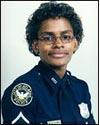
Nora Scott Harris, a 93-year-old woman from Atlanta, died on December 22, 1951, and for a time her death seems to have passed in the quiet, almost the way an old person’s death so often did in that era, with little reason for outsiders to stop and ask whether something darker had happened. Later reporting tied her final days to the house on Eason Street where Roberta Elder lived, and Harris was described as a friend who had been staying in that home.
As investigators began peeling back the history of that address, Harris’s death no longer stood alone. It became one more shadow in a house that had already seen too many funerals, too many sudden illnesses, and too many explanations that did not sit right once police started looking closely.
The turning point came not with Harris’s death itself, but months later in 1952, when Reverend William M. Elder died and a coroner tested for arsenic after being struck by the pattern of sickness and death inside the same household. That discovery widened the case dramatically. Police began examining a string of earlier deaths connected to Roberta Elder, and detectives said there was probable cause to connect her to still another death beyond the ones already under formal scrutiny. In the growing list of suspicious dead, Nora Scott Harris was named among those whose deaths investigators believed might fit the same poisoning pattern. Reports from the time and later historical accounts place her among the people who died mysteriously while living with or closely connected to Elder, as the case expanded into what newspapers called one of Georgia’s biggest murder investigations.
What made the story feel especially grim was the way the suspected method echoed through the other deaths around Elder. Investigators and later writers described arsenic as the poison at the center of the case, sometimes hidden in ordinary remedies or food. Witnesses in the broader Elder investigation said sickness often arrived after something had been eaten or administered at home, and police came to suspect that several deaths first blamed on pneumonia, food poisoning, or natural decline might actually have been caused by arsenic. In that atmosphere, Harris’s death took on a chilling new meaning. She was no longer remembered simply as an elderly woman who died in Atlanta in the winter of 1951, but as one of the people whose death may have been swallowed by a larger pattern before anyone recognized the pattern existed.
As for arrests and charges, the central suspect was Roberta Elder. She was arrested in 1952 after arsenic evidence was developed in the deaths of her husband and stepdaughters, and a coroner’s jury held her in connection with those killings. She was later convicted and sentenced to life in prison, but the conviction was for the murder of Reverend William Elder, not for Nora Scott Harris’s death. Historical accounts say Elder was linked by police to many other suspicious deaths, including Harris’s, yet the case against her was strongest where toxicology, exhumations, and witness testimony could be brought into court. So in Harris’s case, the record that survives points to suspicion and association rather than a separate prosecution: she was counted among the dead in Elder’s orbit, but there is no clear indication from the sources that anyone was specifically tried or convicted for killing Nora Scott Harris herself.
That leaves Harris’s story with the kind of ending that lingers. Her name survives not through a dedicated murder case file made famous on its own, but through the unraveling of another death that forced authorities to look backward. In the wake of that investigation, Nora Scott Harris emerged from the margins of the record as one of the people believed to have been caught in Roberta Elder’s deadly circle. The suspicion was serious enough that newspapers and later historians continued to place her among Elder’s likely victims, yet the justice system never fully resolved her death in a courtroom of its own. What remains is the image of an elderly Atlanta woman whose life ended before the alarm was finally raised, and whose death only began to speak once too many others had followed it.