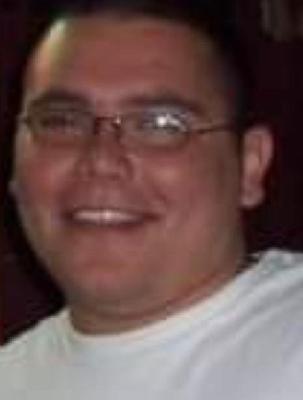
Timothy “Tim” Hack was a 19-year-old White/Caucasian male from the Hebron area of Wisconsin whose life ended after what should have been an ordinary summer night with his longtime girlfriend, Kelly Drew. On August 9, 1980, Tim and Kelly attended a wedding reception at the Concord House, a dance hall near Sullivan in Jefferson County. The high school sweethearts were last seen around 11:00 that night.
They were expected to meet friends afterward, but they never arrived, and neither returned home.
The following day, Tim's father began searching and discovered his son's 1977 Oldsmobile still sitting at the Concord House. The car was locked, and personal possessions including Tim's wallet, checkbook, and jacket had been left behind. There was no indication that the couple had simply decided to leave the area voluntarily. Their disappearance triggered an enormous search involving law enforcement officers, volunteers, ground searches, and aircraft. In the days that followed, pieces of Kelly's clothing were recovered along a rural road several miles from the reception hall, providing investigators with disturbing evidence that the couple had encountered violence after leaving the wedding.
For more than two months, Tim and Kelly remained missing. Eventually, squirrel hunters discovered their badly decomposed remains near the edge of a wooded area and cornfield outside Ixonia, roughly eight miles north of the Concord House. Dental records were used to identify them. Because of the condition of Tim's remains, investigators could not reconstruct every detail of his death, but examination of his clothing and body revealed a penetrating wound through the left rear portion of his shirt and damage to his ribs consistent with a knife wound. Authorities concluded that Tim had most likely been stabbed. Kelly's condition indicated that she had apparently been bound and strangled.
One of the men questioned during the original investigation was Edward Wayne Edwards, a drifter and convicted criminal who had recently moved to Wisconsin with his family. Edwards had stayed at the Concord Center campground and performed handyman work around the campground and Concord House property. When detectives interviewed him in September 1980, Edwards said he had been at the campground earlier on August 9 gathering materials for work on a sign and believed he had been home with his family that evening. Investigators also learned that Edwards had suffered a broken nose around that period. He attributed the injury to a hunting accident. At the time, however, police did not have physical evidence capable of proving that he had killed Tim and Kelly.
The investigation continued to circle back toward Edwards. In 1988, Jefferson County farmer John Simon contacted authorities and told them he had known Edwards when Edwards lived in the area. Simon remembered behavior and statements that caused him to wonder whether Edwards could have been involved in the murders. Edwards had been familiar with the rural area where the bodies were eventually found, and investigators learned that he and his family had left Wisconsin not long after the original investigation began. Detectives attempted to follow the lead, but without modern DNA technology there was still no evidence strong enough to charge him.
The break in the case came decades later through preserved evidence. Investigators had retained Kelly's clothing, including pants containing seminal fluid. In 2007, Wisconsin authorities used federal funding to have the evidence subjected to modern DNA testing. A complete DNA profile was developed, although initially there was no matching profile in the national DNA database. Then, in June 2009, Edwards' daughter contacted Wisconsin investigators and told them she believed her father might have been responsible for the Hack and Drew murders. Her information gave detectives a reason to take another close look at the man who had been questioned nearly three decades earlier.
Investigators traveled to Louisville, Kentucky, where Edwards was living, questioned him and obtained his DNA. Wisconsin State Crime Laboratory testing determined that Edwards was the likely source of the semen recovered from Kelly's clothing. The genetic evidence placed him directly in contact with evidence associated with the murder investigation and contradicted the distance he had placed between himself and the couple during the original inquiry. Authorities arrested Edwards at his Louisville home on July 30, 2009. Jefferson County prosecutors charged him with two counts of first-degree murder in the deaths of Tim and Kelly. He initially entered not-guilty pleas while proceedings began to return him to Wisconsin.
The case ultimately did not go to trial. On June 9, 2010, Edwards changed course and pleaded guilty in Jefferson County Circuit Court to murdering both Tim Hack and Kelly Drew. The pleas were part of a broader arrangement that also involved his admission to the 1977 murders of William “Bill” Lavaco and Judith Straub in Ohio. Edwards thereby formally admitted responsibility for a double homicide that had remained unresolved for almost three decades.
On June 21, 2010, Edwards returned to a Jefferson County courtroom for sentencing. Members of both families addressed the court and described the decades of grief, unanswered questions, and anger created by the killings. Edwards declined to make a statement. The judge imposed two life sentences for the murders of Tim and Kelly. Under the arrangements surrounding his cases, Edwards was to serve prison time in Ohio, where he had also received life sentences for the Lavaco and Straub murders.
Edwards later admitted another killing, the 1996 murder of a man he considered his foster son, Dannie Boy Edwards, and ultimately received a death sentence in Ohio for that crime. He claimed that the five admitted murders were the only killings he had committed, although investigators and others continued examining whether he could have been connected to additional unsolved cases. He never faced another trial involving Tim Hack because his guilty plea conclusively resolved the criminal prosecution. Edwards died of natural causes in an Ohio prison on April 7, 2011, bringing the prosecution of the man responsible for Tim's death to an end more than thirty years after the young couple disappeared from the Concord House.