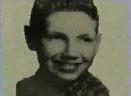
Thomas Aquinas Ashton, a 22-year-old male, was tragically killed on August 1, 1966, in Austin, Texas. Ashton, who was born on June 1, 1944, in San Francisco, California, had grown up in Redlands, California. He graduated Cum Laude from the University of Southern California in June 1965 with a degree in Political Science. Inspired by President Kennedy's assassination, Ashton joined the Peace Corps and was involved in various civil rights organizations, including CORE, the Redlands Young
Democrats, and the NAACP. He was at the University of Texas at Austin in the summer of 1966 to study Persian, as he was assigned to Iran as an English instructor by the Peace Corps.
On the fateful day of August 1, 1966, Ashton was leaving his Persian language class to meet up with other Peace Corps trainees at the Student Union. As he crossed the paved terrace above the University's Computation Center, he began to see bodies fall. Before he had a chance to duck for cover, a bullet from Charles Whitman, the infamous UT Tower sniper, pierced his chest. Ashton was pronounced dead at 1:35 pm at Brackenridge Hospital. The Peace Corps arranged for his body to be flown back home to Redlands, California, where he was buried at Hillside Memorial Park in San Bernardino County.
The UT Tower shooting, carried out by Charles Whitman, lasted for approximately 96 minutes and resulted in 15 fatalities and over 30 injuries. Whitman, a former Marine, had climbed to the observation deck of the UT Tower and began shooting at people on the campus below. The attack was eventually stopped by Austin police officers Ramiro Martinez and Houston McCoy, who reached the observation deck and killed Whitman. The incident left a lasting impact on the survivors and the community, with many of the injured living with physical and emotional scars for years.
There were no arrests or suspects other than Charles Whitman, who was identified as the sole perpetrator of the attack. The investigation into the shooting revealed that Whitman had been suffering from severe mental health issues, including a brain tumor that may have contributed to his violent behavior. The tragic event led to changes in law enforcement tactics and increased awareness of mental health issues in the years that followed.