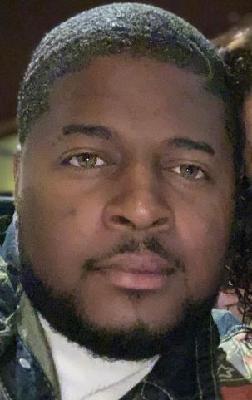
Dennis Lee, a 48-year-old white man, was the manager of the Mi-T-Fine Car Wash in Irving, Texas, when he was killed on the morning of March 20, 2000. The attack occurred before the business opened for the day and became one of the deadliest workplace shootings in the Dallas area at the time. Lee was inside the car wash with assistant manager Augustin Villasenor and cashier Rhoda Wheeler when former employee Robert Wayne Harris arrived at about 7:15 a.m.
Harris had worked at the business for approximately ten months but had been fired three days earlier after an incident in which he exposed himself to women at the car wash and was arrested.
Investigators and later court records established that Harris prepared for his return to the business. The day before the killings, he borrowed a friend's car even though he had access to his own vehicle. He also obtained a pistol through another friend. Because he had worked at the car wash, Harris knew that an armored-car pickup did not occur on Sundays and that the safe would contain the weekend's cash receipts on Monday morning. When he entered the business on March 20, he forced Lee, Villasenor and Wheeler into the office and ordered Wheeler to open the safe. After taking the money, Harris made all three get onto the floor. He then shot each of them at close range in the back of the head. Lee was also attacked with a knife and suffered a slash to his throat.
The violence continued when three more employees arrived for work without realizing what had already happened. Harris forced the newly arrived workers to kneel on the lobby floor and shot them in the back of the head at close range. Benjamin Villasenor and Roberto Jimenez Jr. were fatally wounded, while Octavio Ramos survived but was left with permanent disabilities. Lee, Wheeler and Augustin Villasenor died at the scene, while the other two fatal victims died after being taken for medical treatment. Authorities initially described robbery as a motive, noting that property and money had been taken, and the later criminal case showed that Harris had specifically known cash from the weekend would be available that morning.
Another employee, Jason Shields, arrived after the shootings and discovered bodies in the lobby. Harris was still inside and attempted to portray himself as someone who had merely come upon the crime scene. When Harris produced a knife, Shields became alarmed, managed to leave the building and went to a nearby doughnut shop to contact police. Harris followed him there and even briefly spoke with the 911 operator before fleeing. He then returned the borrowed vehicle to its owner and claimed that he had discovered bodies at the car wash.
After leaving the scene, Harris took steps to conceal evidence. Court records state that he went to the home of a friend, separated the stolen money from other property and discarded metal cash boxes, a knife, a crowbar and pieces of a cellular telephone in a wooded area. He bought new clothing, checked into a motel and later stayed at another friend's home. Police were searching for him as the investigation developed, and members of the public reportedly provided tips about a man matching his description. Harris was arrested the following morning, March 21, at the home where he had been staying.
Following his arrest, Harris was repeatedly advised of his rights and initially provided investigators with a written statement denying responsibility. Detectives confronted him with inconsistencies between his account and the physical evidence, and he subsequently gave an incriminating written statement. He also directed officers to the wooded location where he had discarded a duffel bag and items connected to the car wash robbery. During further questioning, Harris unexpectedly admitted involvement in a separate killing, the 1999 murder of Sandra Scott, and led investigators to the location of her remains.
Prosecutors charged Harris with capital murder in connection with the car wash killings and sought the death penalty. At trial in Dallas County in September 2000, the evidence presented against him included his statements to police, the circumstances showing advance preparation for the robbery, the recovered evidence and testimony concerning his actions before and after the murders. A jury convicted him of capital murder after a brief deliberation. During the punishment phase, the prosecution also presented evidence of Harris's extensive history of violent and aggressive conduct. The jury ultimately chose the death penalty, and the trial judge formally sentenced him to death.
Harris challenged his conviction and sentence on numerous grounds, including objections involving his statements to police, jury selection and the punishment proceedings. The Texas Court of Criminal Appeals rejected his claims and affirmed the conviction and death sentence. The court concluded that the evidence showed a calculated series of killings rather than an impulsive reaction, emphasizing that Harris borrowed a different vehicle, obtained a firearm in advance, knew when money would be in the safe, attacked employees at close range and attempted to destroy or hide evidence afterward. Authorities did not identify any co-defendants in the car wash murders; Harris was treated as the sole perpetrator.
Robert Wayne Harris remained on Texas death row for nearly twelve years. After his appeals and later attempts to stop the execution were unsuccessful, Texas carried out his death sentence by lethal injection on September 20, 2012. The prosecution of Harris therefore ended with a capital-murder conviction, a death sentence and his eventual execution, resolving the criminal case arising from the March 20, 2000 attack that killed Dennis Lee and four other car wash employees and permanently injured another worker.