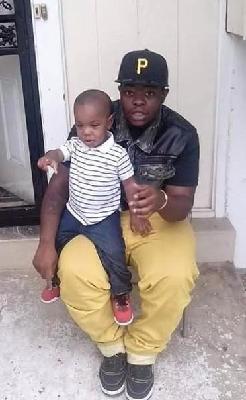
Darrick L. Wade was a 41-year-old Black man from St. Louis, Missouri, and his death left a quiet, aching absence that numbers and brief records can’t fully hold.
What’s known here is simple and heavy: a life ended. Whatever the exact date was, whatever the hour, whatever street or room or stretch of night it happened under, the result is the same—a person who once moved through a familiar city is no longer there to do so. In a place where routines can feel unbreakable, a loss like this breaks them anyway. Someone’s phone stops ringing. Someone’s chair stays empty. Someone’s name becomes something people say a little softer.
When information is scarce, the imagination tries to fill the gaps, but grief doesn’t need details to be real. It lives in the unanswered questions and in the ordinary moments that suddenly feel extraordinary: a last conversation that can’t be replayed, a plan that will never happen, a memory that turns sharper with time. St. Louis is a city of neighborhoods and histories, of families who know their blocks by heart, and a death like Darrick’s ripples outward—through relatives, friends, coworkers, and the people who may have only known him in passing, but knew him as real.
And there is something uniquely painful about a story that stops short. Without the circumstances laid out, without a public narrative that explains what happened, the mind is left holding a blank space where the truth should be. That emptiness can feel like another kind of wound, because it invites uncertainty into a grief that is already hard enough. It can make mourning feel unfinished, like a sentence that never reaches its period.
Still, even in the absence of those specifics, a person’s life is more than the moment it ended. Darrick was someone’s somebody. He belonged to a world of connections—people who recognized his voice, his habits, his laugh, the particular way he showed up. Those details aren’t listed here, but they exist, and they matter, because they are the parts that do not vanish just because the ending came too soon.
In cases like this, what families and loved ones often want most is simple: clarity and accountability. They want the truth named plainly, and they want the responsibility for that truth to land where it belongs. When that doesn’t happen quickly—or when it doesn’t happen publicly—it can feel like time is moving forward while the heart is stuck, still waiting at the edge of the same unanswered moment.
Darrick L. Wade’s name deserves to be spoken with care, because a name is not a statistic. It is the marker of a whole human being, and behind it is a circle of people who carry the loss into every new day. If nothing else is provided, then what remains is this: a life mattered, a death happened, and the space left behind is real—felt in the city he called home, and in the lives that will never be quite the same.