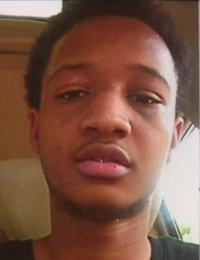
Calvin R. Shafer was a 29-year-old man from Knoxville, Tennessee, whose last morning began like an ordinary Friday and ended in a quiet stretch of Ball Camp Pike, where he was found lying in the roadway on October 7, 1983. He had been shot once at the base of the neck and once in the head, wounds so severe that the scene should have been wordless—yet he was still conscious when help arrived. In those fleeting moments, he reportedly said he knew who had shot him, but he never gave the name.
Not far away, investigators followed what looked like the story’s missing chapter written in blood: a trail leading back to Shafer’s white frame house roughly forty yards from where he was found. Inside that home, a witness who shared the residence described a life lived close to danger, saying Shafer used and sold drugs. The witness told investigators that someone came to the back door at around 9:30 a.m., and Shafer went with the person into another room, shutting the door behind them. Then came two gunshots—sharp, final punctuation in a conversation no one else could hear.
After the shots, the witness said she later saw Shafer lying in the road with several people standing around him. What happened in the minutes between the closed door and the roadside gathering has never been publicly pinned down: whether Shafer tried to run, whether he was pushed outside, whether he staggered out under his own strength, leaving that trail behind him like a dark breadcrumb path. But the details that remain suggest a brief, intimate encounter—someone close enough to speak with him at his back door, close enough to be trusted into the house, and close enough to pull the trigger.
The case has endured as one of Knox County’s unresolved homicides, still listed by the Knox County Sheriff’s Office Cold Case Unit. Public-facing case materials do not identify a suspect by name, and there is no public record of arrests, charges, trials, or convictions tied to Shafer’s killing in the agency’s summary of the case. For investigators, the most haunting fragment may also be the simplest: Shafer’s reported claim that he knew his shooter—an answer that seemed within reach, then slipped away before it could be spoken aloud.