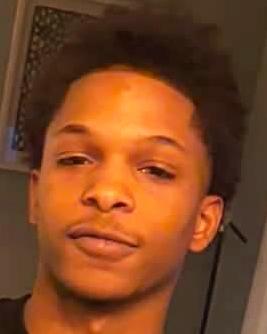
Larry Boyd, a 34-year-old Black male from Memphis, Tennessee, was killed on June 6, 2015, in the middle of a community gathering meant to push violence out of the neighborhood. Hastings Park in the Smoky City area had filled up as the day went on, with grills firing, kids playing, music rolling from a DJ, and people drifting from group to group as the “Keep the Peace” rally and “Stop the Violence” cookout unfolded.
Earlier in the day, Boyd moved through the park like anyone else
there for food and company. He walked up to a grill around midday and was given something to eat, then sat down, finished, and wandered off. As late afternoon approached, he returned to the flow of conversation, joining a loose circle of people talking face to face near the activity. The setting was public and crowded, the kind of place where the noise of music and laughter usually swallows small moments before they can turn into something bigger.
That afternoon, a shooter crossed the park and stepped into the circle, close enough to be within arm’s reach of the people talking. Witnesses later recalled the shooter’s purple Polo shirt, jewelry, and dark sunglasses, and that he pulled a small revolver from his waistband. He pointed the gun at Boyd’s chest and fired repeatedly at close range. Boyd threw his arms up and then bolted away from the circle, running out of the park as shots continued. In the confusion, the DJ tried to calm people by announcing the popping sound was fireworks, but the panic spreading through the crowd said otherwise.
From nearby, another witness saw the attack continue at point-blank range as Boyd tried to get away, and heard the shooter shouting afterward in a charged, agitated state, as if the shooting was the ending of something already decided. A 911 call went in immediately with a description of the shooter and where he was standing. When officers arrived, Boyd was down on the east side of the park, shot multiple times. No weapon was found around him, and investigators at the scene did not recover shell casings, a detail consistent with a revolver that keeps casings inside the cylinder.
At the medical examiner’s office, the autopsy documented five fresh gunshot wounds and recovered five bullets. Two of the wounds were fatal, and the combined injuries hastened his death; the manner of death was ruled a homicide. Investigators also collected his clothing and personal effects, and the inventory included small amounts of heroin and crack cocaine; toxicology testing also showed marijuana in his system.
Attention quickly focused on Derrick Jefferson. Witnesses identified him as the shooter from photographic lineups, and police went looking for him the next day at a residence on Oriole Street after learning where he could be found and what kind of car he used to leave the area. A black Cadillac with dark tinted windows was at the location, matching the description tied to the suspect; the vehicle was registered to Jefferson. He came to the door and, according to testimony, consented to searches of his bedroom and his vehicle, while his mother consented to a search of the home. Officers found a light purple Polo shirt in a dryer that matched the clothing witnesses described, along with jewelry that also fit what people remembered seeing on the shooter. Even so, the gun itself was never recovered from the park, the home, or the Cadillac. Jefferson was arrested, and his booking photo in the case was taken on June 7, 2015.
As the case moved toward trial, the defense argued that another person, Dennis Butler, also known as “Little D,” had prior conflict with Boyd and could have been responsible. Testimony described a tense argument between Boyd and Butler in the weeks before the shooting and presented the idea that Butler had access to Jefferson’s Cadillac on the day of the killing. Other testimony, however, placed Butler at the cookout in different clothing and described a pointed exchange where Boyd refused to shake Butler’s hand, after which Butler went to the east side of the park and greeted Jefferson. Not long afterward, witnesses described Jefferson running up with a gun and shooting Boyd. One witness chased after Boyd and caught him as he collapsed, holding him as he died.
Jefferson was charged with first-degree premeditated murder. A jury found him guilty, and he was sentenced to life imprisonment. His conviction and sentence were later upheld on appeal.