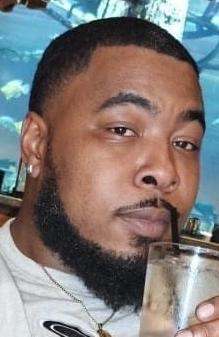
On the evening of July 17, 2015, a routine traffic stop in Memphis, Tennessee, ended in the fatal shooting of 19-year-old Darrius Stewart, an African American male. The incident began when Memphis Police Officer Connor Schilling, who is white, pulled over a car in which Stewart was a passenger due to a broken headlight. What started as a minor traffic violation quickly escalated into a deadly confrontation that would spark community outrage and legal battles for years to come.
During the
stop, Officer Schilling ran a check on Stewart's identification and discovered two out-of-state warrants. One was a juvenile warrant from Macon County, Illinois, for failure to appear on a criminal trespass charge. The other, also a juvenile warrant, was from Iowa City, Iowa, for two counts of second-degree sexual abuse. Upon finding these warrants, Schilling placed Stewart in the back of his patrol car without handcuffs. According to Schilling's account, when he later opened the door to handcuff Stewart and formally place him under arrest, the teenager became combative. Schilling stated that Stewart kicked the door into him, and a physical struggle ensued. He claimed that Stewart gained control of his handcuffs and used them as a weapon, striking him. Fearing for his life, Schilling said he fired his service weapon.
However, eyewitness accounts painted a starkly different picture of the events that transpired. Several individuals who witnessed parts of the altercation stated that Stewart was attempting to flee when he was shot. One witness reported hearing Stewart yell, 'I can't breathe,' just before the shots were fired. Another witness claimed to have seen Stewart stand up and start to run away as the officer fired. An autopsy later revealed that Stewart had been shot twice. One bullet entered his upper right chest, and the other struck his inner left arm and entered his chest. The medical examiner concluded that the shots were fired from a distance of no more than four feet.
In the aftermath of the shooting, the case was turned over to the Tennessee Bureau of Investigation. Despite a recommendation from then-Shelby County District Attorney Amy Weirich to charge Schilling with voluntary manslaughter, a grand jury declined to indict the officer. Subsequently, the U.S. Department of Justice conducted a review of the case to determine if there were any violations of Stewart's civil rights. In September 2016, the DOJ announced that it had found insufficient evidence to bring federal charges against Schilling. Officer Schilling later retired from the Memphis Police Department.
Darrius Stewart's family has continued to seek justice through the civil court system and by advocating for the case to be re-examined. They filed a wrongful death lawsuit against the city of Memphis and Officer Schilling. In 2019, a judge dismissed the claims against the city, but the case against Schilling was allowed to proceed. In February 2020, Stewart's mother filed a new $17 million lawsuit solely against Connor Schilling. The family and their supporters have held vigils and made public appeals to keep Darrius Stewart's memory alive and to push for a re-evaluation of the case. In February 2023, they formally requested that the new Shelby County District Attorney, Steve Mulroy, reopen the investigation into Stewart's death. As of late 2025, the outcome of this request and the status of the civil litigation remain ongoing matters in the pursuit of justice for Darrius Stewart.