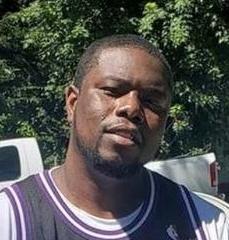
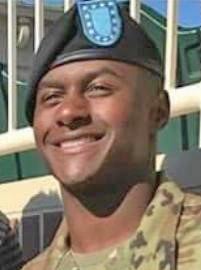
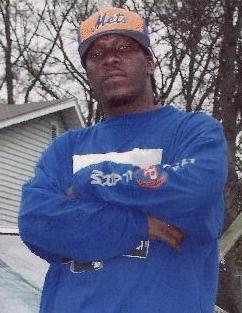
Jajuan Hubert Latham was a 12-year-old Black male from Knoxville, Tennessee, whose life ended in a burst of gunfire on the night of April 16, 2016. Although some later memorial databases list April 17, contemporary Knoxville reporting, police accounts, and his obituary place his death on April 16. Latham was a sixth-grade student at Bearden Middle School who loved basketball and played in an AAU league.
Earlier that Saturday, he and his father, Hubert Latham, had attended a celebrity basketball game at Fulton High School organized by former University of Tennessee basketball player Bobby Maze. The event carried an anti-violence message and honored Latham’s cousin, Zaevion Dobson, the Fulton High School student who had been killed in another gang-related shooting four months earlier while protecting friends from gunfire.
Hours after leaving the basketball event, Latham and his father stopped at Danny Mayfield Park in Knoxville’s Mechanicsville community to pick up a friend. A large gathering, described in later reporting as a birthday party, was underway at the park, with police estimating that as many as 200 people may have been present. Shortly before 10 p.m., gunfire erupted. Knoxville police said the initial investigation indicated that people at the gathering exchanged shots with occupants of two vehicles passing the park. Investigators recovered numerous shell casings from different-caliber weapons, evidence that several firearms had been discharged during the confrontation. Police characterized the violence as gang-related but repeatedly described Latham as an innocent victim who was not the intended target.
Latham was sitting in the back of his father’s SUV when bullets struck the vehicle. Several windows were shattered, and a bullet struck Latham in the head. His father was not wounded. Hubert Latham initially realized something was wrong when his son was no longer responding and then discovered that he was bleeding. He rushed him to a hospital, where medical personnel found the gunshot wound. Latham died shortly after 11 p.m. The violence also caused another devastating loss: Knoxville police later reported that a woman who was seven months pregnant fell while running for shelter during the shooting and subsequently lost her unborn child.
Investigators immediately began interviewing witnesses and trying to determine who had fired the weapons. On April 18, police detained several people described as persons of interest or witnesses and questioned them about the shooting. Those interviews produced what police called potential evidence and new investigative leads, but no homicide charges followed. The Knoxville Police Department’s Violence Reduction Task Force, including detectives from the Violent Crimes Unit, Organized Crime Unit and Repeat Offender Squad, also visited the residence of a person of concern as investigators attempted to reconstruct the exchange of gunfire. By April 28, police confirmed that more than one person of interest was in custody on unrelated charges. Their names were withheld because of the sensitivity of the continuing investigation, and police emphasized that none had been charged with Latham’s killing.
The investigation became more publicly focused in May when Knoxville police identified Marquez Travell Billingsley as a major person of interest. Billingsley was 18 at the time and was described by police as a known gang member. On May 17, Police Chief David Rausch stressed that Billingsley was being sought because detectives believed he possessed information that could move the homicide investigation forward; Rausch specifically said Billingsley was not considered a suspect at that point. Police had already been trying to locate him on unrelated outstanding warrants, initially reported as involving possession of a stolen weapon and reckless driving. As authorities continued searching for him, additional serious allegations were associated with his fugitive status, including aggravated robbery, aggravated assault, carjacking and possession of a stolen weapon.
The Tennessee Bureau of Investigation placed Billingsley on its Top Ten Most Wanted list on May 19. Authorities considered him armed and dangerous and warned the public not to approach him. Police said he had successfully avoided efforts to locate him, and investigators appealed to anyone assisting him to stop helping him evade capture. The unrelated allegations included an incident in which police said Billingsley and another person held two individuals at gunpoint with a MAC-10-style firearm, threatened to kill them, took a small amount of money, a cellphone and car keys, and fled in the victims’ 2004 Saturn. Those accusations, rather than Latham’s death, formed the legal basis for the effort to arrest him.
Billingsley’s flight ended on May 31, 2016, in Chattanooga. Tennessee Bureau of Investigation agents, U.S. Marshals and Chattanooga police officers took him into custody during a traffic stop near Dodds Avenue and East 23rd Street. He was subsequently transported back to Knox County and booked into the Knox County Jail during the early morning hours of June 1. Contemporary reporting listed his bond at $76,000. Although headlines sometimes described him as a man wanted in connection with Latham’s death, law-enforcement statements were more precise: he had been arrested on the separate warrants and was wanted for questioning as a person of interest in the homicide. Chief Rausch said that if investigators developed evidence establishing direct involvement in Latham’s shooting or the loss of the unborn child, appropriate charges would then be pursued.
Billingsley later appeared in court on the unrelated robbery, assault and carjacking allegations. At a July 28, 2016 preliminary hearing, an inmate named Christopher Horner testified that he and another person had been held at gunpoint and robbed by Billingsley and another individual. Horner told the court he was testifying despite the potential consequences of cooperating because he was doing so “for the kid,” an apparent reference to the attention surrounding Latham’s death. A judge sent most of the unrelated charges against Billingsley to a grand jury while declining to bind over one theft charge. Importantly, prosecutors still had not charged Billingsley with killing Latham, and the court proceedings did not establish that he had participated in the fatal gunfire.
As the months and years passed, the distinction between being a person of interest and being an accused killer remained critical. Reporting on what would have been Latham’s next birthday in March 2017 stated that no one had been charged in his death, even though a person of interest remained jailed on unrelated charges. Memorial coverage in 2018 continued to recount the killing without announcing an arrest or prosecution. In 2019, reporting surrounding legislation named for Latham again explicitly stated that no one had been charged with his killing. Available later coverage continues to describe the shooting as the gang-related attack that took his life without reporting a murder prosecution, trial or conviction for the person who fired the fatal shot.
The killing ultimately had consequences beyond the criminal investigation. Tennessee lawmakers enacted legislation commonly called the JaJuan Latham Act in 2019, increasing punishment in circumstances in which a minor is injured or killed during certain drive-by shootings. The measure grew directly out of the frustration surrounding a case in which an innocent student was caught in gunfire between others and yet no one had been brought to trial for the death. Despite the detention of multiple early persons of interest, the recovery of potential evidence, the intensive gang-violence investigation, and the highly publicized arrest of Marquez Billingsley on separate criminal allegations, publicly available reporting does not identify anyone who was ultimately charged, tried or convicted of Latham’s homicide.