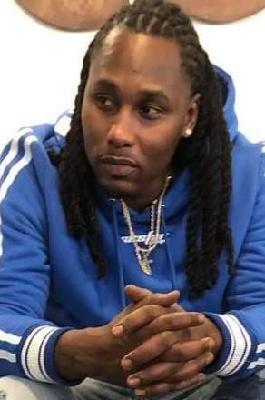
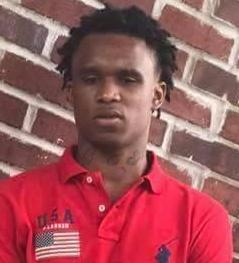
Justin Blake Beecham, a 29-year-old White/Caucasian male, was fatally shot during the early morning hours of October 8, 2019, at a residence on Middlefork Road in Luray, Tennessee. The Henderson County Sheriff Department report places the initial dispatch at approximately 2:09 a.m., when deputies were advised of a suspicious person beneath or near the carport at 5012 Middlefork Road.
While deputies were still responding, dispatch reported that the homeowner had the individual at gunpoint and then advised that the homeowner had shot him. When Deputy John Miller arrived, he found homeowner Jason Nobles standing beside Beecham in the driveway. Beecham still appeared to take a labored breath, but the deputy was unable to locate a pulse.
Deputies began compression-only CPR because of the severity of Beecham's facial and head injuries. Emergency medical personnel soon arrived and assumed treatment while investigators secured the property and began processing the shooting scene. Another responding deputy described Beecham as lying approximately ten yards outside the garage, with his head toward the residence and his feet pointing away from it. Three spent shell casings were marked in the driveway near where he was found.
The investigative report identifies Jason Nobles as the person who fired the weapon. Deputy Brandon Kizer reported that Nobles showed him the AR-15 rifle he said he had used. The rifle was inside the residence when Kizer collected it, with its magazine nearby, and both were secured as evidence. According to the account Nobles gave deputies, he had encountered Beecham in the garage near a door leading into the living portion of the residence. Nobles claimed Beecham attempted to move farther inside, that he ordered him to stop, and that he later saw what he believed was a dark-colored object in Beecham's hand as Beecham moved toward him. Nobles said he feared for his life.
In a more detailed interview, Nobles said he had awakened after hearing his dog barking, followed the dog toward the garage, and saw Beecham on the landing of the steps leading to the residence. Nobles said he went back for the AR-15 he kept for home defense and returned to the garage. According to Nobles, he spoke with Beecham for several minutes, learned that his name was Justin, and ordered him to remain seated while law enforcement was on the way. Nobles told investigators that Beecham later stood and began moving toward him despite repeated commands to stop. He claimed Beecham came within approximately five feet before he fired multiple rounds. Nobles also told investigators that he had prior military experience and explained that he had recently undergone shoulder surgery. During the interview, the report records Nobles becoming emotional and acknowledging that he had taken a man's life.
Nobles' fiancée, Gwendolyn Wealti, provided investigators with a partially similar account. She said Nobles awakened her and instructed her to call 911 because a man was in the garage. She reported seeing Beecham sitting on the steps while Nobles held him at gunpoint. After moving to a nearby laundry-room window, Wealti said she saw Beecham moving toward Nobles immediately before the gunfire.
The sheriff's report, however, contains an important detail from the actual 911 recording that adds another dimension to the sequence of events. Investigators wrote that approximately seven and a half minutes into the call, Wealti told the dispatcher that Beecham was trying to leave and that Nobles had fired a shot into the air. Shortly afterward, Nobles could reportedly be heard ordering Beecham to sit down and remain there until law enforcement arrived. Beecham was then heard responding to Nobles, followed by two additional gunshots that could be faintly heard on the recording. Wealti began crying and remained on the telephone with dispatch until deputies arrived.
That portion of the 911 recording is significant because a close family member has maintained that Beecham was attempting to leave when Nobles fired a warning shot. The family member also states that Beecham was unarmed, never entered the living portion of the house, and had been talking with Nobles for some time before the fatal shots were fired. According to the close family member, Beecham spoke politely during the encounter, told Nobles his name and talked about his children. While the sheriff's report records Nobles' claim that he believed Beecham had a dark object in his hand, the portions of the investigative file provided here do not document the recovery of a firearm or other weapon from Beecham. Among the specifically listed items located around his body were his cellular telephone and three spent shell casings.
The physical evidence showed that Beecham suffered devastating gunshot injuries. At the scene, a physician reported a projectile entering through the top of Beecham's head and exiting through his mouth, along with another entering his lower abdomen and exiting through his left buttock. A wound was also identified around his right knee. In a subsequent discussion with the Tennessee Medical Examiner's Office, investigators were told that the knee injury might have been associated with the projectile that exited his mouth, although that was only a preliminary assessment and had not yet been established as a final autopsy finding.
Crime-scene investigators photographed and measured the area and recovered three spent cartridge casings. Beecham's body was measured roughly 24 to 29 feet from the center column of the double garage doors, depending on whether the measurement was taken to his head or feet. His cellular telephone was also recovered nearby. The documented position of his body, the cartridge casings, the recorded 911 call, and the statements of Nobles and Wealti became central pieces of evidence for investigators reviewing whether the shooting was legally justified.
The investigative report does not describe an immediate arrest of Nobles. Instead, it states that the Henderson County District Attorney's Office was briefed and that the matter would be presented to a Henderson County grand jury. The pages provided do not contain the eventual grand-jury disposition or record a criminal charge resulting from the shooting.
A close family member says the family later learned that no prosecution would occur and strongly disagrees with that outcome. The family member states that relatives repeatedly requested the sheriff's investigative file and did not receive it until approximately a year later. She believes that delay made it considerably more difficult for the family to challenge how the case had been handled. She also alleges that Nobles owned a business in Jackson, Tennessee, and had a friendship with the district attorney. Those assertions represent the family's account; the investigative report provided does not independently establish a relationship between Nobles and the prosecutor.
For Beecham's family, one of the most troubling parts of the investigative record is the contrast between the accounts surrounding his movements immediately before the fatal gunfire. Nobles told investigators that Beecham advanced toward him until he was only a few feet away, while Wealti similarly told investigators she saw Beecham approaching Nobles before the shots. Yet the preserved 911 account also records Wealti telling dispatch that Beecham was trying to leave when Nobles fired a warning shot. The report therefore documents both the self-defense explanation provided by the shooter and a contemporaneous statement indicating that, at an earlier point in the confrontation, Beecham was attempting to leave.
No arrest, trial, or conviction arising from Beecham's death is documented in the material provided. What the sheriff's own investigative file establishes is that investigators knew who fired the shots, recovered the AR-15 identified as the weapon used, preserved the 911 recording, documented three spent cartridge casings, interviewed the shooter and his fiancée, and referred the matter to the district attorney and grand jury. Beecham's family continues to dispute the conclusion that the shooting warranted no criminal prosecution and maintains that he was unarmed and trying to leave when the confrontation escalated into the gunfire that ended his life.