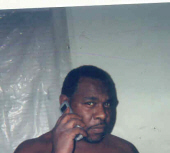
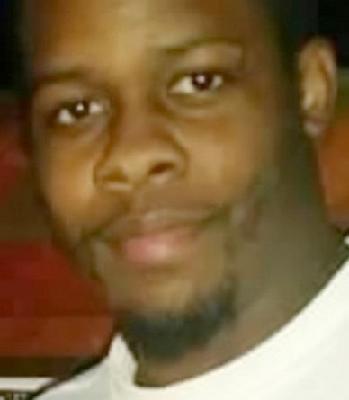
Gregory Jones, a 42-year-old male from Chester, Pennsylvania, died on February 21, 1995, leaving behind the kind of loss that is difficult to measure when so few public details remain available. What is known is painfully brief: his name, his age, his gender, his connection to Chester, and the date his life ended. Beyond that, the public record offers little about who he was, what he loved, who depended on him, or what he still hoped to do.
Yet even without those details, his death represents far more than an entry in a record. It represents a man whose life mattered, a family and community left with grief, and a story that should not be allowed to fade simply because time has passed.
The absence of information surrounding Gregory’s death is itself heartbreaking. There is no clear public account describing the moments before he died, what circumstances led to his death, or whether anyone witnessed what happened. There is no widely available narrative that explains whether his death followed an argument, a sudden act of violence, a targeted attack, or some other chain of events. The silence around those details can be especially painful for the people who cared about him, because when answers are missing, grief often has nowhere to rest. Families are left not only mourning the person they lost, but also wondering what really happened and whether the truth was ever fully known.
Gregory was from Chester, Pennsylvania, a city with deep history, strong families, and generations of people who have endured hardship while continuing to hold on to community. In a place where many lives intersect through neighborhoods, relatives, friendships, schools, churches, workplaces, and everyday routines, the death of one person can ripple outward in ways that public records never capture. Gregory may have been a son, a brother, a father, an uncle, a cousin, a friend, a neighbor, or someone whose presence was woven into the daily lives of others. His absence likely changed ordinary moments for those who knew him: an empty chair, a phone call that would never come, a familiar face no longer seen on the street, a voice remembered but no longer heard.
What makes cases like Gregory’s especially sorrowful is that the years can pass without bringing the clarity people deserve. February 21, 1995, may be just a date to anyone reading about it decades later, but for those close to him, it may have become a permanent dividing line: life before Gregory died, and life after. Anniversaries, birthdays, holidays, and family milestones can reopen the wound. The passage of time does not erase the need for answers. It often deepens it, because every year without a public resolution can feel like another year in which the person lost has not been fully acknowledged.
There is no publicly available information provided here identifying any suspect or suspects in Gregory Jones’s death. No arrests have been described, and no charges have been linked to a named person. There are also no details available indicating that anyone was prosecuted, convicted, sentenced, or otherwise punished in connection with his death. That lack of a known resolution leaves the case in a painful space, where the loss is known but the accountability is not. For families and communities, that can feel like a second injustice: first the death itself, and then the absence of a clear answer about who was responsible.
Even when official details are scarce, Gregory’s life should not be defined only by how it ended. He was 42 years old, old enough to have built memories and relationships, but still young enough to have had years ahead of him. At 42, many people are still working toward dreams, raising children, supporting relatives, reconnecting with old hopes, or trying to find peace in the next chapter of life. Whatever Gregory’s path looked like, it was cut short. The people who knew him were left to carry memories instead of making new ones with him.
The lack of public information does not make Gregory’s story less important. In many cases, the people most affected by a death are the ones who remember the details that never made it into articles or records: how a person laughed, how they showed up for others, the music they liked, the places they went, the things they said, the way their presence filled a room. Those memories are part of the truth too. They remind us that Gregory was not simply a case, a statistic, or a forgotten name. He was a human being whose death left real people hurting.
For anyone who loved Gregory Jones, the years since 1995 may have carried unanswered questions and quiet pain. They may have wondered whether someone knew more than they said, whether the investigation had leads that never became public, or whether justice was ever within reach. Without known arrests, charges, convictions, or sentencing, the public record does not offer the closure that families so often need. What remains is the hope that his name continues to be spoken with dignity, that his life is remembered beyond the limited facts available, and that anyone with knowledge of what happened understands the weight of silence.
Gregory Jones’s death stands as a reminder that every unsolved or publicly unresolved case belongs to a real person. His story deserves care, not because every detail is known, but because so much is not. The absence of answers should not become an absence of remembrance. He was here, he lived, he mattered, and his death on February 21, 1995, in Chester, Pennsylvania, remains a loss deserving of compassion, attention, and respect.