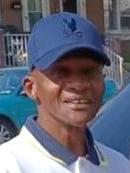
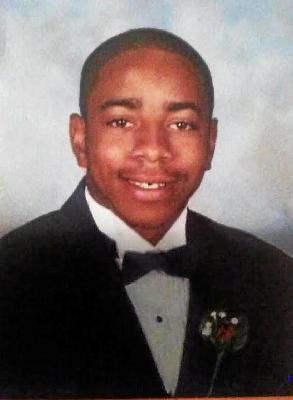
On August 14, 1998, Damon Hastings, a male from Chester, Pennsylvania, was shot and killed in a case that began with personal jealousy and ended in a first-degree murder conviction. The available online records describe his death as a fatal shooting in Chester, and the later court record identifies James E. McLaughlin as the man prosecuted for shooting and killing him.
The case centered on tensions involving a former girlfriend.
A Delaware County Daily Times report preserved online stated that the shooting was triggered by “bad blood” after McLaughlin broke up with his girlfriend and later saw her in a car with Hastings, who was described as an ex-boyfriend, at a liquor store in Delaware. That encounter appears to have been the spark for the violence that followed. What might have begun as jealousy or anger over a relationship became a homicide case in Delaware County court.
McLaughlin, who was 27 and lived on the 900 block of West Ninth Street in Chester, was arrested and brought to trial for Hastings’ killing. On October 5, 1999, a jury convicted him of first-degree murder and recklessly endangering another person. Court records later summarized the trial by stating that McLaughlin was found guilty by a jury of shooting and killing Hastings. The records also indicate that eyewitness testimony played a major role in the prosecution’s case, with five eyewitnesses testifying against McLaughlin at trial.
On November 9, 1999, McLaughlin was formally sentenced. He received life imprisonment for the murder conviction. He was also sentenced to a concurrent term of three to twenty-three months on a firearms charge and a consecutive term of one to two years for reckless endangerment. A newspaper account of the sentencing described an emotionally charged courtroom atmosphere, with relatives reacting strongly before McLaughlin was formally sentenced to life in prison. The report said McLaughlin was not in the courtroom when heated words were exchanged between relatives and a key Commonwealth witness, and sheriff’s deputies quickly calmed the situation.
McLaughlin continued to challenge the conviction after trial. His post-conviction efforts included claims of ineffective assistance of counsel and newly discovered evidence. In later federal habeas proceedings, he argued that statements from Gordine Miller and Darnley Belgrave supported his claim that the shooting was accidental or that he did not have a gun when he approached the victim’s car. One statement reportedly claimed McLaughlin did not have a gun in his hand when he approached the car; another involved a recantation and claims about what witnesses had said regarding the shooting.
The courts did not accept those later claims as grounds to disturb the conviction. The federal court noted that the allegedly new evidence appeared to have been discoverable earlier, that there were credibility concerns with at least one recanting witness, and that five eyewitnesses had testified against McLaughlin at trial. The court found the newly discovered evidence claim “plainly meritless” in the context of the habeas petition and denied McLaughlin’s request to stay the federal proceedings while he pursued additional state-court remedies. His petition was dismissed without prejudice for failure to meet exhaustion requirements.
The available online record therefore points to a solved prosecution rather than an unsolved case. James E. McLaughlin was the identified suspect, was convicted by a jury of first-degree murder in Hastings’ shooting death, and was sentenced to life in prison.