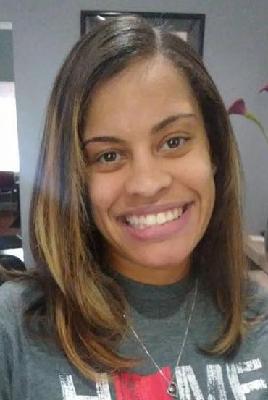
Emily Sarah Murray was a 21-year-old White woman with a joyful and caring spirit, known for her kindness and enthusiasm. Born on February 19, 1980, she grew up mostly in Shaker Heights, Ohio, and was deeply involved with the Christ Episcopal Church and the Youth Ministry of the Diocese of Ohio. Emily was a junior at Kenyon College in Gambier, Ohio, majoring in philosophy with the aspiration of becoming an Episcopal priest. She was an adventurous soul who had traveled to Italy, New Zealand, and Japan, and had spent a semester studying in Oxford, England. Her family, including her parents Thomas and Cynthia Murray and her sister Kathleen, described her as a "complete joy" with whom they shared a very close relationship. To support herself, Emily worked as a server at Pirate's Cove, a restaurant near her college dormitory.
The night of Friday, November 3, 2000, was Emily's last shift at Pirate's Cove, as she had recently quit the job. Friends had stopped by the restaurant to celebrate with her. She clocked out at 3:07 a.m. and was last seen by the bartender a little before 3:30 a.m., looking for her keys. A kitchen worker named Gregory McKnight had clocked out just eight minutes before her. When Emily failed to return to her dorm or show up for a party later that day, her friends grew concerned, as it was unlike her not to let anyone know her whereabouts. Her Subaru Outback was also missing from campus.
For five weeks, Emily's disappearance remained a mystery. The break in the case came on December 9, 2000. Vinton County sheriff's deputies went to a rural trailer near Ray, Ohio, about an hour's drive from Kenyon, to serve an indictment on Gregory McKnight for an unrelated burglary. McKnight was not home, but parked behind the trailer was Emily's Subaru. After obtaining a search warrant, investigators entered the trailer and found a blood trail leading down a hallway. In a spare bedroom, they discovered Emily's body rolled in a carpet. She had been killed by a single gunshot wound to the head from a high-powered weapon.
The investigation at McKnight's property uncovered an even more gruesome scene. During a further search, investigators found the scattered and burned remains of another person. These were later identified as Gregory Julious, a 20-year-old from Chillicothe who had been missing since May 2000. McKnight, who had a previous murder conviction from when he was 15, was arrested. Evidence found in his trailer included spent shell casings and bloodstained duct tape.
Gregory McKnight was charged with aggravated murder, kidnapping, and aggravated robbery for Emily's death, and murder for the death of Gregory Julious. His trial began in October 2002. The case drew national attention when the judge initially ruled that Vinton County could not afford a death-penalty trial, a decision he later reversed. On October 10, 2002, after less than an hour of deliberation, a jury found McKnight guilty on all counts. He was sentenced to death for the aggravated murder of Emily Murray, plus consecutive sentences of 15 years to life for the murder of Gregory Julious and 10 years each for kidnapping and aggravated robbery.
In a remarkable display of their faith and principles, Emily's parents, Thomas and Cynthia Murray, publicly opposed the death penalty for their daughter's killer. Before the sentencing, they issued a statement saying, "Emily would regard it as a tragedy and an abomination if another human being were put to death in her name." This stance drew widespread attention to the case, highlighting a perspective on justice rooted in compassion rather than retribution.
The case has continued through years of appeals. McKnight's lawyers have raised issues of racial bias, arguing the death penalty was sought for the murder of Emily, who was white, but not for Gregory Julious, who was Black. In 2020, his attorneys sought a new trial, alleging that white jurors had used racial slurs during the 2002 deliberations. As of March 2023, Gregory McKnight remains on death row at the Chillicothe Correctional Institution. Emily's memory is honored by those who knew her and by a fund established in her name at an Episcopal conference center. Her former high school classmate, the novelist Celeste Ng, wrote a poignant essay about her, remembering the bright, poetry-loving young woman whose life was tragically cut short.