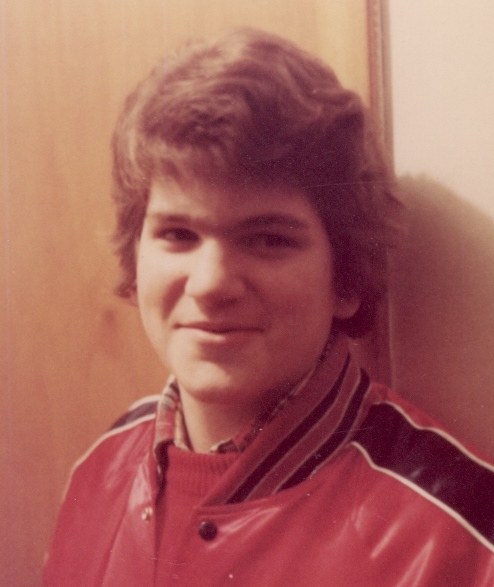
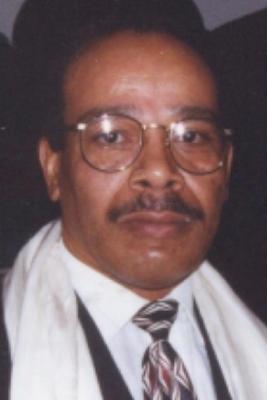
Anthony E. “Packy” Brown, a 46-year-old man originally from St. Vincent in the West Indies, died on October 12, 2016, after being shot near his residence in Columbus, Ohio. Born on July 2, 1970, Brown was also known to friends and neighbors as “Tone.” His death followed a violent confrontation outside his home at 480 East Markison Avenue, where multiple gunshots were fired shortly before noon. What began as an ordinary Wednesday morning ended in tragedy, leaving Brown's family grieving and investigators working to reconstruct a shooting involving several individuals, multiple firearms, and a vehicle that had traveled to Ohio from Michigan. Brown was transported to Grant Medical Center, where he was pronounced dead.
His death eventually resulted in arrests, criminal charges, a murder conviction, and an appellate court decision that documented the circumstances surrounding his final hours.
Earlier that morning, Brown had visited a nearby friend, Alphonse Williams, who lived on Southwood Avenue, approximately half a block from Brown's residence. According to testimony later presented in court, Brown appeared frightened and anxious. He told Williams that he believed someone had been driving around his block and expressed concern about what might be happening. Brown asked his friend to accompany him back to his residence to check the property. The two men walked through the home and found nothing obviously suspicious. Williams remained with Brown for approximately 15 minutes before returning to his own residence. Neither man could have known that the neighborhood would soon become the scene of a deadly shooting.
At approximately 11:30 a.m., another witness, Demetri Robinson, arrived on East Markison Avenue to pick up Max Holder, who lived with Brown and helped Demetri operate a mobile food cart. As Demetri approached, a dark Chevrolet Impala with Tennessee license plates arrived near the residence. The vehicle contained four individuals, and Holder began speaking with some of the occupants. After a conversation that Demetri could not hear, Holder entered the Impala rather than leaving for work. Concerned that something was wrong, Demetri followed the vehicle to a Kroger grocery store on Parsons Avenue. Holder and another man entered the store, and Demetri followed them inside. Holder subsequently told Demetri to meet him back at the house. By the time Demetri returned to the neighborhood, word had already spread that Brown had been shot.
Other witnesses described suspicious activity near Brown's residence shortly before the gunfire. Charles Mowery, who sometimes stayed in the adjoining portion of the duplex at 478 East Markison Avenue, testified that he encountered Anthony Robinson outside the property that morning. Robinson asked Mowery to purchase cigarettes for him, explaining that he was waiting for someone and could not leave. Mowery recalled Robinson wearing a black hooded sweatshirt. Approximately half an hour later, Mowery was inside the adjoining residence when gunshots erupted. One bullet entered the property, forcing him to take cover behind a refrigerator. When he looked outside, he observed several individuals near a dark-colored sedan. Some entered the vehicle while another person ran down the alley. The vehicle then departed toward Southwood Avenue.
Williams also heard the shooting from his nearby home and rushed toward the alley. He testified that he could see individuals firing weapons and could hear Brown screaming. A Chevrolet Impala traveled through the alley as the confrontation unfolded. When the gunfire stopped and the vehicle departed, Williams saw Brown lying on the ground. He called 911, while neighbors gathered near the scene. At approximately 11:57 a.m., Columbus police officers were dispatched to the 480 East Markison Avenue area following reports of gunfire. Responding Officer Heidi Graber discovered Brown lying in the alley, bleeding from his mouth and chest. The back door of his residence was open, and investigators subsequently found that bullets had penetrated the front door, which remained locked.
Crime scene investigators recovered evidence indicating that at least two firearms had been discharged during the confrontation. Officers documented bullet holes in the adjoining residence and collected. 40-caliber and. 45-caliber cartridge casings. A. 40-caliber Glock 23 pistol was recovered near a grill behind a nearby property at 522 East Markison Avenue. Forensic examinations established that the recovered. 40-caliber casings had been fired from the Glock, while the. 45-caliber casings came from another firearm. An autopsy conducted by Franklin County Deputy Coroner Dr. Donald Pojman established that Brown had sustained gunshot wounds to his right chest and lower back. His death was attributed to gunshot wounds to the torso. The physical evidence, witness accounts, and recordings from surveillance cameras at Brown's residence became important components of the subsequent criminal investigation.
The investigation eventually focused on Anthony Robinson and Jason J. Hicks, both of whom were connected to the events surrounding the shooting. Hicks himself had been wounded by gunfire while standing on the front porch of Brown's residence at approximately 11:53 a.m. Following the incident, Hicks was transported to Detroit, Michigan, where he received hospital treatment. Investigators established that the Chevrolet Impala involved in the incident had been rented by Hicks's wife in Eastpointe, Michigan, on October 10, 2016. Although the rental was scheduled to continue until October 24, the vehicle was returned on October 14, just two days after Brown's death. On November 3, 2016, authorities arrested Robinson in Detroit, while Hicks was taken into custody at a Detroit hospital. These developments provided investigators with two suspects connected to the deadly confrontation.
On November 14, 2016, a Franklin County grand jury indicted Robinson on charges that included kidnapping, two counts of aggravated murder, two counts of murder, and tampering with evidence. Firearm specifications accompanied the charges. Hicks was also named as a defendant in the indictment on the kidnapping, aggravated murder, and murder counts. Prosecutors alleged that the defendants were involved in the events that culminated in Brown's death. Although both individuals faced serious accusations, their criminal responsibility had to be determined through the judicial process. The available appellate records establish that Hicks was arrested and indicted, but do not establish his ultimate trial outcome or whether he was convicted or sentenced.
Robinson's case proceeded to a jury trial beginning October 23, 2017, in Franklin County Common Pleas Court. Before the trial, prosecutors dismissed the kidnapping charge and one aggravated murder count against him. They also amended one murder charge to specify felonious assault as the underlying offense. During the proceedings, prosecutors presented witness testimony, surveillance recordings, forensic findings, and evidence connecting Robinson to the area immediately before the shooting. One neighbor, Monha Cooper, testified that she recognized Robinson walking near Brown's residence with Holder and Hicks shortly before gunfire erupted. She also identified Robinson in surveillance footage wearing black clothing. Prosecutors argued that Robinson had positioned himself near the front porch and fired shots toward Brown's residence while Hicks and Holder approached the front door.
The surveillance footage became particularly important because it helped establish the sequence of movements immediately before the shooting. Recordings showed Holder, Hicks, and Robinson approaching the front of Brown's residence shortly before 11:52 a.m. Holder approached the door first, and Hicks subsequently stood near the entrance while apparently speaking with someone inside. Prosecutors maintained that Robinson remained off to the side, in an area where investigators later recovered spent cartridge casings. Their reconstruction suggested that Brown attempted to escape through the rear of his residence as the confrontation intensified, only to encounter further gunfire near the alley. The prosecution's account was supported by the location of Brown's wounds, the recovered firearms evidence, and witness descriptions of the men leaving the scene. However, the defense challenged the prosecution's interpretation, arguing that no witness had actually observed Robinson firing a weapon and that his presence near the residence was insufficient to establish his guilt.
After hearing the evidence, the jury found Robinson guilty of felony murder, concluding that Brown's death resulted from the commission of felonious assault. The jury did not find him guilty on the other remaining counts and rejected the firearm specification associated with the murder conviction. On November 7, 2017, the trial court entered its judgment and sentenced Robinson to 15 years to life in prison. The verdict represented a significant development for Brown's family, bringing a murder conviction approximately thirteen months after the shooting.
Robinson subsequently appealed his conviction to the Ohio Tenth District Court of Appeals, challenging the sufficiency and weight of the evidence presented against him. He also argued that the trial judge had improperly instructed jurors that they could consider his departure from Ohio as potential evidence of consciousness of guilt. The defense maintained that his presence in Michigan several weeks after the shooting did not necessarily establish that he had fled to avoid prosecution. The appellate court examined the testimony describing Robinson's activities before the shooting, the surveillance evidence, the movements of the vehicle, and the circumstances surrounding his arrest in Detroit. On February 14, 2019, the appellate court rejected his arguments and affirmed his conviction. The court determined that the evidence supported the jury's verdict and that the trial court had not committed reversible error in permitting the jury to consider the circumstances of his departure. Robinson's sentence of 15 years to life therefore remained in effect following that appeal.
Beyond the legal proceedings, Brown's death left a lasting loss for his loved ones. His obituary remembered him as a father and a member of a large family. He was survived by his children, siblings, and other relatives who mourned his unexpected death. A celebration of his life was held on October 27, 2016, at Wayne T. Lee Funeral Service on East Main Street in Columbus, with visitation followed by a memorial service. He was laid to rest at Evergreen Cemetery. While the criminal proceedings focused on the violent circumstances of his death, his family was left to remember the person they had known long before the shooting and the relationships that had shaped his life.
The death of Anthony E. “Packy” Brown remains a case marked by the circumstances of a confrontation that escalated into deadly gunfire in a residential Columbus neighborhood. Court testimony established that Brown had expressed concerns about suspicious activity near his home shortly before the shooting, and investigators ultimately reconstructed the incident through witness accounts, surveillance evidence, and forensic examinations. Authorities arrested Anthony Robinson and Jason J. Hicks in November 2016, and Robinson was subsequently convicted of murder and sentenced to 15 years to life in prison. His conviction was upheld on appeal in February 2019. The ultimate disposition of the charges against Hicks could not be confirmed from the available records, nor was a later change to Robinson's sentence independently established. Although the judicial process produced a conviction, the tragedy continued to affect those who knew Brown. His case stands as the story of a father whose life ended suddenly outside his own home, a lengthy criminal investigation that resulted in prosecution, and a family left to carry forward his memory.