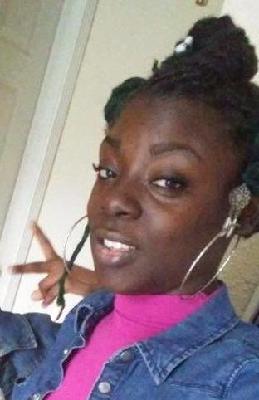
Tiesha Nix was a 40-year-old Black woman from New Orleans, Louisiana, known to family and friends as “Tee Tee” Nix Stewart, a native of the city who had built a life with her husband, Kedrich Stewart Sr., their six children, and a growing number of grandchildren. Her obituary paints the picture of a woman at the center of a large, blended family, surviving the earlier loss of a son and still anchoring everyone around her with affection, food, and laughter.
She was living in nearby Waggaman at the time of her death, but her roots and relationships were deeply intertwined with New Orleans, where siblings, parents, cousins, and longtime friends remembered her quick smile and her devotion to her children and grandchildren.
On the night of Monday, December 3, 2012, her 25-year-old daughter, Renesha Nix, was at her apartment in the 6800 block of Parc Brittany Boulevard in New Orleans East, arguing with her estranged boyfriend, 22-year-old Keith Phillips, the father of her infant son. Police later said that, to avoid a physical confrontation, Renesha called her mother to come pick her up, prompting Tiesha to drive to the complex and pull into the parking lot. But Renesha herself has since corrected that public version of events, explaining that she did not call her mother that night; instead, a friend called Tiesha for help while Renesha was in the middle of the escalating argument.
When Tiesha arrived at the apartment complex parking lot, she stepped straight into the chaos gripping her daughter’s life. According to investigators, she saw the altercation between Renesha and Phillips unfolding in front of the building. In an instant, the confrontation turned deadly. Witness accounts collected by police describe Phillips turning toward Tiesha and firing a single shot into her head, killing her almost immediately in the parking lot. As Renesha tried to run for help, Phillips turned the gun on her and opened fire; she has said that he shot her seven times as she fled, and that she “died and came back,” surviving only after being brought back from the brink during treatment. Public reports from that night record that she was critically wounded and rushed to a hospital, while her mother was pronounced dead at the scene.
Phillips fled the area on foot, leaving the parking lot spattered with evidence of the attack and a family shattered in seconds. Police launched a search and publicly identified him as the suspect, describing him as Renesha’s estranged boyfriend and issuing a warrant on one count of second-degree murder for Tiesha’s death and one count of attempted second-degree murder for the shooting of Renesha. In the days that followed, authorities also noted that Phillips was no stranger to law enforcement: he had prior arrests for simple battery, domestic violence, illegal carrying of weapons, and driving on a suspended license, suggesting a documented pattern of volatility and violence before the homicide in the Parc Brittany parking lot.
Two days after the shooting, the manhunt came to an end when Phillips surrendered to New Orleans police. On December 5, 2012, he was booked into Orleans Parish custody on charges of second-degree murder in the death of Tiesha and attempted second-degree murder in the shooting of Renesha. Those charges placed the case squarely in the criminal courts, but publicly accessible records and news stories do not clearly spell out what happened in the years that followed—whether there was a jury trial, a plea agreement, or a formal conviction and sentence. What is documented is the immediate legal framing: authorities treated the killing as a domestic-violence homicide that grew out of a dispute between a young mother and an estranged partner, and the woman who rushed to help her daughter paid with her life.
In the years since, grief for Tiesha has continued to echo through her family’s words. Messages left in her online obituary speak of a woman who “glowed” when she talked about her husband, who looked after children who weren’t biologically her own as if they were, and whose presence was woven into everyday routines that friends and relatives have struggled to recreate without her. For Renesha, survival has carried the additional burden of seeing the most traumatic night of her life told and retold by strangers. Her insistence on correcting the details—who called her mother, how many times she was shot, what she went through as she fought for her life—adds a raw, personal layer to the official record, a reminder that behind the headlines and police bulletins are people still living with the weight of what happened in that parking lot on a December night in New Orleans.