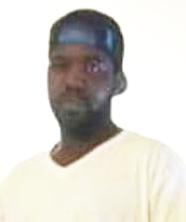
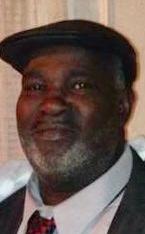
Jed Howard, a 46-year-old Black man, was killed in Shreveport, Louisiana on May 11, 2015, in a crime that seemed designed to erase itself. Early reports from local media described him being shot at his home in the 8200 block of Wildbriar Drive, with his black Saturn taken in the same violent sweep, as if the killer wanted distance as quickly as possible.
Within hours, the car surfaced again—not intact, but reduced to burned remnants near a wooded area close to the 3800 block of Camrose Lane, turning a personal vehicle into a smoky clue left out in public.
Court records later painted a tighter, darker scene of what responders found that day: a fire call at an apartment complex in Shreveport, investigators determining the blaze was intentionally set, gasoline saturating the space, and a victim discovered unburned with a fatal gunshot wound to the head. The killing and the fire were treated as parts of the same act—one to end a life, the other to bury evidence. According to the factual basis read in court, the victim’s car was also stolen and later found torched on Camrose, with surveillance video capturing a person the state alleged was connected to the burning.
As detectives followed the trail, the case began to hinge on identification and the quiet accumulation of details that are hard to explain away. The state’s account described family members identifying Jeremy Rachal as the person seen in the surveillance footage near the burned vehicle, and investigators tying him to property taken from Howard’s residence, including a television later traced through people close to Rachal. The same court record described Rachal suffering a severe burn around the time of the fires and giving conflicting explanations for how it happened—an injury prosecutors argued fit the story of arson better than coincidence.
Jeremy Xavier Rachal was ultimately charged by indictment with second-degree murder and aggravated arson, and in July 2019 he entered an Alford plea to second-degree murder—pleading guilty while maintaining innocence—under terms that included a life sentence at hard labor without the benefit of parole, probation, or suspension of sentence. Under the plea agreement described in the appellate record, the aggravated arson charge was dismissed, along with other charges from separate dockets, and the state agreed not to file an habitual offender bill; he also pled guilty to aggravated battery in the same proceeding, with that sentence set to run concurrently. The appeal decision emphasized that the prosecution’s case was supported by surveillance video, witness identification, evidence connected to stolen property, injury evidence, and a claimed confession made on an inmate tablet while in jail—threads that, taken together, formed the backbone of the state’s narrative from the burned car back to the fatal shot.