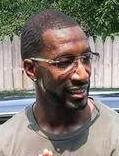
Melvin Jennings, a 26-year-old Black man, was shot on the evening of May 20, 2017, outside a family home on Detroit’s east side, in the 5800 block of Woodhall Street near Chandler Park Drive and Cadieux Road. He had come to the house and found tensions already in the street—people he knew clustered nearby, voices raised, the kind of argument that can feel ordinary right up until it isn’t.
He stepped toward it anyway, trying to settle things down, and in the sudden burst of gunfire that followed, he was hit. He was taken to a hospital, but he did not survive.
In the days immediately afterward, those closest to him described the scene as a clash between two men who didn’t know each other, both armed, and both willing to shoot. His family said the argument may have been sparked by an attempted robbery involving a Rolex watch, and that Jennings tried to put himself between the two men as the confrontation escalated. The shots came fast, and he was caught in the crossfire. Another man was also wounded in the same violence, though little was publicly released about that victim. To his mother, the cruelest part was the motive behind his actions: she said her son died while trying to stop the violence around him.
As investigators worked the scene, early accounts circulated about vehicles connected to whoever fired the fatal rounds. One report said police were looking for a dark-colored Lexus with heavily tinted windows and Indiana license plates. Another report, echoed by witnesses in the area, pointed instead to a yellow Chevrolet Corvette—described as pulling up and opening fire before speeding away, last seen heading up Cadieux toward I-94. A witness description attached to that Corvette mentioned a dark-complected man with dreadlocks wearing a white coat, a fleeting portrait that—if accurate—vanished with the taillights into the city streets.
Grief gathered where he fell. Family, friends, and neighbors turned the block into a vigil, a dense crowd of people holding onto one another and trying to make sense of how quickly a familiar place could become a crime scene. Those who loved him talked about his devotion to his children and how much pride he took in being present for them. Coverage of the aftermath described him as a father of three at the time of the shooting, while later reporting spoke of five children left without their dad. People also remembered pieces of his earlier life—playing basketball at Finney High School, making the honor roll, attending Wayne County Community College, and working for Chrysler—details that painted him as more than a headline, someone with routines and responsibilities that didn’t end until the gunshots did.
Publicly, the investigation stayed spare on specifics. Shortly after the killing, police had not announced a motive or confirmed any suspect identities, even as relatives insisted Jennings knew the people involved and urged the shooter to turn himself in. More than a year later, the case was still being discussed in terms of what hadn’t happened—witnesses who were believed to have seen something but had not come forward, and a community left with the same question hanging in the air: who fired the shots that ended his life on Woodhall Street, and why.