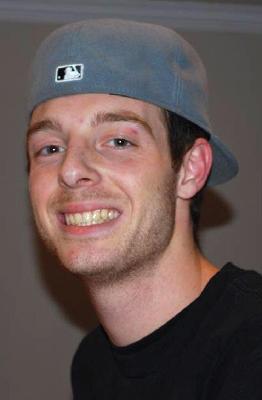
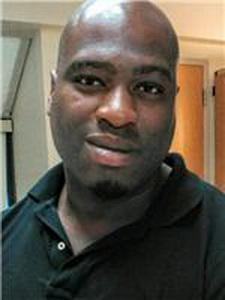
Yahke Hogan was 23 years old when his life was cut short on June 26, 2022, in Harvey, Louisiana. He was a Black/African American male, and the stark simplicity of that date and place can’t capture what it means to lose someone so young. One day he was here, moving through ordinary moments that most people take for granted, and then suddenly the world around him had to make room for a grief that doesn’t feel like it should exist.
There is a particular kind of heartbreak that comes
with a death at 23. It’s the unfinishedness of it, the sense that the story was still opening up, that the best parts were still supposed to be ahead. It’s the quiet questions that follow families into every room: What was he thinking about that morning? Who was the last person to hear his voice? What plans did he have that never got the chance to become real? Even without the details, the absence itself tells its own story—of a life interrupted, of people left holding memories like fragile glass.
Harvey is a real community, not just a dot on a map, and deaths there are felt in neighborhoods, on porches, in phone calls that begin with a pause because the caller can’t find the words. For those who knew Yahke, that day would have turned ordinary routines into landmarks: the moment the news arrived, the moment the hope for a mistake started slipping away, the moment reality settled in and nothing afterward felt the same. Grief doesn’t show up all at once. It comes in waves—first shock, then disbelief, then a deep, exhausting sorrow that finds people at unexpected times, in the middle of a grocery aisle, in the quiet of a car ride, in the hours of the night when the world is asleep but the mind won’t rest.
When a young man dies, people don’t just mourn the person; they mourn the future that belonged to him. They mourn the conversations that will never happen, the laughter that will never fill a room again, the milestones that won’t be witnessed. They mourn the version of him they expected to meet later—the older, steadier Yahke, the man shaped by time, the person he would have become through all the chapters he never got to live. And for those who loved him best, the loss doesn’t stay contained to one day. It follows them into every season, because love doesn’t stop simply because someone is gone.
With only the information provided, there are no specifics here about suspects, arrests, or anyone being held accountable for his death. That lack of answers can be its own kind of wound—one that keeps reopening because closure never arrives. It leaves families and friends carrying not just sorrow, but uncertainty, searching for meaning where none is offered, wanting clarity that the world refuses to give. In cases like this, the silence around the “why” can feel almost as heavy as the loss itself.
Still, Yahke Hogan’s name matters, because names are how we refuse to let someone be reduced to a date. He was not just a statistic or a headline; he was a person whose life had weight, whose presence mattered to someone, whose absence changed people. June 26, 2022, will always be a hard marker in time, but the story of Yahke doesn’t belong only to that day. It belongs to every memory that keeps him close, every person who speaks his name, every moment when grief and love meet and prove, again and again, that he was here and he mattered.