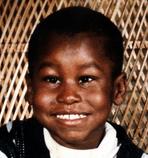
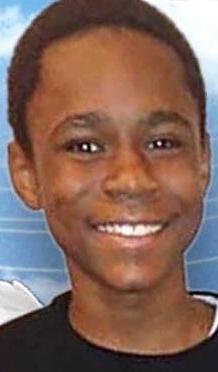
Dantrell Davis was a 7-year-old African American boy whose life was tragically cut short on October 13, 1992, when he was struck by gunfire while walking to school with his mother in Chicago, Illinois. The shooting occurred in the Cabrini-Green public housing development on the city's Near North Side, an area struggling with gang violence and frequent shootings. Dantrell was crossing the street near his home on his way to Jenner Elementary School, just a short distance from the apartment building where he lived. His mother, Annette Freeman, was holding his hand as they made their way toward the school. Without warning, a bullet fired from an upper floor of a nearby high-rise building struck Dantrell in the head, killing him. The shooting happened in broad daylight, despite the presence of police officers and volunteer parent patrols in the neighborhood.
What should have been an ordinary morning became an unimaginable tragedy for his family and a defining moment in Chicago's struggle with gun violence.
Investigators determined that the fatal bullet had been fired from a 10th-floor window of a building within the Cabrini-Green complex. Authorities believed the gunman had been targeting individuals associated with a rival street gang rather than deliberately aiming at Dantrell. The child had simply been caught in the line of fire. His death was especially devastating because his father had reportedly been murdered approximately one month earlier, leaving his mother to endure the loss of both her son's father and her only child within a remarkably short period. The killing immediately attracted widespread media attention and public outrage. Residents, community leaders, politicians, and law enforcement officials expressed anger that a child could be killed while walking to school. Dantrell became a symbol of the innocent lives being lost to gang violence, particularly in communities where residents had long struggled with poverty, dangerous living conditions, and inadequate protection from shootings.
Chicago police quickly launched a homicide investigation, focusing on the building from which the gunfire had originated. Approximately five hours after the shooting, authorities arrested Anthony Garrett, a Cabrini-Green resident who had military firearms training and was described by investigators as an experienced marksman. Police reportedly received information from a neighborhood resident identifying Garrett as the suspected shooter. Investigators alleged that Garrett had positioned himself near a window on the 10th floor and fired a high-powered rifle toward individuals he believed were associated with a rival gang. According to the prosecution's original account, Garrett admitted that he had been targeting rival gang members when he accidentally struck Dantrell. Garrett was subsequently charged with murder and held without bond. His arrest initially appeared to provide a rapid resolution to a crime that had horrified Chicago and attracted national attention.
The prosecution proceeded against Garrett, and in February 1994, a Cook County jury convicted him of Dantrell's murder. On March 8, 1994, Cook County Circuit Judge Earl Strayhorn sentenced Garrett to 100 years in prison. Prosecutors characterized the shooting as an exceptionally reckless and violent act that had resulted in the death of an innocent child. The lengthy sentence reflected the seriousness of the offense and the devastating circumstances surrounding Dantrell's death. Garrett was incarcerated in the Illinois Department of Corrections and eventually housed at Centralia Correctional Center. For decades, the conviction remained in place, and the case was widely reported as having resulted in the successful prosecution of the person responsible for the shooting. However, Garrett maintained that his confession had not been voluntary and that Chicago police had physically abused him during questioning.
The murder also produced lasting consequences throughout Cabrini-Green. In the weeks following Dantrell's death, rival gangs reportedly agreed to a truce, bringing a temporary reduction in shootings and allowing children to return to playgrounds that had previously been considered dangerous. Residents who had grown accustomed to nightly gunfire described an unusual period of quiet. The killing also intensified public scrutiny of conditions within Chicago's public housing developments, contributing to broader discussions about public safety, policing, housing reform, and the eventual demolition and redevelopment of Cabrini-Green. Although the neighborhood underwent substantial changes over the following decades, Dantrell's death remained one of the most widely remembered tragedies associated with the development.
For his mother, however, the passage of time did little to diminish the pain. During an interview marking the 25th anniversary of the shooting in October 2017, Annette Freeman spoke about how deeply the loss continued to affect her. She explained that October 13 was not simply an anniversary but a reminder of a tragedy she carried with her every day. Freeman, who was only 22 when her son was killed, never had another child. She devoted much of her life afterward to caring for others and preserving Dantrell's memory. She remembered him as a child filled with potential, someone who should have been allowed to grow up, pursue his dreams, and determine his own future. His death became more than a statistic or a symbol of urban violence; it represented the destruction of a childhood and a future that could never be restored.
Decades after Garrett's conviction, serious questions emerged about the methods used by Chicago police to obtain his confession. Garrett alleged that former Chicago Police Detective Richard Zuley and other officers had subjected him to physical and psychological abuse during his interrogation. According to Garrett's account, he was restrained in a windowless interrogation room, handcuffed to a metal ring, and beaten with a rubber hose and a telephone book. He alleged that officers deliberately struck a leg that had previously undergone surgery and threatened to continue the abuse unless he signed a confession. Garrett maintained that the statement attributed to him was the product of coercion rather than a truthful admission of responsibility. Zuley denied using torture or coercive interrogation techniques.
In April 2023, the Illinois Torture Inquiry and Relief Commission examined Garrett's allegations and determined that sufficient credible evidence existed to warrant further judicial review. The commission considered Garrett's description of his interrogation, allegations involving Zuley's conduct in other cases, and the lack of certain physical evidence connecting Garrett to the shooting. Investigators had not recovered a murder weapon or gunshot residue evidence conclusively linking him to the fatal gunfire. The commission's findings raised substantial concerns about the reliability of the confession that had played a central role in securing Garrett's conviction. The matter subsequently returned to Cook County Circuit Court, where Garrett sought to overturn his conviction and obtain a new trial.
Throughout 2026, court proceedings examined the allegations of police misconduct. During hearings, Zuley testified and denied abusing Garrett or forcing him to confess. Prosecutors challenged aspects of Garrett's account, including inconsistencies in his descriptions of the alleged beatings. The defense argued that the circumstances surrounding the interrogation, together with the documented concerns about Zuley's methods, demonstrated that Garrett's confession could not be considered reliable. The proceedings placed renewed attention on a murder investigation that had been considered resolved for more than three decades and raised the possibility that the original conviction had been obtained through unconstitutional police conduct.
On November 16, 2026, Cook County Circuit Judge Adrienne E. Davis issued a significant ruling vacating Garrett's 1994 murder conviction. In a detailed 37-page decision, the judge concluded that Garrett had more likely than not been subjected to torture before signing his confession. The court rejected material portions of Zuley's testimony denying knowledge of coercive interrogation conditions. The ruling represented a major reversal in one of Chicago's most prominent murder prosecutions. Although Garrett had spent more than three decades incarcerated under his original sentence, the decision did not establish that he was innocent or identify another person as Dantrell's killer. Instead, it meant that his conviction could no longer stand because of the serious constitutional concerns surrounding the confession used against him.
Following the ruling, Garrett was ordered transferred from state prison to the custody of the Cook County Department of Corrections while prosecutors considered whether to pursue another trial. The Cook County State's Attorney's Office acknowledged that it was reviewing the decision and determining its next legal steps. As of November 23, 2026, Garrett's original conviction and 100-year sentence have been vacated, but he remains in custody while the possibility of a retrial is evaluated. No subsequent conviction or final resolution of the reopened prosecution has been confirmed. The reversal has also raised renewed questions about the identity of the person who fired the fatal shot and whether the available evidence could support another prosecution.
For Dantrell's family, the legal developments have reopened painful questions surrounding a tragedy they have endured since 1992. The possibility that the original conviction was based on a coerced confession has complicated the search for accountability and renewed uncertainty about the circumstances of his murder. His loved ones have continued to emphasize the importance of identifying the person truly responsible rather than allowing an unreliable conviction to stand. Dantrell's death remains a powerful reminder of the devastating consequences of gun violence and the importance of conducting homicide investigations that are both thorough and just. More than three decades after he was killed while holding his mother's hand on the way to school, the case has entered another chapter, with Garrett's conviction overturned and the legal proceedings unresolved. At its center remains the memory of a young child whose life ended before he could reach his classroom and a family still seeking lasting answers and justice.