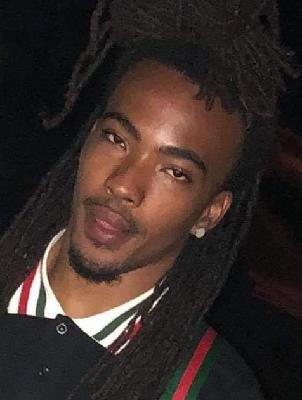
Salah Yousef Jaber Muhieddin was a 35-year-old Middle Eastern / Arab man living in an apartment above a small business on the 9100 block of South Commercial Avenue in Chicago's South Chicago neighborhood when his life was cut short in a brutal home invasion in the early hours of January 19, 2014.
He shared that space with his younger nephew, Harb Ibraihim Yousef Mohyddin, and together they were part of a close-knit family who had come to Chicago from Egypt.
Neighbors later told reporters that the two were related, that Salah had moved to Chicago from Egypt only about six months before the shooting, and that his nephew had grown up in the neighborhood with grandparents who had recently gone back overseas, leaving the uncle and nephew to build a modest life in the rooms above the storefront.
In the pre-dawn quiet of that Sunday, around 4:30 a.m., police believe intruders entered the apartment and opened fire, turning the small home into a scene of chaos and bloodshed. After the gunshots, Salah, gravely wounded, managed to reach a neighbor's door and ask for help. The neighbor, who did not have a phone, rushed outside and flagged down a passing police car; by the time officers and paramedics made it upstairs shortly after 5 a.m., both uncle and nephew were beyond saving and were pronounced dead at the scene. Outside, police tape sealed off the largely commercial block while a forensics van stood in front of the hosiery wholesale shop beneath their apartment, the ordinary storefront suddenly transformed into a backdrop for a double homicide investigation.
For people who had lived in South Chicago for years, the violence was shocking but not unfamiliar. Neighbors described that stretch of South Commercial as a place where trouble had surfaced before, recalling other shootings on the same block in the preceding months, including the killing of Navy veteran Telkia Burns during a robbery and another incident in which a passerby was wounded. Parents in the area spoke of the constant tension of letting their children walk to school past the same shops, now associated not just with daily errands but with sirens, detectives, and memorials to lives abruptly ended.
From the outset, authorities treated the case as an apparent home invasion: two residents shot to death inside their dwelling in the middle of the night. Later coverage noted that both victims died of gunshot wounds and that a handgun was recovered near the scene, though investigators did not publicly explain whose weapon it was or how it figured into the confrontation. Case summaries in gun-violence databases classify the incident as a home invasion in which the residents were killed, underscoring that while the broad outlines of what happened are known, crucial details—who forced their way into the apartment, what they were looking for, and exactly how the encounter unfolded—remain in shadow.
In the months that followed, local homicide reporting emphasized the wait for justice. More than four months after the killings, write-ups noted that family members were still hoping for an arrest, their grief compounded by the absence of answers about why the men who had left Egypt seeking a future in Chicago were gunned down in their own home. Years later, case descriptions continued to state that no arrests had been made and that the investigation was still open, with the lack of progress described as a source of frustration for both relatives and the wider community. As of the most recent public updates, more than a decade after the shootings, there are no reports of anyone being charged, no suspects publicly named, and the deaths of Salah and his nephew exist primarily in online memorial pages and databases—brief entries marking a double homicide that has yet to be solved, and a family story that ended on a cold January morning behind the door of an upstairs apartment on South Commercial Avenue.