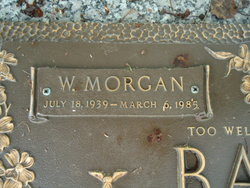
Warren Bailey, a 45-year-old White man, was working as a supervisor during the night shift at Atlanta’s main post office on March 6, 1985, when the routine noise of the mail-sorting floor shattered into gunfire. Accounts from the time describe postal employee Steven W. Brownlee, a 12-year veteran of the service, pulling out a. 22-caliber handgun in the sorting area and opening fire on the people around him.
In the first stunned moments, many workers did not even realize what they were hearing. One witness said it sounded at first like equipment being dropped, then came more shots, panic, and the sight of employees diving for cover or running for the exits as the floor turned chaotic.
Bailey was struck in the head and critically wounded. Early reports identified him as being from Marietta and said he had been taken to South Fulton Hospital, where doctors declared him brain dead. Those same reports noted that physicians kept him on support long enough for organ donation, a grim detail that underscored just how sudden and devastating the attack had been. Another employee, Phillip Sciarrone, was also killed, and Douglas M. Adams was wounded. In the confusion immediately after the shooting, co-workers managed to stop Brownlee themselves, wrestling him down before he could escape. One witness recalled that Brownlee was shouting as if he were trying to blend into the panic, claiming people were shooting inside the building even as others realized he was the gunman.
Investigators moved quickly, but the early answers were thin. Police said they had not established a motive and could not tell at first whether the victims had been specifically targeted or whether Brownlee had fired randomly at whoever was in his path. Bailey’s position as a supervisor added another layer of uncertainty, because authorities were not immediately sure whether he had been Brownlee’s direct supervisor or whether he had simply been one of the people caught in Brownlee’s line of fire. Co-workers described Brownlee afterward as disturbed and erratic, with one witness saying he often talked to himself and behaved abnormally long before the killings. That helped shape the public understanding of the case almost as soon as the shooting was over: not as a robbery, feud, or clear revenge plot, but as an eruption of violence that seemed to come from a mind already unraveling.
There was an arrest, and there was a named suspect. Brownlee, who was 30 at the time, was subdued at the scene, arrested, and charged first with murder and aggravated assault; after Bailey died, authorities added a second murder charge. He was then taken for psychological evaluation at Grady Memorial Hospital. The legal case did not end in an ordinary murder conviction. Later court records state that Brownlee was indicted on two counts of murder and one count of aggravated assault, but on June 21, 1985, a jury found him not guilty by reason of insanity on all counts. After that verdict, his sister, Felicia Brownlee Cleveland, was appointed guardian over him by the Probate Court of Fulton County.
So the story of Warren Bailey’s death closes in a way that often leaves a different kind of ache behind. The killer was identified immediately, captured on the spot, and formally charged, but the case did not travel the usual road toward conviction and punishment. Instead, it became one of the early and haunting workplace mass shootings tied to the postal system, remembered not only for the lives it took but for the sense of bewilderment that followed it. Bailey left for work that night as a supervisor in a busy federal workplace and never came home, his death folded into a tragedy that investigators could describe in facts and charges, but never fully explain in motive.