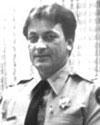
Jeremy Javies, a 16-year-old African American male from Clayton, Georgia, was killed on March 22, 1995, after what began as a rupture in a friendship and ended in extraordinary violence. Court records say David Phillip Smith came to Jeremy’s home that day and argued with him on the front porch while Jeremy’s mother listened from inside, unable to make out the subject.
When Jeremy came back in, he told her she would not have to worry about Smith coming around anymore because he had told him to get rid of the guns or she would go to the police. Later that night, the two went into the woods with shotguns, and neighbors heard a single blast, a pause, and then a rapid burst of more shots.
What happened in those woods was described in court in grim detail. Jeremy was found the next day, along with a blue book bag holding the guns. The evidence showed he had suffered six, and possibly seven, shotgun wounds: injuries to his arms and shoulders, a press-contact blast to the neck that fractured vertebrae, and one or possibly two press-contact shots to the face, all from a 12-gauge shotgun. Not long after the shooting, an acquaintance named Lamar Hopkins saw Smith on a nearby road carrying both shotguns in that blue bag. Hopkins testified that Smith told him he had just killed Jeremy, and the two then went to a place in the woods where the weapons were hidden. Hopkins also testified that Smith had been angry and said he shot Jeremy because he feared Jeremy would tell on him for possessing the guns. At trial, Smith admitted he shot Jeremy but claimed self-defense, saying Jeremy had fired first with a 16-gauge shotgun.
As for suspects and arrests, the reporting and court record point to one identified suspect: David Phillip Smith. He was arrested the day after the killing and was later indicted on August 10, 1995, for malice murder, four counts of felony murder, theft by receiving stolen property, and possession of a firearm during the commission of a felony. In January 1997, a jury convicted him, and he was sentenced to death after jurors found aggravating circumstances tied to the brutality of the murder. That was not the end of the case. In 1998, the Supreme Court of Georgia reversed Smith’s murder conviction and the firearm conviction because relevant defense evidence had been excluded at trial, though it left intact the theft-by-receiving conviction. Later reporting on the retrial fallout said doubts surrounding a second death-penalty prosecution led to an agreement under which Smith would serve life without parole in Jeremy’s killing.