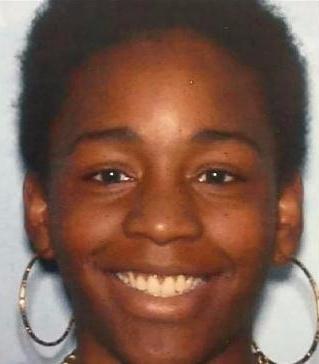
Ashley Danielle Sharpe, a 29-year-old Black woman, was killed on July 11, 2014, after what should have been an ordinary workday turned into a deadly final ride. She had been living and working in the Vidalia area, employed at Walmart, where Barbra Ann Polke worked at the McDonald’s inside the store. By the time of the shooting, their relationship had already broken apart under violence and fear. According to later court findings, Polke had punched Sharpe in the face on June 29, sending her to the emergency room and prompting a police report. Sharpe ended the relationship immediately, considered getting a restraining order, and instead tried to create distance by seeking a transfer to another Walmart. In text messages during the days that followed, she made clear that she was afraid and that she wanted the relationship over for good.
The day before Sharpe died, the case took on the shape of something planned. Court records say Polke asked a friend named Catherine for help, and the two went to a pawn shop, where they traded items for a. 380 Jiminez handgun. After that, they searched for. 380 ammunition, moving from place to place until they found it. A store employee later testified that Polke was urgently sorting through boxes of bullets and quieted the employee when asked why she needed them. On July 11, Sharpe learned that her transfer request had been approved. She clocked out for lunch at 1:56 p.m., and Walmart surveillance showed her getting into Polke’s car shortly afterward. About 45 minutes later, Polke called 911 and said Sharpe had been shot but was still alive. Responders reached a home in Reidsville, in Tattnall County, and found Sharpe dead in the passenger seat.
The physical evidence cut sharply against the story Polke first told. Sharpe had been shot once just above her left ear. The medical examiner testified that the bullet crossed through her head and exited at the right temple, and that gunpowder stippling showed the gun had been fired from less than 18 inches away, probably even closer. Investigators found gunpowder residue on Polke’s hands. They also found a. 380 shell casing in the back seat of the car. The passenger-side window appeared to have a bullet hole, but the shattered glass pattern and the lack of glass inside the car suggested the shot came from within the vehicle, not from someone firing in from outside.
At first, Polke told officers that after lunch they had been driving through Lyons when a group of men standing near Highway 280 and Gordon Avenue fired at the car, striking Sharpe. She said she panicked and drove toward Reidsville instead of heading to a hospital in nearby Vidalia. Police immediately checked the area she identified, but they found no ballistics evidence, no witnesses who had heard gunfire, and no sign that any ambush had happened there at all. That account began to fall apart under scrutiny. A local newspaper later reported that after investigators gathered the facts, GBI agents concluded there was enough evidence to charge Polke in Sharpe’s death, and she was booked into the Tattnall County Sheriff’s Office.
Barbra Ann Polke became the central suspect and the only person publicly charged in the case. A Tattnall County grand jury indicted her on February 24, 2015, on charges including felony murder, aggravated assault, malice murder, possession of a firearm during the commission of a felony, and possession of a firearm by a convicted felon. At trial in May 2016, the State presented the broken relationship, the prior assault, the purchase of the gun and ammunition, the surveillance footage, the forensic evidence, and Polke’s inconsistent stories as the backbone of the case. Polke changed her version again at trial, saying that Catherine had given her the gun and told her to kill Sharpe, and that Catherine later took the weapon and hid it. Even so, the Supreme Court of Georgia later wrote that the evidence of Polke’s guilt was overwhelming, noting that Polke essentially admitted that she shot Sharpe.
The case ended in conviction. A jury found Polke guilty on all counts except one of the firearm-by-felon charges. On June 14, 2016, she was sentenced as a recidivist to life in prison without parole for malice murder, along with additional firearm sentences. She later sought a new trial and challenged the sufficiency of the evidence and the issue of venue, but the Georgia Supreme Court affirmed the judgment on October 25, 2022. So the record that remains is not one of an unsolved roadside mystery, but of a woman trying to leave a violent relationship, making plans to move on, and being killed before she could get clear of it.