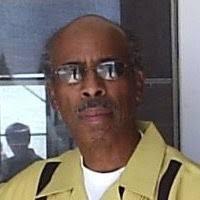
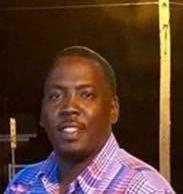
Edward James Ferguson, a 25-year-old Black man, was killed on the night of August 12, 2014, in Adel, Georgia, after what should have been an ordinary walk turned into a burst of gunfire inside the Adel Housing Authority complex at 500 Holiday Street. According to investigators, Cook County 911 received the call at about 10:36 p.m. Police said Ferguson and 18-year-old Anthony Hill were passing through the complex when both were shot several times. Ferguson was taken to a local hospital, where he was pronounced dead that same evening, while Hill survived despite life-threatening injuries.
The case took on the shape of a sudden, public act of violence with very little immediate clarity. Officials said the two men were walking through the neighborhood when the shooting happened, suggesting they were out in the open rather than inside a private home or behind closed doors. Ferguson’s death left investigators with a homicide scene, a surviving victim, and a community that had seen two young men gunned down in the same attack, yet the available public reports did not identify a motive, name a suspect, or explain why the pair had been targeted.
As the months stretched into more than a year, the silence around the case became part of the story. In a later public appeal, the Georgia Bureau of Investigation and the Adel Police Department said they were still looking for the people responsible. That appeal stated plainly that no arrest had been made in the case and asked the public to come forward with information. Authorities also offered a reward for information leading to the arrest and conviction of whoever was responsible for Ferguson’s death and Hill’s assault. A 2016 Georgia executive order went even further in describing the stalled investigation, saying the Adel Police Department, assisted by the GBI, had been unable to generate any solid leads.
The reward history shows how seriously the case remained open in official eyes. Public reporting noted a $4,000 reward tied to information leading to arrest and conviction, while the governor’s February 9, 2016 executive order formally offered $2,000 for information leading to the identification, arrest, and conviction of the individual or individuals responsible. Taken together, those notices show that investigators believed more than one person could have been involved, or at minimum were leaving room for that possibility, but the public record available online still does not identify any named suspect, arrest, charge, trial, or conviction tied to Ferguson’s killing. In the sources available online, the case remains one marked less by courtroom resolution than by an unanswered shooting, a surviving witness to the violence, and a long-running plea for someone to finally say what happened on Holiday Street that night.