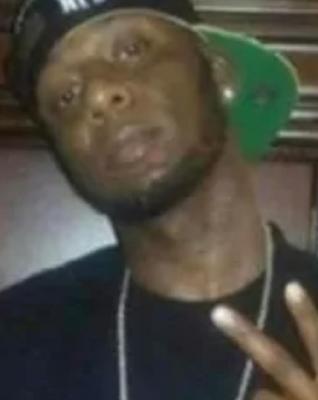
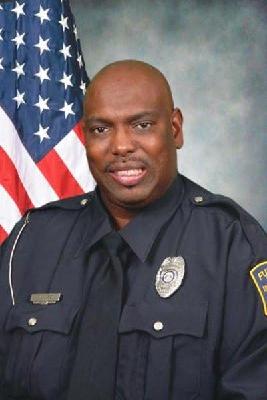
Clayton Smith, a 22-year-old man, was killed on September 17, 2015, in the parking lot of a Hardee’s on Senoia Road in Fairburn, where what began as a marijuana sale turned into a robbery and then a gunfight. According to police and later court findings, Smith had recently returned to Georgia after buying a large amount of marijuana in California. Earlier that day, he met Mountavius Holt in an Atlanta McDonald’s parking lot, gave him a sample, and exchanged contact information. By that evening, a meeting had been set at the Hardee’s, and Smith drove there in his truck with a friend, Callie McNew, carrying a handgun with him.
The encounter unraveled quickly. Court records say Mountavius Holt had already decided he wanted to rob Smith but did not have a gun, so he contacted Labrinzo Matthews, who said Quintavius Hawkins had a weapon. Mountavius, his brother Rontavius Holt, Matthews, Hawkins, and another man, Thomas Way, drove together to the restaurant. When Smith arrived, Mountavius first approached the truck alone, got a sample of marijuana, and took it back to the car. He then returned to Smith’s truck with Hawkins. As Mountavius and Smith argued over the price of a larger amount, Hawkins pulled a handgun and tried to take the marijuana. Smith drew his own gun in response. Shots were exchanged in the darkness of the parking lot, and Smith was struck in the chest. He died at the scene beside his truck. Hawkins was also wounded, suffering injuries to his hand and hip.
In the chaotic minutes after the shooting, the group split apart. Matthews, Rontavius Holt, and Thomas Way drove off in Rontavius’s Dodge Intrepid, while Mountavius Holt and Hawkins ran from the scene on foot. Hawkins later called for help, telling them he had been shot, and the others picked him up. Before going to the hospital, they even stopped to search for the gun Hawkins had lost. That detail, along with witness testimony, DNA evidence from blood stains and a cap left at the scene, and the recovery of a Jimenez Arms 9mm handgun, would later help prosecutors reconstruct what happened. A witness nearby also noticed a man in a Batman-logo shirt speaking urgently on the phone just after the gunfire, a detail that matched media later pulled from Hawkins’s cellphone.
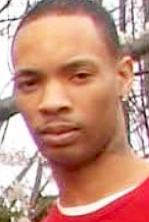
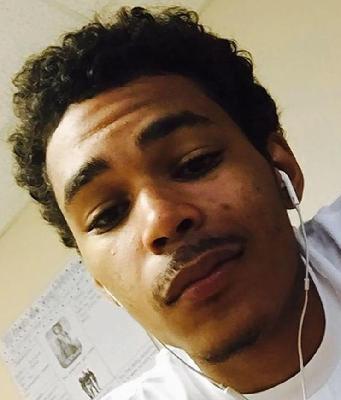
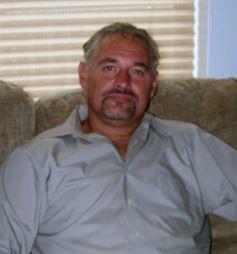
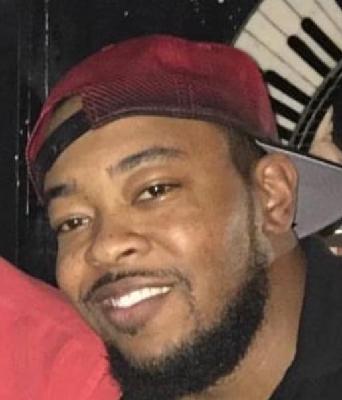
Police moved fast. Initial reports said investigators were looking for at least two suspects, but by the next day Fairburn police had arrested four men in connection with the killing: Quintavius Hawkins, Mountavius Holt, Rontavius Holt, and Labrinzo Matthews. FOX 5 reported that all four, then between 18 and 21 years old, were jailed and faced charges including murder and armed robbery. Hawkins came into custody after police tracked an injured suspect to a hospital. Those early arrests made it clear that authorities did not view Smith’s death as a random shooting, but as a planned robbery that spiraled into murder.
The most complete public outcome concerns Hawkins, who prosecutors identified as the gunman. He was indicted with the others on December 15, 2015. At a July 2016 trial, a jury found him guilty of felony murder, aggravated assault, criminal attempt to commit armed robbery, and a firearm charge tied to the killing. News reports at the time said he was convicted of murder and aggravated assault with intent to rob and sentenced to life in prison plus five years. Hawkins claimed he had acted in self-defense, but the evidence showed the confrontation began as an attempted armed robbery of Smith during the drug deal. In 2019, the Supreme Court of Georgia upheld the core convictions, while vacating one merged armed-robbery-attempt count on sentencing grounds.
As for the others, court records from Hawkins’s appeal show that Mountavius Holt, Rontavius Holt, and Labrinzo Matthews later testified against him under plea agreements, confirming that the prosecution continued against the group after the initial arrests. Publicly accessible reporting available here does not clearly spell out each of their final sentences, but it does show they were not treated as bystanders. Investigators and prosecutors portrayed them as participants in the setup that lured Smith to the Hardee’s and turned the meeting into a fatal attempted robbery. In the end, Clayton Smith’s death was not left as an unsolved street killing. It became a prosecuted homicide case, with named suspects, arrests within hours, a convicted shooter serving a life sentence, and a court record that preserved the grim sequence of how a planned robbery ended with Smith dying in a restaurant parking lot.