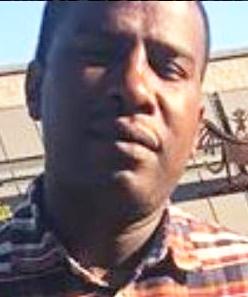
Paul Dancik, a 26-year-old artist from San Francisco, was tragically killed on December 11, 1973. On that fateful day, Dancik was standing near a telephone booth on Haight Street in the Fillmore neighborhood when he was approached by two young men. Without warning, the assailants opened fire, shooting Dancik three times in the chest with a .32 caliber gun. He succumbed to his injuries at the scene.
This brutal act was part of a series of racially motivated attacks known as the Zebra murders, which terrorized San Francisco from October 1973 to April 1974.
The Zebra murders were carried out by a group of four men who referred to themselves as the Death Angels. These men targeted white individuals in a spree of violence that left at least 15 people dead and many others wounded. The name "Zebra" was assigned to the case by the police, who used a special radio band for the investigation. The attacks were characterized by their randomness and brutality, instilling fear throughout the city.
Following Dancik's murder, the police launched an intensive investigation to apprehend the perpetrators. In 1974, a breakthrough came when a worker at the warehouse where the Death Angels operated provided crucial information to the authorities. This informant, motivated by a reward, revealed private details about the murders, leading to the arrest of four men: Manuel Moore, Larry Green, Jessie Lee Cooks, and J.C.X. Simon. These individuals were subsequently convicted of first-degree murder and conspiracy to commit first-degree murder. They were sentenced to life imprisonment, and the informant, along with his family, was placed in a witness protection program.
The Zebra murders, including the killing of Paul Dancik, remain a dark chapter in San Francisco's history. The case highlighted the extreme racial tensions of the time and the capacity for violence driven by hatred. The successful prosecution of the Death Angels brought some measure of justice to the victims and their families, but the scars left by their actions continue to be felt in the community.