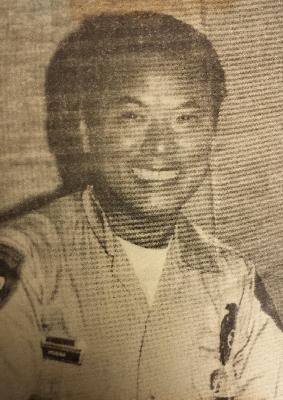
Douglas Michael Metal, aged 23, tragically lost his life on November 4, 1984, in Garden Grove, California. His death was part of a brutal crime spree carried out by Teofilo Medina Jr., a convicted felon who had been released from the Arizona Corrections Department just three months prior. Medina's spree began in October 1984 and spanned several weeks, during which he targeted convenience stores and gas stations in Orange and Riverside counties.
Douglas Michael Metal was working at a drive-in dairy in Garden Grove when Medina fatally shot him in the head during a robbery.
Medina's crime spree resulted in the deaths of four young men, including Metal. The other victims were Horacio Ariza Jr., 20, and Victor Rea, 20, both clerks at gas stations in Santa Ana, and Craig Martin, 18, a night cashier at an Arco gas station in Corona. Medina's actions were driven by a series of robberies that netted him less than $450 in total. Despite the relatively small amount of money stolen, the impact of his crimes was devastating, leaving a trail of grief and loss in the communities affected.
Following his arrest, Medina was charged with multiple counts of first-degree murder and other criminal offenses. His defense argued that he was mentally ill, claiming that he believed he was a high priest who had visions of Jesus Christ and the Virgin Mary. However, the jury found him legally sane, and he was convicted of the murders. In 1987, Medina was sentenced to death for the killings in Orange County, and he received an additional death sentence for the murder in Riverside County. His case went through various appeals, but his death sentence was ultimately upheld by the California Supreme Court.
Medina's case highlights the complexities of the criminal justice system, particularly in dealing with individuals who commit heinous crimes shortly after being released from prison. The legal proceedings surrounding his case involved extensive litigation, including arguments about his mental state and the appropriateness of the death penalty. Despite these challenges, the courts consistently upheld his convictions and sentences, reflecting the severity of his crimes and the impact on the victims' families.