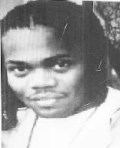
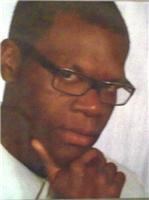
Mitchell Tyrone Fobbs, 51, a Black man, died on Sunday, March 20, 2011, in New Orleans, Louisiana. The news of his passing landed with the heavy finality that no family is ever truly ready for, even when life has given plenty of warning that time moves faster than we want it to. In the days that followed, what rose first wasn’t the kind of detail that satisfies curiosity, but the kind that families cling to when they’re trying to make sense of loss: his name spoken out loud, his presence
described in simple, enduring roles, and the steady work of gathering people together to honor who he was.
He was remembered as a United States Army veteran, a detail that carries its own quiet weight—years of service, discipline, and sacrifice that most of the world never sees up close. For the people who knew him, that background wasn’t just a line in a record. It was part of the shape of his life, part of what informed how he moved through the world and how he showed up for others. When someone like that is gone, the absence feels both personal and wide, like a chair left empty that no one else can fill, and like a chapter closed in a story the community didn’t want to end.
Mitchell’s passing was marked in the way many loved lives are marked—through the names of the people he belonged to and the people who belonged to him. He was described as the beloved son of the late Mildred and Edward Oliver, a connection that hints at a long lineage of family love and family history, and also at the ache of leaving this world to join those who went before him. He was also a father to Shontell, Mitchell, and Corey Kelley, and that detail alone speaks volumes: three lives carrying his influence forward, three hearts changed forever by a loss that doesn’t stop hurting just because time passes. A father’s name sits in a family like an anchor, and when that anchor is gone, everything shifts—holidays, milestones, ordinary days that suddenly feel unfamiliar because the person who once held them steady isn’t there to do it anymore.
In New Orleans, where remembrance has its own deep traditions and where grief is often met with community, the arrangements were handled through Majestic Mortuary Service. That practical fact says something tender beneath the surface: there were people who had to make phone calls and sit through difficult conversations, people who had to choose how to honor him, how to speak about him, how to bring everyone together under one roof in the midst of heartbreak. The process of laying someone to rest is never only about logistics. It is about love—love shown through responsibility, love shown through ritual, love shown by refusing to let a person’s life be reduced to the moment it ended.
Other public records tied to his military remembrance reflect the same steady focus. The information available associates him with veteran memorial documentation and lists his birth as April 15, 1959, placing him within a specific span of history and experience—someone who lived through changing decades, changing neighborhoods, changing seasons of life, all the way to that day in March when those who loved him had to face what they never wanted to face. These records confirm what mattered most to the people who recorded them: his identity, his service, his place in the lives of others.
What is not present in the information provided is any description of the circumstances of his death, any public narrative of an investigation, or any mention of arrests, suspects, charges, trials, or convictions connected to his passing. In the absence of those details, what remains is the portrait that families and communities most often try to preserve when someone is gone: the human being, not the headlines. A man with a name that deserves to be spoken with care, a veteran whose service is noted, a son whose parents are remembered alongside him, and a father whose children must carry forward without him.
And that, in many ways, is the truest shape of a life after death: not only the fact of an ending, but the echo it leaves behind. Mitchell Tyrone Fobbs is not simply a date on a calendar. He is the sum of the people who loved him, the roles he held, the obligations he met, the years he lived, and the memories that remain in the hands of those who still speak his name.