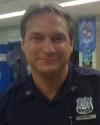
Calvin Lamont Clinkscales, a 43-year-old man, died in the early hours of September 20, 2015, after a burst of gunfire tore through the courtyard walkways of the Ingersoll Houses in Fort Greene, Brooklyn. Long before sunrise, Fleet Walk—usually just another path between brick towers—became a crime scene, and by the time daylight reached the complex, his name was being spoken alongside two others in a tragedy that stunned the neighborhood.
Investigators later said the shooting unfolded at about 1:45 a.m. near 58 Fleet Walk. Trial accounts described a gunman closing in on Clinkscales and Lacount Simmons and firing at close range; both were struck multiple times, with wounds to the head and torso. In the chaos, a stray bullet hit Herbert Brown—an elderly bystander who had been nearby—striking him in the abdomen; he was taken to New York Methodist Hospital, where he later died. What began as an attack aimed at two men ended as a triple killing, leaving families grieving and residents wondering how such violence could erupt in a place so close to home.
In the days and months that followed, detectives worked the case through the hard edges of city evidence: witness accounts, timelines, and surveillance. Police circulated video and said the suspect had been captured lingering around the complex before the shooting and then running from the scene. By January 5, 2016, authorities publicly identified the man they believed was responsible as Allen Cooper, known by the nickname “Pike,” describing the episode as tied to a dispute between alleged rivals in the area's drug trade. The case drew wider attention as part of a weekend of heightened gun violence across New York City, adding urgency to the hunt for whoever had pulled the trigger on Fleet Walk.
The break came the following spring. Prosecutors said Cooper was found and arrested on April 22, 2016, in an apartment in Fayetteville, North Carolina, after an anonymous caller tipped the NYPD to where he was staying, and he was brought back to New York to face the allegations. Police and prosecutors accused him of murdering all three victims and charged him with murder and weapons offenses, setting in motion a court process that would stretch across the next year and a half as the killings moved from street-corner horror into the formal, grinding machinery of a homicide prosecution.
In October 2017, a Brooklyn jury convicted Cooper of three counts of second-degree murder and second-degree criminal possession of a weapon after a trial in Brooklyn Supreme Court. Sentencing followed on December 4, 2017, when Justice Neil Firetog imposed 90 years to life—effectively ensuring Cooper would spend the rest of his life in prison. Reports from the courtroom described an attempt by the defense to delay the sentence amid arguments over witness credibility, but the proceeding went forward, with prosecutors portraying the killings as a cold-blooded settling of scores that also claimed an innocent bystander. For the families, the verdict and sentence offered a legal ending, but not a true one—only the closing of a case file that began in the dark on Fleet Walk and left three empty places where three lives had been.