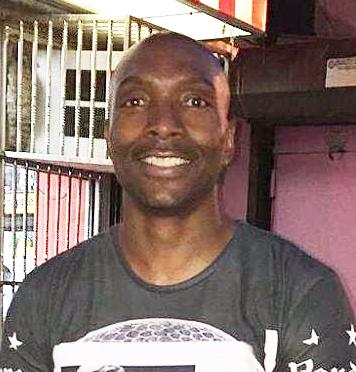
Gerard Woodley, 46, a Black man, was killed late on June 23, 2016, in Harlem, just steps from where he lived near West 139th Street and Lenox Avenue. Close to 11 p.m., the night broke open in the middle of a disturbance outside his building, and in the sudden chaos he was shot—struck hard enough that the block’s ordinary summer sounds gave way to sirens and shouting.
Police arrived to find him gravely wounded, and he was rushed to Harlem Hospital, but he did not survive.
In the immediate aftermath, investigators had little they could say publicly about who pulled the trigger, and reports noted there were no arrests announced and no suspect description released.
What was clear, even in those first accounts, was that the shooting happened right at his front door—an attack that felt personal in its timing and its place. Reports described the incident as a clash or disturbance outside the home, and said he was shot in the head and also in the back, suggesting a violent confrontation that escalated in seconds.
Woodley’s death quickly drew wider attention because of a shadow that had followed him for years: he had been widely identified as a key suspect in the 1999 killing of Harlem rapper Big L. In that earlier case, he was arrested in May 1999 and charged with second-degree murder, but prosecutors ultimately did not secure a conviction and the case was thrown out for lack of evidence, leaving Big L’s murder officially unresolved.
His own story, as told in contemporaneous reporting, included repeated brushes with the criminal-justice system—time in prison on gun charges, and an order that he remain on parole until 2020 after his most recent sentence. Even with that history and the notoriety surrounding his name, the public record around his 2016 killing pointed to the same frustrating end: an open investigation, no immediate arrests, and no publicly named suspect.