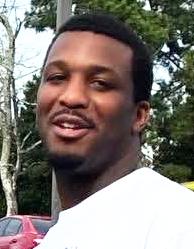
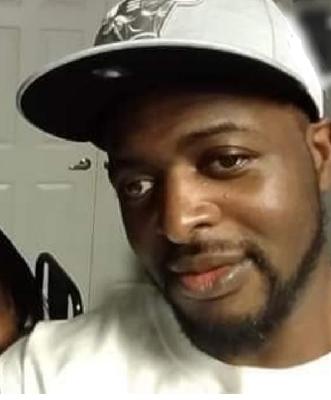
Fred Eugene “Slim” Anderson, a 29-year-old man from Greenville, spent the night of December 8, 2016 visiting a friend at the Shemwood Crossing apartments on Shemwood Lane, a familiar complex where he and many others in the neighborhood lived. It was a weeknight, late enough that the courtyards were mostly quiet, and he was sitting in his friend’s downstairs apartment, talking with one of the women who lived there.
A local obituary would later list him simply as a beloved son, brother, and friend, but that evening he was just a young man at ease in a place he knew well, unaware that others had marked him as a target.
Inside the apartment, the conversation was interrupted when two masked men slipped through the unlocked front door. According to court records, they did not waste time on threats or pretense: they demanded Anderson’s marijuana and his money. Anderson, described in those same records as a known marijuana dealer, handed over a mason jar of marijuana and the small amount of cash he had on him. When the intruders insisted on his wallet, he told them he didn’t carry one. At some point, they allowed the woman who had been sitting with him to go upstairs; she retreated partway up, then edged back to the stairwell, close enough to hear the struggle but not to see it. From there she heard the sounds of a tussle and Anderson’s voice saying he would not fight because one of the men had a gun. Moments later came a volley of shots—four in all, with testimony later indicating that at least two of the wounds were likely fatal and that there was a noticeable pause between the third and fourth shot, as if the violence had time to harden into a decision before the last round was fired.
Outside, the quiet of the complex broke as neighbors heard the gunfire. Just after 10 p.m., Greenville police received two separate 911 calls: one reporting the sound of shots, another reporting a shooting victim in building 31 at Shemwood Crossing. Officers arriving at the scene followed those calls to a downstairs unit, where they found Anderson shot multiple times inside the apartment. He was pronounced dead there, his life ending on the same worn carpet where he had been talking with a friend only minutes before. A later summary from the local solicitor’s office would place the killing plainly: on December 8, 2016, Fred Anderson was shot and killed in an apartment on Shemwood Lane in the City of Greenville.
Detectives began piecing together what had happened from fragments: the woman’s account from the stairwell, shell casings and bullet paths inside the apartment, and the layout of the complex. One key break came from surveillance cameras around the buildings. Investigators recovered video that showed flashes from a gun at the front of Anderson’s friend’s apartment, followed by two figures running away and then entering a nearby unit. Another segment of footage from earlier that night showed a man stepping out of that same nearby apartment and gesturing toward the unit where Anderson was sitting, as if directing the masked intruders to their target. Police identified that intermediary as Jonathan Suber-Purry. In interviews, Suber-Purry gave several inconsistent and false statements before finally pointing to a name: Nyquan Tykie Brown. Phone records added weight to his identification by placing Brown’s phone near the scene at the critical time. Throughout, the case that investigators built suggested a small circle of residents within the complex, one of whom had allegedly guided two masked men to the door where Anderson sat.
The woman in the apartment could not give a full description of both intruders, but she told police that the gunman she saw before going upstairs was unusually short. Surveillance video and witness testimony focused investigators on Brown, who, like Anderson, lived at Shemwood Crossing. As detectives closed in, Greenville police obtained warrants for his arrest. By late December, Brown had left South Carolina, and authorities turned to the U.S. Marshals Service for help. On December 30, 2016, marshals located and arrested the 20-year-old in Charlotte, North Carolina. Police announced that Brown was wanted as the gunman in the December 8 shooting that left Anderson dead and that he faced a slate of serious charges: murder, first-degree burglary, armed robbery, kidnapping, and possession of a weapon during the commission of a violent crime.
In the months that followed, prosecutors refined the case for trial. Court documents show that Brown was ultimately indicted for murder, armed robbery, and possession of a weapon during the commission of a violent crime arising from the Shemwood Crossing home invasion. The narrative presented to jurors was stark: Anderson had been sitting in his friend’s apartment when two masked men entered through an unlocked door, robbed him of marijuana and cash, and then shot him four times despite his saying he would not fight because one of them was armed. The defense did not contest that a robbery and killing occurred but argued that the state had the wrong man, attacking Suber-Purry’s shifting stories and suggesting that Brown was being blamed largely because he matched the description of a short man in a neighborhood where many people knew one another. The core dispute, as an appellate court later summarized it, was identity—whether the state had proved beyond a reasonable doubt that Brown was the masked shooter.
On September 5, 2019, after hearing the witnesses, viewing the surveillance footage, and weighing the cell-phone evidence, a Greenville County jury found Nyquan Tykie Brown guilty on all three indictments: murder, armed robbery, and possession of a weapon during a violent crime. According to the Thirteenth Circuit solicitor’s office and state corrections records, the trial judge sentenced Brown to 45 years in the South Carolina Department of Corrections for murder, 30 years for armed robbery, and 5 years for the firearm offense. The sentences run in a way that yields a controlling 45-year term. Brown was admitted to state prison on September 9, 2019; his projected release date is in December 2062, and he is listed as not eligible for parole.
Brown’s conviction did not end the legal story. He appealed, arguing primarily that the trial judge erred by instructing the jury that malice “can be inferred if one kills another during the commission of a felony,” contending that this charge improperly highlighted certain facts and shifted the burden of proof. In 2022, the South Carolina Court of Appeals acknowledged the debate over such instructions but held that, even assuming the charge was flawed, any error was harmless because neither side disputed that the killing was a deliberate, malicious act committed during an armed robbery; only the shooter’s identity was in question, and on that point the jury had spoken.
The case then went to the South Carolina Supreme Court, which in 2024 agreed that the inferred-malice instruction was improper but likewise concluded that it did not affect the verdict. The justices vacated the lower court’s reasoning on that single instructional point yet affirmed the conviction and sentence “in result,” leaving Brown’s murder judgment intact. With the appellate courts finished, the Shemwood Crossing home-invasion killing that claimed Fred Anderson’s life stands in the record as a completed case: a late-night visit with a friend turned into a fatal robbery, an investigation that traced muzzle flashes and hurried footsteps across a courtyard, and a prosecution that, years later, secured a long prison term for the man a jury decided pulled the trigger.