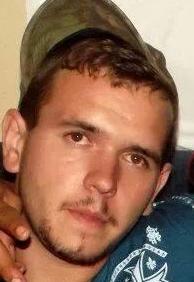
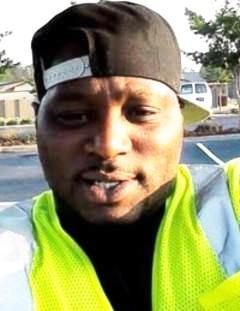
Scott Allen Brooks, a 52-year-old man from Orangeburg, South Carolina, began March 20, 2017, expecting an ordinary workday, with a friend scheduled to pick him up at his home on the 1700 block of Joe Jeffords Highway. When that friend arrived and found the house silent and Brooks unresponsive to repeated knocks, concern quickly turned into alarm. Unable to reach him and sensing that something was wrong, the friend contacted authorities, setting in motion an investigation that would reveal a
deadly act of violence inside the quiet residence.
Deputies and emergency personnel who responded to the call discovered that Brooks had been shot inside the home. The Orangeburg County Coroner later identified him publicly and determined that he had died from a gunshot wound to the head, confirming that the scene on Joe Jeffords Highway was not a medical emergency but a homicide. The address, an otherwise unremarkable stretch of highway, was transformed into a guarded crime scene as investigators photographed, collected evidence, and tried to reconstruct Brooks’s final moments in the early hours of that Monday morning.
In the days that followed, the Orangeburg County Sheriff’s Office treated the killing as an active and pressing investigation. Detectives released limited details to the public but made clear that they were searching for whoever was responsible. The coroner’s announcement, combined with the call for help from law enforcement, underscored the urgency of the case. Authorities turned to the community for assistance, urging anyone with information about the crime or the identity of possible suspect or suspects to contact Crime Stoppers, even offering the possibility of a cash reward for tips. At that stage, the picture was incomplete: a man had been found shot in his own home, and investigators were piecing together why he had become a target and who had pulled the trigger.
Over time, the investigative work led prosecutors to focus on Lance Michael Miller, whose name would eventually be linked in court records and news reports to the killing on Joe Jeffords Highway. According to the First Judicial Circuit Solicitor’s Office, Miller confronted Brooks during the early morning hours of March 20, 2017, and shot him to death because he feared Brooks would report a prior armed robbery that Miller had committed. What had begun as an attempt to silence a potential witness turned into a homicide case that, for years, moved through the criminal justice system, from investigation to charging decisions and, ultimately, to the courtroom where Miller would be called to account for his actions.
By late 2019, the case reached a decisive moment. Prosecutors reported that they had been prepared to take Miller to trial, but instead he chose to plead guilty for his role in the fatal shooting of Brooks. A judge sentenced him to 17 years in prison, a term that reflected both the seriousness of the killing and the acknowledged motive of eliminating a witness to an earlier crime. The solicitor’s office noted that Miller did not stand alone in the case; a co-defendant’s case remained pending at the time of Miller’s sentencing, indicating that authorities believed more than one person bore legal responsibility for what happened to Brooks that morning.
When prosecutors spoke publicly about the resolution of Miller’s part in the case, they credited the steadfast support of Brooks’s friends and family, who had waited through the long span between the 2017 shooting and the 2019 sentencing. Their presence in the courtroom and cooperation with investigators were acknowledged as key elements in seeing the case through to a conviction and substantial prison term. Yet even with Miller behind bars, the reference to a pending co-defendant served as a reminder that the story of the crime had more than one participant, and that the legal aftermath of the killing continued beyond the single sentencing hearing. For the community in Orangeburg, the outcome brought a measure of accountability for the man identified as the shooter, while still leaving lingering questions about the full scope of responsibility for the night that ended Scott Allen Brooks’s life.