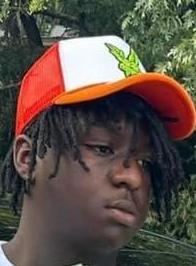
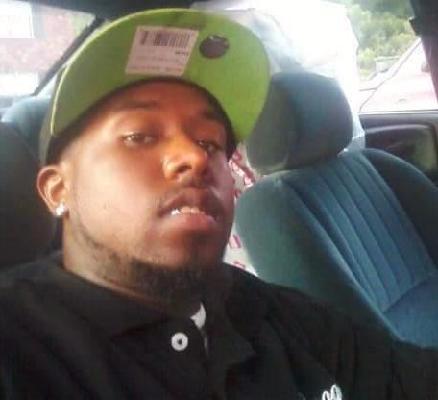
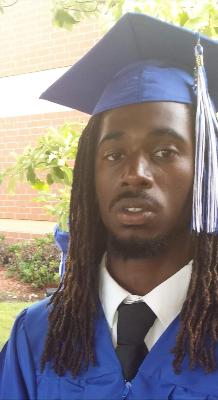
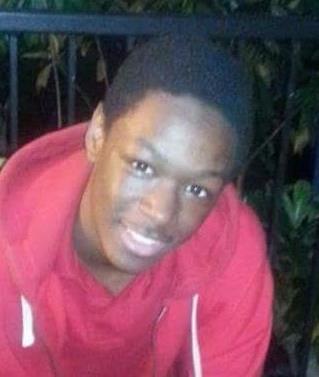
Courtenay Ambrose Smalls, a 29-year-old Black man from North Charleston, spent his days juggling work, music, and family. Friends and relatives knew him as “Big C,” a charismatic presence who managed the My Three Sons Restaurant and poured his energy into rap, earning a reputation in the local scene as one of Charleston’s standouts. At home, his world revolved around his young daughter Zaria and son Massiah, and a future he was building with his fiancée, Paris Brown.
On the evening of January 8, 2020, Courtenay’s plans were ordinary and close to home. A relative later recalled that he had been at a restaurant with his mother before heading toward the house where she lived on St. Francis Street in North Charleston. Around 7:15 p.m., neighbors heard gunshots and called for help. Police officers responding to 2025 St. Francis Street found Courtenay bleeding in front of the home, gravely wounded by gunfire. Despite efforts at the scene, he died there on the sidewalk, just outside the place where his mother lived.
In the hours and days that followed, his family was left with more questions than answers. His aunt, Dolores Smalls, spoke publicly about the shock of losing him so suddenly — how he had been expected at the house, how one moment he was on his way and the next the family was being told he was gone. She described the agony of not knowing why anyone would want to hurt him or who was responsible. His uncle, James Smalls, talked about the weight of the loss pressing through every generation of the family, saying that memories were all they had left and that they were leaning on faith just to get through.
Those memories were filled with laughter. Online tributes and memorial pages painted a portrait of a man who was funny, always dancing, and the life of whatever room he walked into. Friends posted that he was a devoted father and “family man,” someone who loved to eat, joke, and keep everyone around him smiling. In the local music community, fellow artists honored him in song — one track released shortly after his death describes “Courtenay Smalls aka Big C Da Dawg” as “one of the best to do it” in rap in Charleston, a “ghetto legend” from the Waylyn and Dorchester Road area whose absence left a hole in the city’s creative life.
At first, North Charleston police released very little about who might have been behind the killing. The day after the shooting, investigators said there had been no major developments and no suspect description to share. Courtenay’s family, still in shock, stood in front of cameras asking for answers, hoping someone who knew what happened would come forward. Their pleas hung over the neighborhood as a reminder that the scene on St. Francis Street wasn’t just another crime statistic, but a family’s worst night frozen in time.
Nine days later, detectives announced a major break. Following their investigation, North Charleston Police obtained arrest warrants for two men: Terris White and Jabari Lee. Officers, working with the U.S. Marshals Office, Charleston City Police and the Charleston County Sheriff’s Office, tracked the pair down and arrested them on January 17, 2020. Both White and Lee were charged with murder in connection with Courtenay’s shooting and were scheduled to appear for bond hearings that weekend. Authorities did not publicly release extensive details about the evidence tying them to the case, but the arrests marked the moment when the investigation shifted from unknown assailant to named suspects facing the most serious of charges.
Even after those arrests, the investigation continued to widen. On January 25, 2020, police announced that a 72-year-old woman, Linda Mozelle Grant Hines, had been arrested and charged with accessory after the fact to murder. Known by the nickname “Granny,” Hines was accused by investigators of helping White and Lee hide from law enforcement while they were wanted for Courtenay’s killing. According to police, her alleged assistance allowed the men to avoid capture for a time after the shooting on St. Francis Street. She was brought before a magistrate judge for a bond hearing, facing the possibility of prison not for pulling a trigger, but for what authorities say she did to help the accused killers stay out of sight.
Public court records and news coverage available to date do not clearly document how the murder case against White and Lee ultimately resolved — whether through trial, plea agreements, or other outcomes — nor the final disposition of the accessory charge against Hines. What is clear from the record is that the state formally accused the two men of murdering Courtenay Ambrose Smalls and accused Hines of helping them afterward, setting in motion a long legal process that unfolded largely outside the spotlight.
For Courtenay’s loved ones, the question of accountability lives alongside the enduring memory of who he was before the shots on St. Francis Street. His obituary lists the family left to mourn him — his parents, Lorraine Smalls and Carl Jones, his children Zaria and Massiah, his fiancée Paris, his siblings, grandmother, and a wide circle of relatives and friends — and invites the community to celebrate his life at Mount Moriah Missionary Baptist Church rather than remember only the way he died. In online memorials, candles are still lit in his name, and tributes continue to describe a man whose brightest legacy is not the violence that ended his life, but the joy, music, and love he left behind.