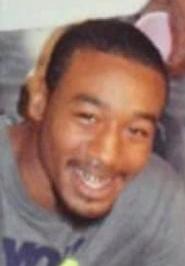
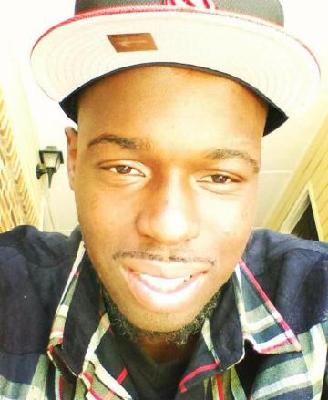
Elijah Amoni Tyre Jefferson was a 19-year-old man from North Charleston, South Carolina, whose life ended in the early hours of Sunday, April 24, 2022. In the days that followed, his name appeared in obituaries and memorial pages that described a young man deeply loved by his mother, siblings, grandparents, and a wide circle of relatives and friends, all of whom were left to navigate a sudden and devastating loss.
Just after 1 a.m.
that Sunday, North Charleston police were dispatched to Bailey Drive after reports of gunfire. Officers arrived to find two wounded teenagers lying on the front porch of a home at 2264 Bailey Drive. Both had been struck by multiple gunshots. One of them, 16-year-old Kay’sean Jones, was pronounced dead at the scene at about 1:12 a.m. The other, Elijah, was rushed to the Medical University of South Carolina, where he was pronounced dead at approximately 1:41 a.m., also from multiple gunshot wounds. The scene was a jarring contrast to the quiet residential street around it, with patrol cars and crime-scene tape replacing what should have been an ordinary spring night.
In the immediate aftermath, police described the case cautiously. Early statements from the North Charleston Police Department noted that the investigation was in its initial stages and that officers were not actively seeking additional suspects at that time, emphasizing that details were still limited as detectives tried to reconstruct what had led to the deadly gunfire on the front porch. As Elijah’s family prepared for his viewing and funeral services at Suburban Funeral Home in early May, the broader community was left with few official answers about what exactly had happened in those moments before the shots were fired.
A month later, investigators publicly outlined a stark narrative of the violence on Bailey Drive. On May 19, 2022, North Charleston police announced the arrest of 18-year-old Rito Singleton Jr. in connection with the shooting. He was charged with murder and possession of a weapon during the commission of a violent crime and booked into the Al Cannon Detention Center. According to police statements reported in local media, detectives now believed that Singleton and Elijah had been attempting to rob another person at the home when gunfire erupted. During that attempted robbery, both Elijah and Kay’sean Jones were shot; one died on the porch and the other later at the hospital, the two young lives intertwined in the same brief, violent encounter.
As the case moved from active investigation into the courts, Singleton waived his bond hearing, and no bond was set on the murder charge. Records describing the incident in national gun-violence databases list him as a suspect who was arrested but unharmed, underscoring that, unlike Elijah and Kay’sean, he survived that night and would face the legal consequences in a courtroom rather than at a hospital or morgue. Publicly available reports, however, do not clearly detail what ultimately happened to the case—whether it went to trial, resulted in a plea, or is still pending—leaving the legal ending to this story less defined than the tragic reality of the two teenagers who died.
For Elijah’s family, the formal language of charges and case numbers never captures the fullness of the person they lost. Obituaries and memorial tributes portray him as someone whose presence filled family gatherings and school hallways, remembered for kindness, humor, and the bonds he shared with his mother, siblings, grandparents, and niece. While the official narrative frames what happened in terms of an alleged attempted robbery that spiraled into fatal gunfire, the personal remembrances focus instead on a young man whose life ended on a porch in North Charleston before he had the chance to grow older, and on a family left to grieve a future that will now always be imagined rather than lived.