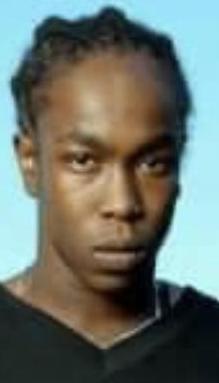
Jeremiah Zachariah Dicker, a 20-year-old man from South Carolina, had only just crossed into adulthood when his life was cut short on May 31, 2022. Born on June 29, 2001, and remembered in obituaries from the Loris and Conway area, he was known to family and friends by the nickname “Double 00,” a small, affectionate detail that lingered on memorial pages after his death.
Loved ones gathered online to light virtual candles, leave condolences, and share how shocking it was to lose him so young, the language of those tributes emphasizing both the suddenness of his death and the size of the hole it left behind in his community.
On that late spring Tuesday, Horry County police were called to a rural stretch of Highway 554 near Red Bluff Crossroads, in the Loris-area of Horry County, just after 2 p.m. for reports of gunfire. When officers and emergency responders arrived, they found a grim scene on or near the roadway: two young men suffering from gunshot wounds, later identified by the coroner as 19-year-old Kalik Conn of the Longs area and 20-year-old Jeremiah Dicker of Columbia. Both were pronounced dead, and a third person was also reported injured in the same incident. In the immediate aftermath, investigators blocked nearby roads, including parts of Woodyard Bay Road, and an autopsy was ordered at the Medical University of South Carolina to help reconstruct exactly what had happened along that quiet stretch of highway.
The investigation quickly took on the weight of a double-homicide case. Local news reported that one person involved in the shooting was labeled a suspect almost immediately, signaling that detectives believed at least one of the surviving individuals at the scene had played an active role in the violence. Even so, details about motive and the relationships between those present remained closely held as Horry County police worked to piece together witness statements, forensic evidence, and ballistics. For Jeremiah’s family, those early months were marked less by public explanations than by quiet grief, funeral arrangements through Leggette-Troy Funeral Home, and services at McNeil Chapel Missionary Baptist Church in early June 2022, where mourners came together to say goodbye and lay him to rest.
In the years that followed, the case continued to move forward behind courthouse doors. According to officials with the Fifteenth Circuit Solicitor’s Office, a significant breakthrough came when three young men from the area were formally brought into the case as suspects. One of them, 19-year-old Todd Allen Fry of Conway, was charged in connection with the shooting and, on August 12, 2024, he stood before a judge and pleaded guilty to accessory before the fact of armed robbery rather than going to trial on more serious charges. As part of his plea, Fry received a 10-year prison sentence and was ordered to serve at least 85 percent of that time before becoming eligible for supervised release, a punishment that acknowledged his role in events leading up to the deadly encounter without labeling him as one of the triggermen.
The central question of who fired the shots that killed Jeremiah and Kalik went to a Horry County jury later that same month. Two brothers from Longs, 22-year-old Nasirea Brewnoplis Grate and 20-year-old Dajon Malik Grate, were tried on charges arising from the double killing along Highway 554. Prosecutors presented the case as a double murder, arguing that the Grate brothers bore direct responsibility for the fatal gunfire that left both men dead in the road. After a trial that began on August 19, 2024, jurors deliberated for nearly three hours before returning verdicts of voluntary manslaughter rather than murder, a decision that suggested they believed the brothers had intentionally caused the deaths but under circumstances that fell short of premeditated murder in the legal sense.
The following morning, Circuit Court Judge Benjamin Culbertson handed down sentences that underscored the gravity of what had happened on that May afternoon. Both Nasirea and Dajon Grate received 30-year prison terms for their roles in the killings of Jeremiah Dicker and Kalik Conn, with the same requirement that they serve at least 85 percent of those sentences before they can be considered for supervised release. For Jeremiah’s loved ones, the outcome meant that the men a jury found responsible for his death would spend decades behind bars, yet no sentence could restore the life he had been in the process of building. His name now appears among the many victims listed on gun-violence memorial pages for Conway and Horry County, a reminder that behind the legal language of charges, trials, and convictions was a young man whose story ended far too soon on a quiet South Carolina road.