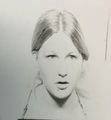
On August 31, 1981, 24-year-old Carolyn Sue Martin and her young son, Mark, disappeared from Madison Heights, Michigan. Friends and family had gathered at her home that day to help her pack for a move to San Antonio, Texas. She planned to start a new life with her fiancé, Hamparsoum 'Harry' Kirezian, who was also Mark's father. Initially, the plan was for Carolyn and her son to travel in a caravan with her twin brother, who was heading to Oklahoma.
However, that evening, she visited her mother in Hazel Park and announced a change of plans, stating she and her son would take a different route and would not be traveling with her brother. This was the last time her family ever saw or heard from her.
The circumstances following their departure raised significant concern. Kirezian, the last person known to have seen them, provided a troubling account to the police. He claimed that shortly after beginning their journey, he and Carolyn had an argument near Toledo, Ohio. According to his statement, she decided she no longer wanted to go to Texas, so he left her and their son on the side of the highway with a single suitcase and $4,000 in cash. Kirezian said he then continued toward Texas but soon turned back to Michigan due to car trouble. This narrative was met with skepticism, especially as Kirezian had only recently reconciled with Carolyn after a paternity suit required him to pay child support.
The investigation into Carolyn and Mark's disappearance has spanned decades, yet their whereabouts remain unknown. Foul play is strongly suspected, and Kirezian has been considered a person of interest, though no direct evidence has implicated him in a crime. Since their disappearance, there has been no activity on either of their Social Security numbers. Kirezian has since changed his name twice and has reportedly refused to take a polygraph test regarding the case. The lack of resolution has left Carolyn's family, particularly her twin brother, in a state of prolonged grief and uncertainty, continually hoping for answers in this long-unsolved case. The official investigation remains open with the Madison Heights Police Department.
Carolyn Sue Martin, who was known by the name “Sue,” was a 24-year-old White woman when she disappeared from the Madison Heights, Michigan, area on August 31, 1981. She vanished together with her two-year-old son, Mark Steven Martin, during what was supposed to be a family move from Michigan to San Antonio, Texas. Carolyn was approximately five feet five inches tall and weighed about 110 pounds. She had shoulder-length brown hair, very light blue eyes, and ears that had each been pierced once. No description of the clothing she wore on the day she disappeared has been made publicly available. From the moment she left Michigan with her child and Mark’s father, Carolyn’s movements became uncertain, and neither she nor her son was ever reliably seen by their relatives again.
The family reportedly left the Hazel Park and Madison Heights area in a black 1978 Pontiac Grand Prix bearing Michigan license plate SSC512. Mark’s father claimed that employment was waiting for him at a Maaco business in San Antonio, giving the trip the appearance of a planned relocation and a new beginning. Carolyn was traveling with a toddler who depended entirely on her, and there is no known indication that she intended to separate from Mark or voluntarily vanish without contacting the rest of her family. At first, relatives apparently believed she was on the road or settling into a new home in Texas. Their concern grew when they could not reach her and received no dependable confirmation that she or Mark had arrived in San Antonio.
Months later, Mark’s father was located back in Michigan, but Carolyn and the child were not with him. When questioned by police, he reportedly claimed that he had left Carolyn and Mark beside a freeway somewhere near Toledo, Ohio. The account did not identify a precise highway, exit, roadside business, municipality, or other location where officers could establish that the mother and child had actually been abandoned. There were no publicly confirmed witnesses who remembered seeing Carolyn and her toddler standing beside the road, asking for assistance, entering another vehicle, or approaching a police station, hospital, motel, shelter, or service station. The vague nature of the story left investigators with an enormous potential search area and no reliable point from which to reconstruct Carolyn’s final known movements.
If Carolyn truly had been left along a freeway, she would have been placed in an extremely vulnerable situation. She had a two-year-old child to protect and would have needed immediate transportation, shelter, food, and a way to contact her family. Yet there is no known record of Carolyn calling relatives, seeking emergency assistance, or appearing in any official record after the trip began. Her continued silence was inconsistent with what her loved ones expected from her and heightened fears that the freeway explanation was either incomplete or untrue. Investigators were left to determine whether Carolyn and Mark had ever reached the Toledo area at all, whether they had continued toward Texas, or whether something had happened to them earlier in the journey.
The black Pontiac connected to the trip was later sold in 1982 and eventually titled in Minnesota. Its transfer to new owners further complicated any effort to examine it for evidence, particularly because forensic technology in the early 1980s was far more limited than it is today. The publicly available record does not indicate that investigators recovered physical evidence from the car that revealed what happened to Carolyn or her son. It also does not show that either missing person’s belongings were found along the reported route. The vehicle nevertheless remains an important part of the case because it was reportedly the means by which Carolyn and Mark left Michigan and may have been the last place they were known to be together with Mark’s father.
Carolyn and Mark were formally reported missing on March 19, 1982, more than six months after they were last known to have left Michigan. That delay cost investigators valuable time. Any witnesses who might have seen the Pontiac or encountered a woman with a small child could have forgotten details, moved away, or never realized that what they had observed was important. Temporary records from gas stations, restaurants, motels, toll areas, and roadside businesses may already have been discarded. In an era before cellular telephones, digital banking trails, widespread security cameras, and automated license-plate systems, it was also much easier for a person’s movements to leave little or no lasting record.
Mark’s father remained a central figure in the investigation because he was the last known adult traveling with Carolyn and the child, and because he later returned to Michigan without them. His statement about leaving them near Toledo has never led to their discovery. However, the publicly available case information does not report that he was arrested or charged in connection with their disappearance. No court proceeding has established what happened during the trip, and no publicly named person has been held criminally responsible. The lack of a recovery or confirmed crime scene has made it difficult for investigators to move beyond suspicion and conflicting possibilities to evidence that could support a prosecution.
Carolyn’s family later provided DNA samples to assist in the search. Reference profiles were collected from her mother, brother, and sister and processed through the University of North Texas Center for Human Identification. Those samples were also useful in the investigation of Mark’s disappearance because the relatives were his maternal grandmother, uncle, and aunt. Complete genetic profiles were uploaded into the national DNA system, allowing unidentified remains recovered anywhere in the country to be compared with Carolyn’s family. Mitochondrial DNA from her brother was also made available, giving investigators another method of identifying remains through the maternal family line.
The collection and preservation of DNA have allowed the case to remain searchable long after the original investigation began. If unidentified remains believed to be those of an adult woman or young child are examined, the profiles can help determine whether they belong to Carolyn or Mark. This technology offers a possibility that did not exist when they disappeared, but no publicly announced comparison has identified either of them. Carolyn’s photograph, physical description, and missing-person information also remain available so that investigators and members of the public can recognize her case and connect it with information that may have been overlooked.
The Madison Heights Police Department has continued to be listed as the agency responsible for the investigation. The central facts remain painful and unresolved: Carolyn left Michigan with her young son and the child’s father, relatives lost contact with her, and the father later returned alone with an unverified account that he had left the mother and child beside an unidentified freeway near Toledo. No confirmed evidence shows that Carolyn willingly abandoned her family or began a new life, and no dependable sighting has placed her anywhere after the trip. In overview, Carolyn Sue Martin disappeared with two-year-old Mark on August 31, 1981, during a supposed move from Michigan to Texas; the last adult known to be with them later offered a vague roadside-abandonment story, but neither Carolyn nor her son has been found, no one has been charged, and their family continues to wait for the truth about where the journey ended.
Carolyn Sue Martin, who was known by the name “Sue,” was a 24-year-old White woman when she disappeared from the Madison Heights, Michigan, area on August 31, 1981. She vanished together with her two-year-old son, Mark Steven Martin, during what was supposed to be a family move from Michigan to San Antonio, Texas. Carolyn was approximately five feet five inches tall and weighed about 110 pounds. She had shoulder-length brown hair, very light blue eyes, and ears that had each been pierced once. No description of the clothing she wore on the day she disappeared has been made publicly available. From the moment she left Michigan with her child and Mark’s father, Carolyn’s movements became uncertain, and neither she nor her son was ever reliably seen by their relatives again.
The family reportedly left the Hazel Park and Madison Heights area in a black 1978 Pontiac Grand Prix bearing Michigan license plate SSC512. Mark’s father claimed that employment was waiting for him at a Maaco business in San Antonio, giving the trip the appearance of a planned relocation and a new beginning. Carolyn was traveling with a toddler who depended entirely on her, and there is no known indication that she intended to separate from Mark or voluntarily vanish without contacting the rest of her family. At first, relatives apparently believed she was on the road or settling into a new home in Texas. Their concern grew when they could not reach her and received no dependable confirmation that she or Mark had arrived in San Antonio.
Months later, Mark’s father was located back in Michigan, but Carolyn and the child were not with him. When questioned by police, he reportedly claimed that he had left Carolyn and Mark beside a freeway somewhere near Toledo, Ohio. The account did not identify a precise highway, exit, roadside business, municipality, or other location where officers could establish that the mother and child had actually been abandoned. There were no publicly confirmed witnesses who remembered seeing Carolyn and her toddler standing beside the road, asking for assistance, entering another vehicle, or approaching a police station, hospital, motel, shelter, or service station. The vague nature of the story left investigators with an enormous potential search area and no reliable point from which to reconstruct Carolyn’s final known movements.
If Carolyn truly had been left along a freeway, she would have been placed in an extremely vulnerable situation. She had a two-year-old child to protect and would have needed immediate transportation, shelter, food, and a way to contact her family. Yet there is no known record of Carolyn calling relatives, seeking emergency assistance, or appearing in any official record after the trip began. Her continued silence was inconsistent with what her loved ones expected from her and heightened fears that the freeway explanation was either incomplete or untrue. Investigators were left to determine whether Carolyn and Mark had ever reached the Toledo area at all, whether they had continued toward Texas, or whether something had happened to them earlier in the journey.
The black Pontiac connected to the trip was later sold in 1982 and eventually titled in Minnesota. Its transfer to new owners further complicated any effort to examine it for evidence, particularly because forensic technology in the early 1980s was far more limited than it is today. The publicly available record does not indicate that investigators recovered physical evidence from the car that revealed what happened to Carolyn or her son. It also does not show that either missing person’s belongings were found along the reported route. The vehicle nevertheless remains an important part of the case because it was reportedly the means by which Carolyn and Mark left Michigan and may have been the last place they were known to be together with Mark’s father.
Carolyn and Mark were formally reported missing on March 19, 1982, more than six months after they were last known to have left Michigan. That delay cost investigators valuable time. Any witnesses who might have seen the Pontiac or encountered a woman with a small child could have forgotten details, moved away, or never realized that what they had observed was important. Temporary records from gas stations, restaurants, motels, toll areas, and roadside businesses may already have been discarded. In an era before cellular telephones, digital banking trails, widespread security cameras, and automated license-plate systems, it was also much easier for a person’s movements to leave little or no lasting record.
Mark’s father remained a central figure in the investigation because he was the last known adult traveling with Carolyn and the child, and because he later returned to Michigan without them. His statement about leaving them near Toledo has never led to their discovery. However, the publicly available case information does not report that he was arrested or charged in connection with their disappearance. No court proceeding has established what happened during the trip, and no publicly named person has been held criminally responsible. The lack of a recovery or confirmed crime scene has made it difficult for investigators to move beyond suspicion and conflicting possibilities to evidence that could support a prosecution.
Carolyn’s family later provided DNA samples to assist in the search. Reference profiles were collected from her mother, brother, and sister and processed through the University of North Texas Center for Human Identification. Those samples were also useful in the investigation of Mark’s disappearance because the relatives were his maternal grandmother, uncle, and aunt. Complete genetic profiles were uploaded into the national DNA system, allowing unidentified remains recovered anywhere in the country to be compared with Carolyn’s family. Mitochondrial DNA from her brother was also made available, giving investigators another method of identifying remains through the maternal family line.
The collection and preservation of DNA have allowed the case to remain searchable long after the original investigation began. If unidentified remains believed to be those of an adult woman or young child are examined, the profiles can help determine whether they belong to Carolyn or Mark. This technology offers a possibility that did not exist when they disappeared, but no publicly announced comparison has identified either of them. Carolyn’s photograph, physical description, and missing-person information also remain available so that investigators and members of the public can recognize her case and connect it with information that may have been overlooked.
The Madison Heights Police Department has continued to be listed as the agency responsible for the investigation. The central facts remain painful and unresolved: Carolyn left Michigan with her young son and the child’s father, relatives lost contact with her, and the father later returned alone with an unverified account that he had left the mother and child beside an unidentified freeway near Toledo. No confirmed evidence shows that Carolyn willingly abandoned her family or began a new life, and no dependable sighting has placed her anywhere after the trip. In overview, Carolyn Sue Martin disappeared with two-year-old Mark on August 31, 1981, during a supposed move from Michigan to Texas; the last adult known to be with them later offered a vague roadside-abandonment story, but neither Carolyn nor her son has been found, no one has been charged, and their family continues to wait for the truth about where the journey ended.Last Seen: Aug 31, 1981