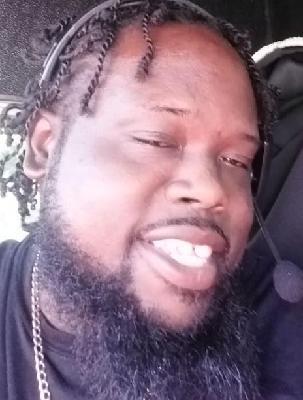
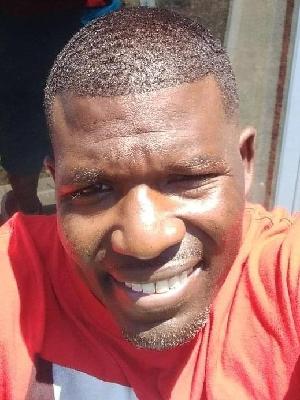
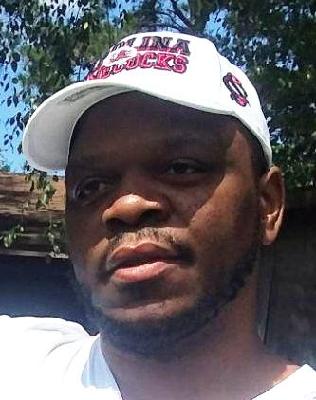
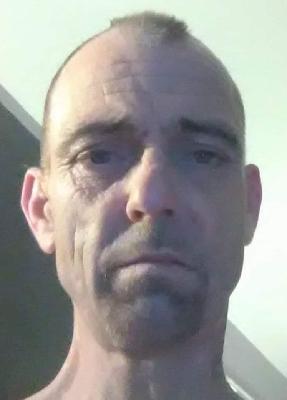
On a warm Sunday afternoon in July 2022, Dequin Garland Ellerbe, a 38-year-old Black / African American man from Timmonsville, South Carolina, was gunned down in broad daylight on North Commander Street in Florence. It was just after 4:20 p.m. when shots rang out in the 800 block, a modest residential stretch where families were used to the ordinary sounds of weekend life, not the sharp crack of gunfire.
When officers and emergency responders arrived, they found Ellerbe lying outside a home, beyond the reach of help, and he was pronounced dead at the scene. The Florence County Coroner’s Office soon identified him publicly and arranged for an autopsy at the Medical University of South Carolina to formally establish the cause of death, treating the case from the outset as a homicide.
In the hours after the shooting, the neighborhood around Commander Street was sealed off behind police tape as detectives and crime scene technicians moved carefully around the yard and the street, documenting what had become a sudden killing ground. Patrol cars blocked traffic while investigators canvassed nearby homes, looking for anyone who might have seen a vehicle speeding away or a confrontation that preceded the gunfire. Local news reports described the death simply at first: one person killed in a shooting, the body found outside a residence, with few immediate details about what had led to the violence. The coroner, Keith von Lutcken, confirmed Ellerbe’s identity and emphasized that an autopsy would be central to understanding exactly how he died, even as the community was left to grapple with the stark fact that someone had been slain in the middle of a summer afternoon.
Beyond the yellow tape, Ellerbe’s life was being remembered in quieter ways. Online memorials later painted a picture of a man woven into the fabric of everyday working life in Florence and the surrounding area. Friends and coworkers recalled his easy humor and the way his laugh could lighten a shift, mentioning jobs at local food businesses like Carolina Fresh Food and Krispy Kreme where he became part of the daily rhythm for colleagues and regular customers. Others referenced his time at Wilson High School and spoke of how much he would be missed at work and at home, where loved ones talked about the ache of his absence and the children now growing up without him. These tributes did not dwell on the details of the crime; instead, they tried to reclaim him from the brief, clinical language of police statements, insisting that he was more than just the victim in a news headline.
Even as family and friends mourned, the investigation pushed forward. Detectives from the Florence Police Department worked alongside the coroner’s office, tracing Ellerbe’s final hours and connecting the Commander Street shooting to an earlier incident that same night on Boyd Street. According to later police statements, there had been an assault on Boyd Street before the murder, an episode that would become important when officers began to tie together witnesses, timelines, and potential motives. For several days after the killing, authorities publicly referred to an unnamed suspect and asked anyone who had seen or heard anything near either location to step forward, underscoring how much they still needed the community’s help to fill in crucial gaps in the story.
On July 16, 2022, nearly a week after the shooting, investigators took a decisive step and named a suspect. Florence police announced that they had obtained outstanding warrants for Christopher Allen Washington, who was wanted on a murder charge in connection with Ellerbe’s death. In addition to the murder count, Washington was also wanted on two counts of possession of a firearm by a convicted felon, possession of a weapon during a violent crime, and three counts of pointing or presenting a firearm. Police said that all of these charges stemmed from the fatal shooting on Commander Street and the assault on Boyd Street earlier that evening. With Washington still at large, officers released his name and photograph, urging the public to contact LCpl. Chatlosh with any information that might lead to his arrest, and local media outlets carried the appeal, making his image and the list of allegations widely known.
The tension that followed those warrants did not last long. By Sunday, July 17, Washington surrendered himself to the Florence Police Department, ending the short manhunt that had followed his public identification. Police confirmed that the same slate of charges now formally applied to him as a defendant: murder, two counts of possession of a firearm by a convicted felon, possession of a weapon during a violent crime, and multiple counts of pointing or presenting a firearm, all tied to Ellerbe’s killing and the earlier assault. News reports at the time described him as in custody on the murder charge after turning himself in, and reiterated that anyone with further details about what happened that night should still contact investigators. Publicly available coverage, however, does not clearly document what happened in court afterward—whether the case proceeded to trial, resulted in a plea, or remains pending—leaving the final legal outcome of the charges against Washington outside the easy reach of the record that exists in news archives and online summaries.
What remains clear from the fragments of reporting and the memorials that followed is that Ellerbe’s death was both sudden and deeply personal: a single shooting in a specific corner of Florence that radiated outward into a grieving workplace, a shaken neighborhood, and a family struggling to reconcile everyday memories with the stark reality of a homicide investigation. The case stands at the intersection of those two narratives—one written in court documents and police bulletins, the other in shared stories and online tributes—and together they trace the arc from an ordinary July afternoon to a loss that still echoes through the people who knew him.