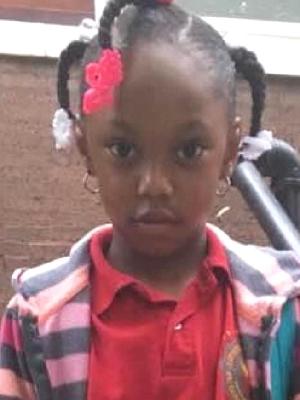
Leondra Clark was a 22-year-old woman from Saint Louis, Missouri, and on August 7, 2017, her story ended in a way that still feels unfinished. In a city where summer nights can carry laughter through open windows and streetlights hum over familiar blocks, that date became a hard marker—one that separated everything into before and after for the people who loved her.
It’s impossible to talk about her death without thinking about the life that existed around it: the routines that make a person real, the small plans that don’t make headlines, the ordinary moments that become sacred once they’re all you have left. A young woman doesn’t become a name in a record overnight; she is someone’s call that always got answered, someone’s inside joke, someone’s steady presence on the other end of a long day.
She is the space she took up in rooms, the way she moved through her neighborhood, the familiar sound of her voice that people could pick out even in a crowd.
August 7, 2017 is the day that familiar sound went quiet. Whatever the specific sequence of events was—whatever words were said, whatever choices were made—it ended with Leondra gone, and that kind of loss doesn’t arrive gently. It crashes into families and friends like a door kicked open, leaving shock behind first, then disbelief, then the slow, relentless ache of realizing there will be no next conversation, no chance to go back and change a single minute.
When a death happens this way, the questions don’t stop. They multiply. The people left behind replay time in their minds, tracing steps, trying to understand how a normal day became a tragedy. They hold onto details because details feel like anchors: where she was last seen, who might have been nearby, what she might have been thinking in her final hours. And in the absence of clear public answers, the mind fills the silence with what-ifs—what if she’d taken a different route, what if someone had arrived earlier, what if the world had been just a little kinder or just a little safer.
What remains certain is the weight of her absence in Saint Louis. In the places she used to go, there is a kind of echo—an empty chair at a table, an unread message thread, a birthday that comes around and doesn’t feel the way it used to. Her loved ones carry memories like fragile glass, careful with them, because remembering is both comfort and pain. Some days remembering makes her feel close; other days it only emphasizes how far away she is.
And yet, even with grief pressing down, her name continues to matter. Saying it out loud keeps her from being reduced to a date and a location. Leondra Clark was more than the moment she died. She was a whole person with a history, with people who cared about her, with a presence that left marks on the lives around her. The longing for justice, for clarity, for accountability—those aren’t abstract ideas to the ones who loved her. They’re the desperate hope that her life will be honored by truth, that her death will not be left to fade into the background noise of time.
In the end, what makes this loss so heavy is how final it is, and how much it asks of the living. It asks them to keep going while carrying a wound no one can see. It asks them to hold grief in one hand and love in the other, day after day. And it asks the world to remember that behind the name Leondra Clark is a life that mattered—one that deserved more time, more safety, and more tomorrows than she was given.