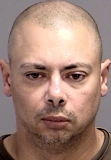
Summary based on the NamUs case record (MP108262)
Kevin Moises Nolasco Rivera was 17 years old when he was last seen on November 9, 2022, in Pflugerville, Texas, a community northeast of Austin in Travis County. Born on October 6, 2005, Kevin was a Hispanic male whose disappearance prompted a missing-person investigation by the Pflugerville Police Department. At the time he was reported missing, Kevin stood approximately 5 feet 3 inches tall and weighed around 134 pounds. He had black hair and brown eyes.
His disappearance drew the attention of authorities and organizations dedicated to locating missing children, leading to the circulation of his photograph and identifying information. Although the date and city of his last known whereabouts were documented, publicly available reports provided few details about the circumstances surrounding his departure or the events immediately preceding it.
Descriptions released to assist in identifying Kevin indicated that he had short black hair, brown eyes, and a relatively small build. His photograph was included in missing-child notices distributed to the public, including a February 2023 publication of The Postal Record, which featured information supplied through the National Center for Missing & Exploited Children. The notice identified November 9, 2022, as his last known contact date and listed the Pflugerville Police Department as the investigating agency. The publication encouraged anyone with relevant information to contact authorities. Such notices were intended to extend awareness of Kevin's circumstances beyond the immediate Pflugerville area, allowing people in other communities to recognize him and potentially provide information about his whereabouts.
As the months passed, Kevin's case remained visible through missing-person listings and public awareness efforts. His information continued to circulate under National Center for Missing & Exploited Children case number 1465472. The circumstances of his departure were not extensively described in the publicly accessible notices, leaving unanswered questions about where he traveled after leaving Pflugerville and who might have known his plans. Public reports did not establish that he had been abducted, injured, or subjected to criminal activity. The available information also did not identify a particular individual suspected of involvement in his disappearance. Without additional confirmed details, the reasons for his departure and the precise sequence of events remained difficult to reconstruct.
An important development in the case involved information reportedly provided by Kevin's father, who was living in Honduras. According to information recorded in the missing-person investigation, his father told a case manager with the National Center for Missing & Exploited Children in March 2023 that Kevin was staying with other family members in Atlanta, Georgia. His father maintained that Kevin was not missing and had received permission to leave the residence of the person responsible for sponsoring him in the United States. He reportedly declined to provide further information because of concerns that disclosing Kevin's location could expose his son to immigration enforcement and possible deportation. This account introduced a significantly different understanding of Kevin's circumstances, suggesting that his departure from Pflugerville might have been voluntary rather than the result of an unknown emergency.
The information attributed to Kevin's father was significant because it offered a possible explanation for why he had left Texas and identified Atlanta as a potential location. Nevertheless, the father's statements did not, by themselves, establish that investigators had independently confirmed Kevin's location or personally verified his safety. The available public record did not provide the address where he was reportedly staying, the identities of the relatives involved, or an independently documented account of his arrival in Georgia. It also did not establish whether authorities subsequently made direct contact with him. These distinctions are important because a report that a missing young person is staying with relatives does not necessarily provide the same confirmation as an official determination that the person has been located.
Kevin's case also raised complicated questions involving family relationships, guardianship arrangements, and immigration concerns. His father's reported explanation indicated that the family believed Kevin had permission to leave his sponsor's residence, while authorities had already documented his disappearance through established missing-person reporting procedures. The reported concerns about deportation provide context for the family's reluctance to disclose additional information, although the public record does not establish whether Kevin himself shared those concerns. The situation illustrates how circumstances involving a young person's movement between households and states can create uncertainty when family members and investigators have different levels of information about where that person is living. There was no publicly verified evidence establishing that Kevin had been harmed, but the available reporting also did not conclusively document his subsequent circumstances.
The Pflugerville Police Department was identified as the investigating agency, and information about Kevin continued to appear in missing-person databases, including listings associated with NamUs case MP108262. These records preserved the basic details of his disappearance and provided a means for the public to recognize his name and circumstances. Anyone possessing reliable information about his whereabouts could contact the Pflugerville Police Department at 512-990-6700 or the National Center for Missing & Exploited Children at 1-800-843-5678. The central unanswered question was not simply where Kevin had gone after leaving Pflugerville, but whether the information supplied by his family had been independently verified and whether authorities had obtained sufficient confirmation of his well-being.
Kevin Moises Nolasco Rivera's case began with the reported disappearance of a teenager from Pflugerville on November 9, 2022, and later developed into a more complicated situation after his father indicated that he was living with relatives in Atlanta, Georgia. Although that account offered a potentially reassuring explanation for his absence, publicly available information did not conclusively establish his location or document an official resolution. His story reflects the importance of distinguishing between an unexplained disappearance and a voluntary departure that may not have been fully communicated to authorities. At its center is a young man whose circumstances became intertwined with family connections across state and national borders, concerns about immigration enforcement, and uncertainty over the verification of his whereabouts. The case remains defined by the original missing-person report, the subsequent information provided by his father, and the absence of publicly documented confirmation establishing the full circumstances of his departure and subsequent safety.Last Seen: Nov 9, 2022