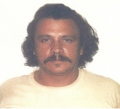
Vincent Frank Adamczak, a 41-year-old man, was last seen in Wellston, Michigan, around August 13, 1995. A member of the Little River Band of Ottawa Indians, he was described as being 6'0' tall and weighing 185 pounds, with brown hair, blue eyes, and a mustache. He had a distinctive tattoo of the word 'Hell' on his left forearm. Not long after he was last seen, his 1985 burgundy Plymouth Reliant was discovered in the parking lot of a nearby bar and was subsequently impounded. For reasons that remain unclear, Adamczak was not officially reported as a missing person until January 2002, more than six years after his disappearance. The passage of so much time without any contact with friends or family led investigators to suspect foul play early on in the investigation.
The case remained cold for many years until a significant break occurred in September 2011 when authorities arrested Rosemary Skrzycki and charged her in connection with Adamczak's murder. In a pivotal development, Skrzycki pleaded no contest to a lesser charge of being an accessory after the fact in January 2012. As part of her plea agreement, she admitted to having witnessed Adamczak's murder and agreed to testify against others involved. Her cooperation pointed investigators toward two other individuals, Peter Lee Peterson and Robert Scott Knauss. The investigation revealed that Adamczak was likely shot and killed during a gathering at Peterson's residence. A search of the property uncovered a human bone fragment, leading to charges against the two men.
In October 2014, both Peter Peterson and Robert Knauss were charged with first-degree murder in the death of Vincent Adamczak. During their trial in June 2015, both men maintained their innocence. Despite their claims, the jury convicted both Peterson and Knauss of first-degree murder, and they were subsequently sentenced to life in prison. Although small bone fragments believed to be Adamczak's were recovered, a full recovery of his remains has never been accomplished. Investigators believe that his body may have been moved to another, still unknown, location. The case, which began as a missing person report years after the fact, ultimately transitioned into a complex, long-term homicide investigation that spanned nearly two decades before culminating in the convictions of those responsible for his death.
Vincent Frank Adamczak was a 41-year-old Native American man when he was last seen in Wellston, Michigan, on August 13, 1995. He stood approximately 6 feet tall, weighed about 185 pounds, and had brown hair that he wore in a longer style extending just below his ears. He had blue eyes, a mustache, and a tattoo of the word "Hell" on his left forearm. Vincent was a member of the Little River Band of Ottawa Indians. At first, his disappearance left little visible evidence of what had happened. His burgundy 1985 Plymouth Reliant was found a few days later in the parking lot of a nearby bar and was impounded, but Vincent himself had vanished. He was not formally reported missing until 2002, nearly seven years after he was last seen, a delay that made the task of reconstructing his final movements considerably more difficult.
For years, Vincent's disappearance remained an unresolved mystery, but investigators eventually uncovered evidence indicating that he had been killed during a confrontation at the rural Manistee County home of Peter Lee Peterson. According to evidence later presented in court, the conflict involved firearms belonging to Robert Scott Knauss's grandfather. Vincent had reportedly arranged for his girlfriend to pawn or sell the guns so that money could be used to bail him out of jail. Prosecutors maintained that Peterson and Knauss later confronted, threatened and assaulted Vincent outside Peterson's home because of what had happened to the weapons. Rosemary Skrzycki, who was Knauss's girlfriend at the time, was present during the confrontation and eventually became a critical witness in the case.
The evidence presented at trial described a violent end to Vincent's life. Prosecutors said Peterson went inside his house, retrieved a rifle and returned outside, where he shot Vincent. Testimony indicated that Knauss then helped dig a hole on the property in which Vincent's body was initially buried. Investigators alleged that Peterson and Knauss later removed the body and attempted to destroy the evidence by burning Vincent's remains in a large fire pit located well behind Peterson's home. Witnesses testified that Knauss made numerous statements over the years about the killing and disposal of the body, although his accounts reportedly varied as to who fired the fatal shot and how much he knew beforehand. The state ultimately argued that Peterson committed the shooting and that Knauss knowingly participated in the planning, burial and later destruction of Vincent's body.
A major break came in 2011, when investigators searched Peterson's property near Wellston. Michigan State Police personnel and forensic specialists excavated an old fire pit measuring approximately six feet by nine feet. Numerous small fragments recovered from the pit were examined by forensic anthropologists, who determined that some of them were unmistakably human. The fragments were too damaged to yield usable DNA, however, and scientists could not conclusively identify them as Vincent's. Despite that limitation, authorities believe the fragments are portions of his remains. Investigators have also concluded that additional remains were probably removed from the property and deposited at another location that has never been identified. Because Vincent's complete remains have not been recovered, his NamUs record has remained open even though he has been legally declared deceased and his death has been established through the criminal proceedings.
Rosemary Skrzycki was initially charged with murder in September 2011. She had previously offered conflicting explanations, including a claim that Vincent might have gone to Arizona to search for gold. In January 2012, she pleaded no contest to the reduced charge of being an accessory after the fact. As part of her agreement with prosecutors, she admitted that she had witnessed the killing and agreed to cooperate with the investigation. She received a five-year prison sentence. Her cooperation helped authorities focus on Peterson and Knauss, although the case continued to move through several legal stages. Peterson was charged in 2012, but that initial murder charge was dismissed. In October 2014, prosecutors again charged Peterson, along with Knauss, with first-degree premeditated murder.
Peterson and Knauss were tried together in 2015, although each man had a separate jury. Both maintained their innocence, and Peterson's defense suggested that Knauss had attempted to frame him. Nevertheless, on June 10, 2015, both juries returned guilty verdicts for first-degree murder. Peterson and Knauss were each sentenced to life imprisonment without the possibility of parole, the mandatory punishment for first-degree premeditated murder under Michigan law. Peterson's sentence was imposed in July 2015, and Knauss was sentenced the following month. Their convictions were later affirmed by the Michigan Court of Appeals, which found that the trial evidence supported the prosecution's account that Vincent had been shot, buried and later burned in an effort to conceal the crime.
The convictions brought legal accountability after nearly two decades, but they did not bring Vincent's family the comfort of recovering and laying all of his remains to rest. Only small human bone fragments believed to belong to him have been found, and the location of the rest of his remains remains unknown. His case is investigated by the Michigan State Police Cadillac Post, and the continuing search for his unrecovered remains reflects the unfinished human loss behind the courtroom outcome. In overview, Vincent Adamczak disappeared from Wellston at age 41 on August 13, 1995; investigators later determined that he was shot at Peter Peterson's property during a confrontation involving stolen or sold firearms, after which his body was buried, removed and burned. Rosemary Skrzycki was convicted as an accessory after the fact, while Peter Peterson and Robert Knauss were convicted of first-degree murder and sentenced to life without parole. Vincent has been declared deceased, but because most of his remains have never been located, an important part of his story remains unresolved.
Last Seen: Aug 13, 1995