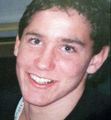
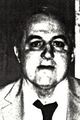
Lawrence Arthur Farrell, known to some as Larry and remembered in later reporting as “Bicycle Larry,” was 54 years old when he disappeared from the southern Kennebec County area of Maine. Online case listings place his last known contact in Chelsea, Maine, on October 25, 2004, and describe him as a White/Caucasian man, about 5 feet 9 inches tall and 130 pounds, with brown hair and blue eyes.
He was known for getting around by bicycle, and one case summary states that he was last seen riding a red pedal bicycle. His absence became alarming in early November 2004, when SSI staff reported him missing after he failed to pick up his monthly benefits, a routine act that appears to have been part of the rhythm of his life.
As the concern around Larry’s disappearance grew, attention turned to the circumstances of his living situation and the people closest to him. Online summaries state that before he vanished, he had been living with 64-year-old Norris Perry. In December 2004, Perry died by suicide, and before his death he reportedly left a phone message with a relative saying that Larry’s body could be found in a brook behind Perry’s trailer home. The Sun Journal, reporting from Randolph through the Associated Press, said investigators had already been looking for Larry for more than a month before the search intensified after Perry’s death. The same report stated that police had also received reports from neighbors about a loud argument between Larry and Perry in early November.
Investigators treated the disappearance as deeply concerning. According to the Sun Journal’s December 2004 report, authorities described Larry’s disappearance as suspicious, and detectives believed he was dead, though police had not characterized the case as a homicide. Search efforts focused around Perry’s property and the brook area described in the message, but winter conditions complicated the work. The article reported that state police suspended the search until spring, with a state police sergeant saying they would not return to Perry’s property until the weather improved in late April. The search effort included the continuing attempt to locate Larry’s bicycle, though investigators were not certain what type of bicycle he had been riding when he vanished; reports referred to either a red Huffy or a gray mountain bike.
The impact on Larry’s family was immediate and painful. The Sun Journal reported that even after the official search was suspended, Larry’s nephew, Scott Ware of Gardiner, began searching on his own near the area where police believed Larry might be found. Ware said he planned to walk the nature trail near the gully close to where Perry lived, and he told the paper that both of Larry’s parents had died that year and that the family wanted closure. Those details give the case a human weight beyond the public facts: a man who had been part of a community disappeared, his family was left without answers, and the people searching for him were forced to carry uncertainty through winter and beyond.
Online case summaries report that Maine investigators searched for Larry using cadaver dogs and a backhoe, but no trace of him or his bicycle was found. The Maine State Police missing persons page explains that its Major Crimes Units assist with or fully investigate missing person reports, especially when suspicious circumstances exist, and urges anyone with information in a missing person case to contact police or the investigating agency. The same state page notes that the Office of Chief Medical Examiner is Maine’s official clearinghouse for missing people and uses NamUs to help track and manage missing person case files. In Larry’s case, NamUs identifies the matter as Missing Person case MP35722, and the listed investigating agency in the provided case data is the Maine State Police Major Crimes Unit Central.
The story of Lawrence Arthur Farrell is therefore one of a man last known in Chelsea and the southern Kennebec area in late October 2004, a man whose disappearance was noticed when he did not collect the benefits he was expected to pick up in November, and a man whose case soon became tied to troubling statements, a reported argument, and an intensive but unsuccessful search around the home of Norris Perry. The available online record does not provide a recovery date or a confirmed resolution, and the exact circumstances of what happened to Larry remain unclear. What is known is that he was 54, he was remembered as Larry, he was associated with his bicycle, and despite searches by investigators and efforts by family, neither he nor his bicycle were found; in overview, this remains a painful Kennebec County missing person case marked by unanswered questions, a family’s need for closure, and the enduring hope that reliable information may still help explain what happened to Lawrence Farrell.Last Seen: Oct 25, 2004