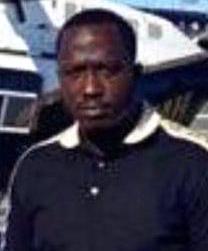
James Winfield Hutton, a 46-year-old male insurance salesman from Philadelphia, Pennsylvania, spent the morning of September 6, 1949, doing the ordinary work that had supported his family for years. He had built a steady life as an agent for Prudential Life Insurance, a job he had held for about eight years, traveling through neighborhoods in and around Camden, New Jersey, calling on clients and local businesses. That late-summer day found him in East Camden's Cramer Hill section, near the small pharmacy run by Maurice and Rose Cohen along River Road, a working-class stretch of rowhouses and storefronts where people knew each other by name.
The neighborhood was also home to Howard Barton Unruh, a 28-year-old World War II veteran whose simmering resentments toward his neighbors had hardened into a private grievance list. Unruh, who lived with his mother nearby, had grown increasingly withdrawn after the war and nursed a belief that people on the block mocked and slighted him.
On the morning of September 6, he left his apartment armed with a German Luger pistol and pockets full of ammunition and began what the press would later call the “Walk of Death,” a brief but devastating rampage along the 3200 block of River Road that would leave thirteen people dead and several wounded, one of the earliest modern mass shootings in the United States.
Before reaching the Cohens' pharmacy, Unruh had already shot and killed a neighborhood cobbler and then a barber and the six-year-old boy whose hair the barber had been cutting. The street, normally busy with children, shopkeepers, and workers heading to their jobs, erupted into chaos as shots rang out and people scrambled for cover. Sirens began to wail in the distance, but for the residents on River Road, the danger was immediate and bewildering, arriving without warning in the form of a familiar but suddenly lethal neighbor.
It was in this confusion that Hutton crossed paths with Unruh at or near the entrance to Cohen's pharmacy. Hutton, doing his rounds as an insurance man, appears to have been caught completely off guard, an unarmed professional simply going about his routine. Accounts describe him as an incidental target, a man who happened to be in Unruh's path rather than someone the gunman had specifically set out to kill. When Hutton did not move out of the way quickly enough, Unruh raised his pistol and shot him, striking him in the head. The attack was swift and merciless; within moments, the workday that had begun so ordinarily for Hutton ended in the middle of a neighborhood he was visiting in the course of his job.
As Hutton lay mortally wounded, Unruh continued through the pharmacy and up into the Cohens' apartment, killing members of the family and then moving back out onto the street, shooting more neighbors, a passing driver who stopped to help, and even a small child glimpsed through a window. The rampage lasted only minutes, but by the time it ended, the quiet block in Cramer Hill had been transformed into a crime scene that stretched from storefronts to sidewalks and front porches. Hutton's presence there—an insurance man making a routine call—underscored the arbitrary nature of the violence: he was not part of any feud or long-standing dispute, but simply “in the wrong place at the wrong time,” targeted because he happened to stand in the way of a man determined to kill.
Police converged quickly on the area as reports of a gunman on the loose poured in. Witnesses saw Unruh retreat back to his apartment once the sirens grew louder, and officers soon surrounded the building. A tense standoff followed, punctuated by gunfire between Unruh and responding officers. Eventually, police lobbed tear gas into the apartment. Choking and injured from a bullet wound to his leg fired by a neighbor who had tried to stop him, Unruh surrendered, calling out that he gave up and emerging to be handcuffed on the stairs. He was taken into custody as the sole suspect in the killings; no other accomplices were ever identified or credibly suggested.
In the aftermath, authorities pieced together the path of destruction and confirmed that Hutton was among the thirteen people killed in the spree. Investigators discovered that Unruh had been stockpiling weapons and ammunition and had mentally cataloged grievances against various neighbors, but Hutton's name did not appear among those long-standing targets, reinforcing the conclusion that his death was a tragic byproduct of Unruh's determination to fire at anyone who crossed his path. Prosecutors initially filed multiple counts of first-degree murder and assault, yet psychiatric evaluations soon diagnosed Unruh with severe mental illness. He was found not guilty by reason of insanity and committed to a state psychiatric hospital, where he remained confined for roughly six decades until his death in 2009. With Unruh's arrest, confession, and lifelong institutionalization, the case of James Winfield Hutton's killing was legally closed, his death forever bound to a morning when an ordinary workday in a New Jersey neighborhood suddenly became part of the grim history of American mass violence.