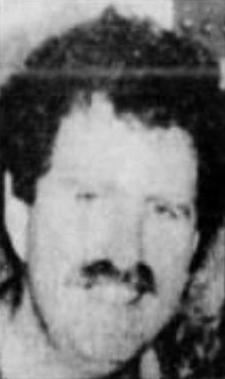
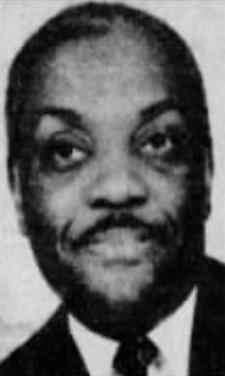
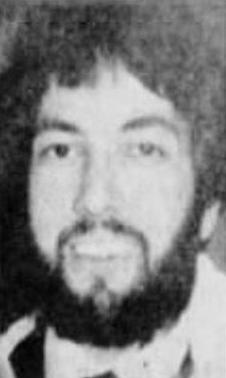
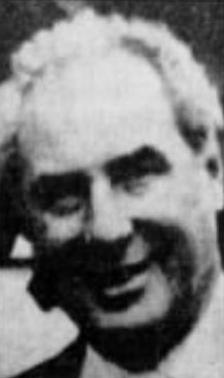
On a late-winter afternoon, March 21, 1995, the Watchung Plaza post office in Montclair, New Jersey, was following its usual rhythm of customers shuffling in with letters and small packages when the day abruptly turned catastrophic. Among the people going about ordinary business was Robert Sarre Leslie, a 38-year-old white male customer who had simply come to the neighborhood postal substation to use a familiar public service, unaware that he was walking into a carefully planned crime.
The gunman who would end his life, Christopher Green, was not a stranger to the building. Green had previously worked there as a temporary postal employee and knew its layout, routines, and vulnerabilities. By early 1995 he was mired in serious financial trouble, carrying what one account described as a “mountain of debt” and behind on his rent. According to later court records and news coverage, he formulated a plan to rob the small Montclair substation and, chillingly, to murder anyone who might be able to identify him.
That Tuesday afternoon, after finishing his shift as a Montclair city employee, Green walked to the Watchung Avenue/Watchung Plaza branch carrying a 9-millimeter handgun. Once inside, he quickly turned the quiet room into a killing ground. He ordered the people present—postal workers Ernest Spruill and Stanley Scott Walensky, along with customers including Robert Leslie and business consultant George Peter Lomaga—to lie face down on the floor. In a sequence later described in court and the press, he shot them at close range, methodically moving from one prone body to the next. A fifth man, customer David Grossman, was also shot in the face but survived.
After the gunfire stopped, the post office was left silent except for the mechanical sounds of the building itself. Green grabbed cash from the premises—reports later put the missing amount at just over five thousand dollars—and fled, leaving four mortally wounded men on the floor. A Postal Service driver who came into the building discovered the bodies and the gravely injured survivor, triggering a frantic emergency response. For Robert Leslie and the others, the attack was instantaneous and final; despite the rush of police and medical personnel to the scene, all four victims were pronounced dead.
The horror of the crime pushed investigators into immediate action. Because Green had once been employed at the same post office and knew two of the men he killed, suspicion quickly converged on him. Within a short time—accounts describe him being arrested within a day or two of the discovery of the bodies—authorities took him into custody. He was charged as the sole suspect in the Montclair post office massacre, facing federal charges tied to robbery of a United States postal facility and the murders committed in the course of that robbery. Contemporary coverage emphasized how his familiarity with the substation's lack of security had shaped his choice of target, underscoring the calculated nature of the attack that took Leslie's life.
In the months that followed, the case moved through the federal courts. Green initially denied his guilt but then changed course: by June 1995 he entered a guilty plea to the robbery and shooting spree that had killed two postal workers and two customers and critically wounded a fifth man. Later that year, a federal judge sentenced him to life in prison, with an additional 25-year term specifically for the wounding of the surviving victim. The sentence, handed down in Camden, New Jersey, ensured that the man responsible for the murders at the Montclair post office would spend the rest of his life in federal custody. The killings were soon cataloged in broader histories of postal shootings in the United States, with the Montclair tragedy cited as one of the stark examples of lethal violence in what should have been an everyday civic space.
For the families of those killed, including the relatives of Robert Leslie, the criminal sentence did not end the search for accountability. In a civil action known as Leslie v. United States, survivors and estates of the victims argued that the government had failed to provide adequate security at the Montclair post office, despite Green's prior employment and the foreseeable risk posed by lax safeguards. Federal court documents describe in stark language how Green arrived around 4 p.m. that day “with the express purpose and intent to rob the post office and to murder any witness therein,” a legal summation that captured the deliberate brutality of the act that claimed Leslie's life.
The town of Montclair, meanwhile, was left to absorb the emotional shock. The Watchung Plaza post office, once a mundane neighborhood stop, became a memorial site and a symbol of unthinkable loss. Local coverage over the years has described annual ceremonies at a plaque in Watchung Plaza honoring the four men who never came home that day, including Robert Leslie, and reflecting on how a single burst of violence reverberated through families, coworkers, and commuters who had known them. Decades later, accounts of the Montclair post office shooting still dwell on the ordinariness of the victims' final moments—buying stamps, sending mail, thinking about evening plans—before a former colleague turned their familiar post office into a crime scene, leaving a permanent absence where a quiet errand should have been.