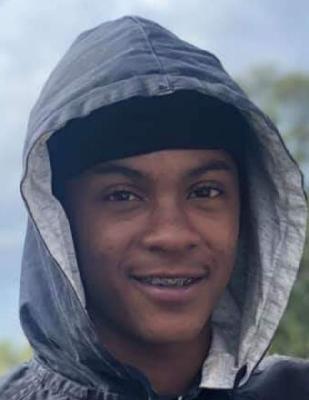
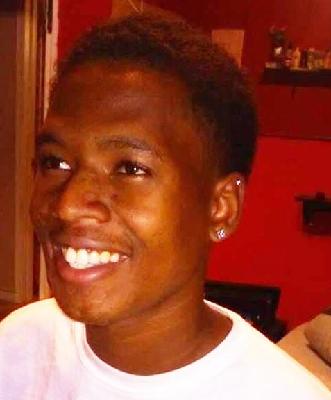
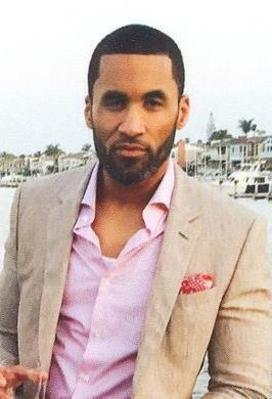
Rondell R. Arnett was a 23-year-old Black / African American man from Lindenwold, New Jersey, whose life was closely tied to nearby Camden, where family, friends, and church formed the backdrop of his everyday world. Obituaries and memorial notices remember him simply as a young man “of Lindenwold” who passed away on November 26, 2012, a loss that immediately rippled through both communities.
On online memorial pages he is also referred to by the nickname “Shank,” a reminder that behind the formal name on funeral programs was someone with a circle of people who knew him well enough to call him by something more personal.
That Monday night in late November 2012, Rondell was in Camden, along Kaighn Avenue, one of the city’s main corridors. Sometime before 9 p.m., violence erupted in the 400 block of the street. When officers arrived, they found him on the ground, already beyond help, and authorities later said he had been shot and was pronounced dead around 9 p.m. at the scene. The date on his death notices is that same November 26, 2012, confirming that the gunfire on Kaighn Avenue and his passing are one and the same moment in time.
In the days that followed, local law enforcement treated the case as a homicide and opened an investigation into who had shot the young man in the street. Later summaries of the case describe him explicitly as the victim of a violent crime, stating that he was murdered and that detectives dug into the possibility of a personal rivalry that had escalated into lethal conflict. News snippets from the time note that authorities publicly appealed for information, asking anyone who knew anything about the shooting on Kaighn Avenue to come forward, an indication that investigators were depending heavily on community tips to move the case forward.
Despite those efforts, there is no publicly available record indicating that a suspect was ever named or that anyone was arrested or charged in connection with Rondell Arnett’s killing. Case listings on crime-tracking and cold-case sites frame his death as an unsolved homicide, explicitly inviting readers to share “any updates on this case” and to report new information, which strongly suggests that the investigation has not produced a publicly acknowledged suspect. Unlike other New Jersey cases on the same platforms, which sometimes include detailed entries about arrested individuals and charges, the entries linked to his name stop at the facts of his death and the plea for leads, with no follow-up about an identified shooter or prosecution.
While detectives worked in the background, Rondell’s family moved through the quiet, structured rituals of grief. Funeral announcements show that his service was held on December 4, 2012, at the First Church of Deliverance on Broadway in Camden, with a morning viewing that allowed relatives, friends, and neighbors to file past and pay their respects before the service began. Afterward, he was laid to rest at Harleigh Cemetery, a historic burial ground in Camden where generations of local families have buried their dead. Online guest books and obituary pages carry short, heartfelt messages—people writing that they still couldn’t believe he was gone, that he would never be forgotten, and that their prayers were with his family—capturing the way his absence was felt in everyday lives.
In the years since, community members have continued to remember him. Forum posts and case discussions mention a vigil held in Camden in his honor, describing how friends, neighbors, and supporters gathered, shared stories about the way he looked out for the people around him, and tried to channel their grief into a shared demand for justice. Crime-tracking sites keep his profile active, updating timestamps but not the central fact: his killer has not been publicly identified. His name also appears on national gun-violence memorial rolls for November 26, 2012, listed alongside others killed by firearms that day, a quiet line on a long page that ensures he is registered not just as a statistic, but as a person whose life ended suddenly and violently.
Taken together, the scattered news snippets, memorial entries, and cold-case listings tell a story that remains painfully unfinished. A young man from Lindenwold is shot to death on a Camden street; police call for witnesses; family and friends bury him and speak his name in prayers and at vigils; websites dedicated to unsolved homicides continue to ask for updates. What has not yet appeared in any public record is the answer his loved ones have been waiting for: who pulled the trigger on Kaighn Avenue that night, and why.