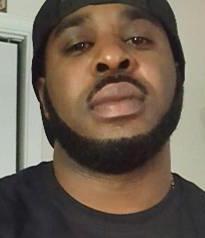
On July 8, 2016, in the city of Paterson, New Jersey, Michael Boone Jr., a 35-year-old Black / African American man, was killed by gunfire, a loss that quietly entered the rolls of national gun-violence records and online memorials. His name appears in a database of shooting victims that lists him simply as “lost to gun violence” in Paterson on that date, with no added narrative about the moment his life ended, only a stark acknowledgment that he was taken by a bullet.
In the days that followed, the most concrete public trace of what happened to him appeared not in crime reports but in the funeral announcement printed in the local paper and preserved online. The obituary identifies him as Michael G. Boone Jr. of Paterson, notes that services were held on the evening of July 15, 2016, at the Community Baptist Church of Love on Broadway, and records that he was laid to rest the next morning at Mount Rest Cemetery in Butler, New Jersey. The notice reads more like a logistical roadmap for grieving family and friends than an account of a violent death, offering times, locations, and the name of the funeral home, but leaving unspoken the circumstances that brought mourners together.
Online memorials fill in a different kind of detail, not about the crime but about who Michael was to the people who loved him. On a gun-violence remembrance site, his page is adorned with virtual candles lit in his memory, each one a small digital gesture that says someone is still thinking of him. In the comment section, those who knew him leave short messages that sketch the outlines of a life: he is remembered as sweet and loving, as handsome, as a best friend who is “truly missed” and a cousin whose absence still hurts. One entry recalls him with enduring affection, promising love “always,” while another speaks directly to him in familiar nicknames, the sort of language that only family and close friends use. These fragments hint at a man rooted in his community, with ties forged in school, neighborhood, and family that persisted long after his death.
Attempts to reconstruct what the wider public record says about his killing quickly run into silence. A case summary on a homicide-tracking site notes his age, date of death, and city, classifying his death as a “death by force,” and emphasizes that local obituary listings focused on his services and burial rather than on how he died. The same summary states that, after looking for more information, its compilers found no publicly available records or news articles that clearly lay out the cause of death or provide any narrative of the incident beyond the fact that he is included in gun-violence databases.
That case summary links to a regional news article titled “Paterson man recently free after long prison term fatally shot,” suggesting that Michael’s death may have been part of a story about someone who had only recently returned home from a lengthy incarceration before being killed. But the contents of that article are not reproduced in accessible public archives, leaving only its headline as a faint indication of a deeper, more complicated history that has not been widely preserved online. The homicide-tracking site underscores this gap by explicitly noting that, despite its efforts, it could not identify any open, detailed reporting that names a suspect or explains how law enforcement pursued the case.
As a result, the fate of any investigation into Michael Boone Jr.’s death remains largely opaque to anyone looking from the outside. The available sources do not describe a suspect, an arrest, or criminal charges, nor do they offer an official declaration that the case has been solved. Instead, what endures in the public eye is a patchwork of brief notices and memorials: an obituary setting out the times of a funeral and a burial, a gun-violence listing assigning him a date and place, and a case page that explicitly laments the lack of information about who was responsible. Between those sparse records, the most vivid details come from the people who continue to write to him and about him online, refusing to let his name be just another line in a database, even as the story of his final moments and the search for his killer remains largely unwritten in the public record.